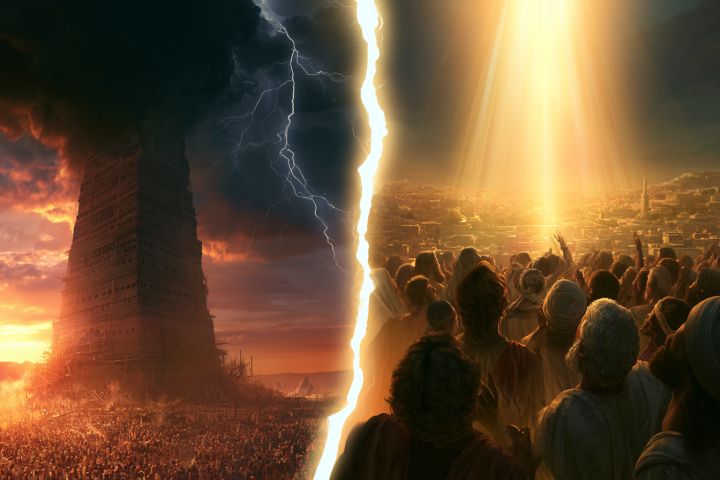
One moment, the largest construction site in human history ran with military precision. The next, no one could understand anyone.
That is what Genesis 11 describes — and its consequences shaped every civilization that followed.
Before Babel, humanity shared one language. That single fact made total coordination possible. No diplomatic negotiation. No translation delays. No miscommunication across thousands of workers. Genesis 11:6 records God’s own assessment of what this unity enabled: “Nothing that they propose to do will now be impossible for them.”
The response was not destruction. It was something far more surgical — the removal of the one thing holding the project together.

The Same Story on Every Continent
What archaeology reveals next is genuinely astonishing. Cultures with zero historical contact with each other — separated by oceans and continents — all preserved versions of the same story: a time of human unity, a project that challenged the divine order, a fragmentation, a dispersal.
The Sumerians described an age when all humanity spoke one tongue. The Greeks preserved the myth of giants stacking mountains to assault Olympus. The Maya recorded ancestors who once shared a single language before being divided. No trade routes connected these cultures. No shared migrations. And yet the same memory echoes across all of them.
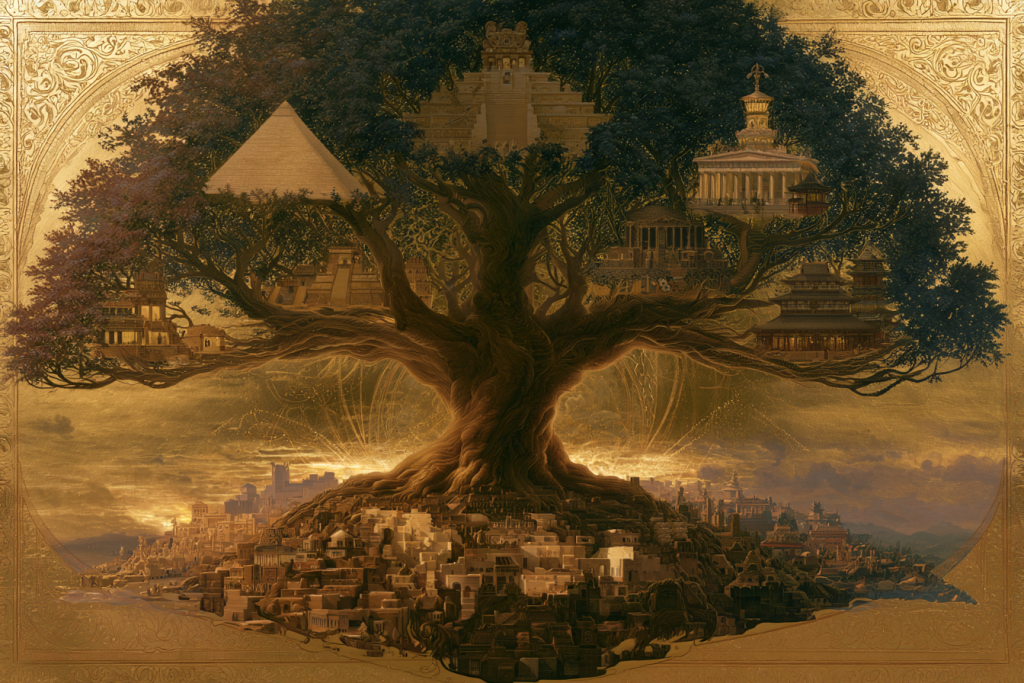
The fragmentation also produced something unexpected: an explosion of diverse innovation. Groups that reached Egypt developed stone-working that built the pyramids. Those who reached the Indus Valley built sewage systems Europe wouldn’t match until the 1800s. Those who crossed into the Americas cultivated maize and built floating cities.
A single civilization explores one direction. Seventy civilizations explore seventy directions simultaneously.
Modern linguistics identifies 6,000–7,000 languages on earth today — all clustering into families that trace back to a smaller original set, branching like a tree grown from seeds planted on the plain of Shinar.
Punishment or Multiplication?
The confusion of languages is remembered as judgment. But its long-term result was the full mosaic of human achievement — every musical tradition, every philosophical framework, every indigenous knowledge system made possible by separation.
Babel gave humanity both incomprehension and diversity in the same moment. That tension — between the unity lost and the richness that loss produced — has driven human history ever since.
Seventy languages. Seventy directions. Four thousand years of civilization branching from a single afternoon on a flat Mesopotamian plain.