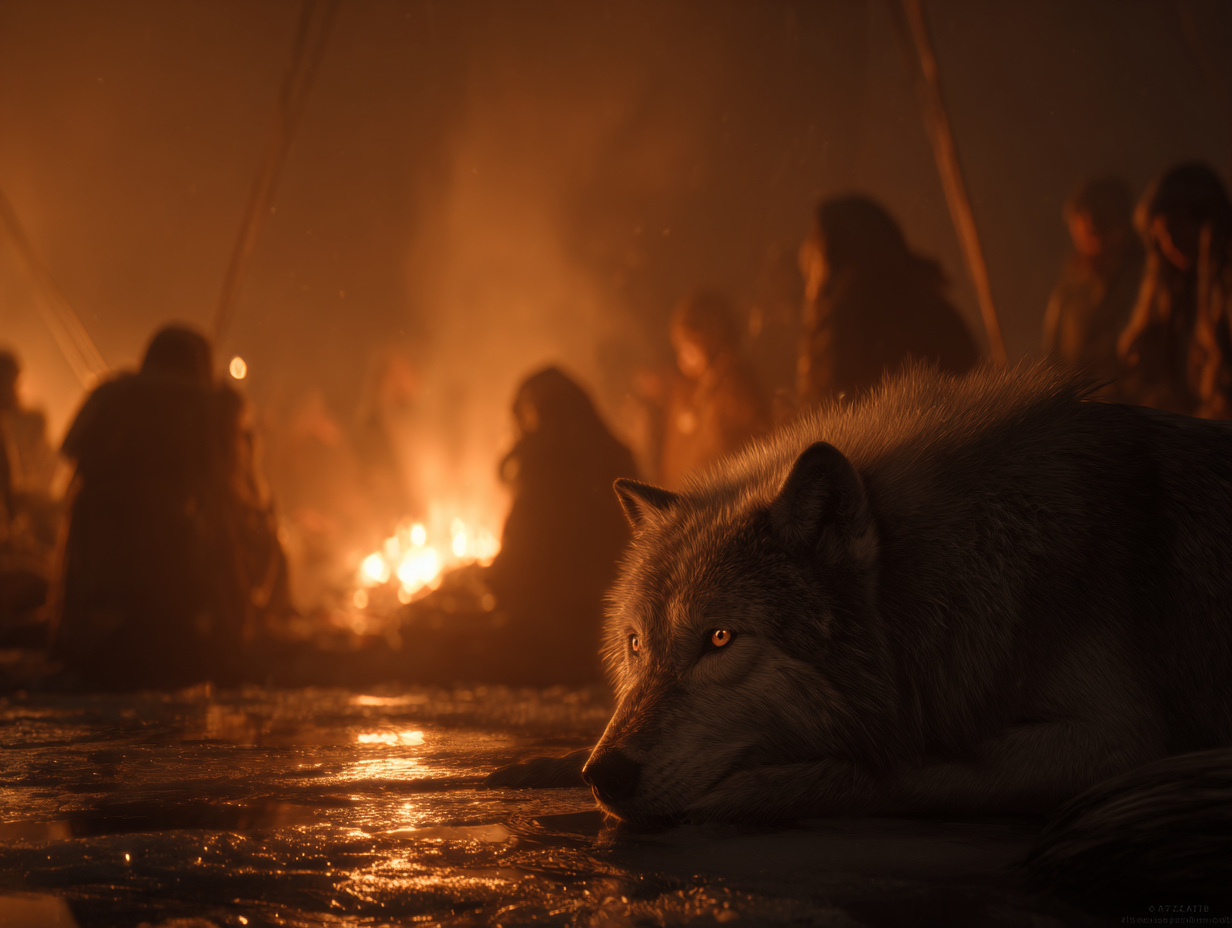
Somewhere in Europe, 30,000 years ago, a wolf sat at the edge of a human campfire.
It didn’t run. Nobody threw a stone.
Two very different animals shared the same light.
That moment — or something very much like it — is where the entire history of the dog begins.
We Got the Story Backwards
Most people assume humans domesticated dogs. That some clever hunter captured a wolf pup, raised it, trained it, and over generations shaped it into the loyal animal sleeping at our feet today.
That’s the tidy version. The real story is stranger.
The dogs came to us.
Scientists now believe the first step toward domestication wasn’t human intention — it was wolf behavior. Some individual wolves had a slightly lower fear threshold than others. They could linger near human camps without bolting. And near human camps was food: discarded bones, scraps, the accumulated waste of wherever people lived.
Wolves that could tolerate human proximity ate more. Survived harsh winters better. Left more offspring. Those offspring inherited that tolerance.
Generation by generation, without anyone planning it, a new kind of animal was being selected — not by humans, but by the consequences of staying near the fire.
The wolves that became dogs were, in the most literal sense, the wolves that chose us.
The Bone That Started Everything
For decades, archaeologists searched for the moment the wolf became the dog.
The clearest answer came from a quarry near Bonn, Germany. Workers cutting through ancient rock uncovered something remarkable: two human skeletons — an older man and a younger woman — buried together with deliberate care.
And beside them, touching them, buried as part of the same interment: a dog.
Young. Probably under seven months old. And showing clear signs of serious illness in the weeks before its death.
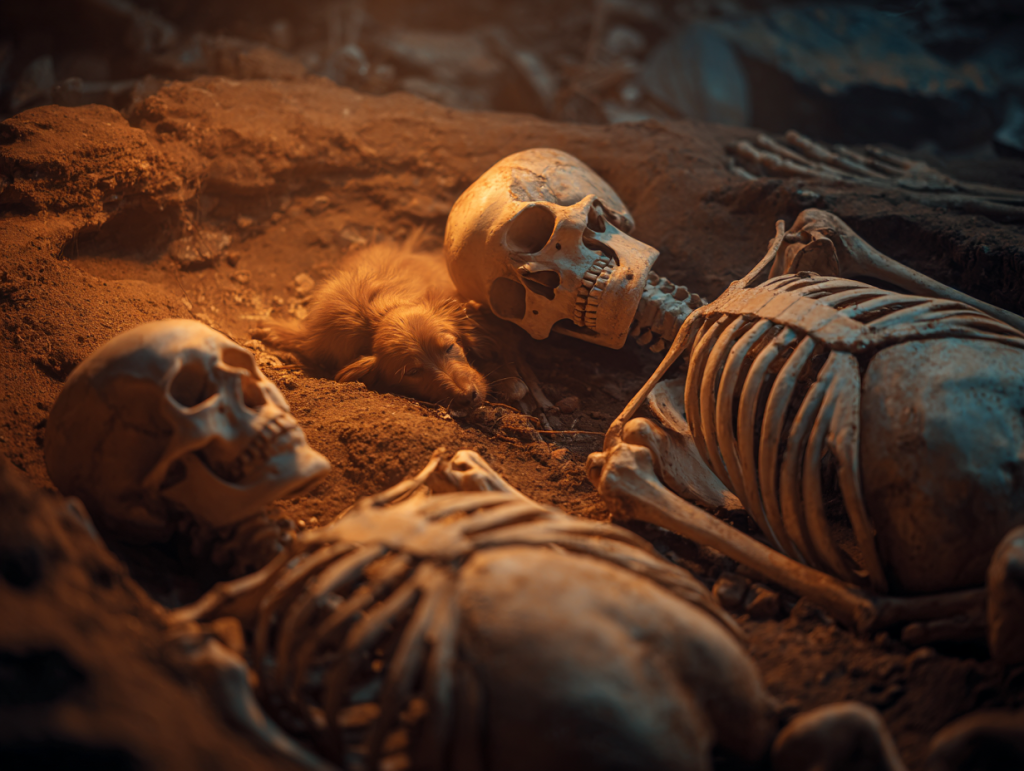
Here’s what that illness means: a sick wolf in the wild doesn’t survive. Something had kept this animal alive through its illness. Something had cared for it. And when it died, the people who cared for it put it in the ground beside their own dead.
That burial is 14,000 years old. It is the oldest unambiguous evidence we have of a dog that belonged to someone. Not as a tool. Not as a resource.
As something worth mourning.
What Dogs Actually Did for Ice Age Humans
The partnership wasn’t just emotional. In the brutal reality of the ice age, dogs were survival technology.
A wolf’s nose can detect scent at concentrations 100,000 times lower than a human can. Hunting a wounded animal through deep snow, tracking prey across broken terrain where visual signs disappear — a dog changed the geometry of the hunt completely. Researchers believe early dog-human hunting groups were substantially more effective than humans hunting alone.
At night, dogs provided something equally valuable: sleep.
The ice age night was full of cave lions, hyenas, and bears. A human watch is imperfect — people tire, attention drifts. Dogs don’t. Their hearing was engaged even while they appeared to be sleeping, sorting information from the darkness that no human could access. When something approached that shouldn’t, they responded.
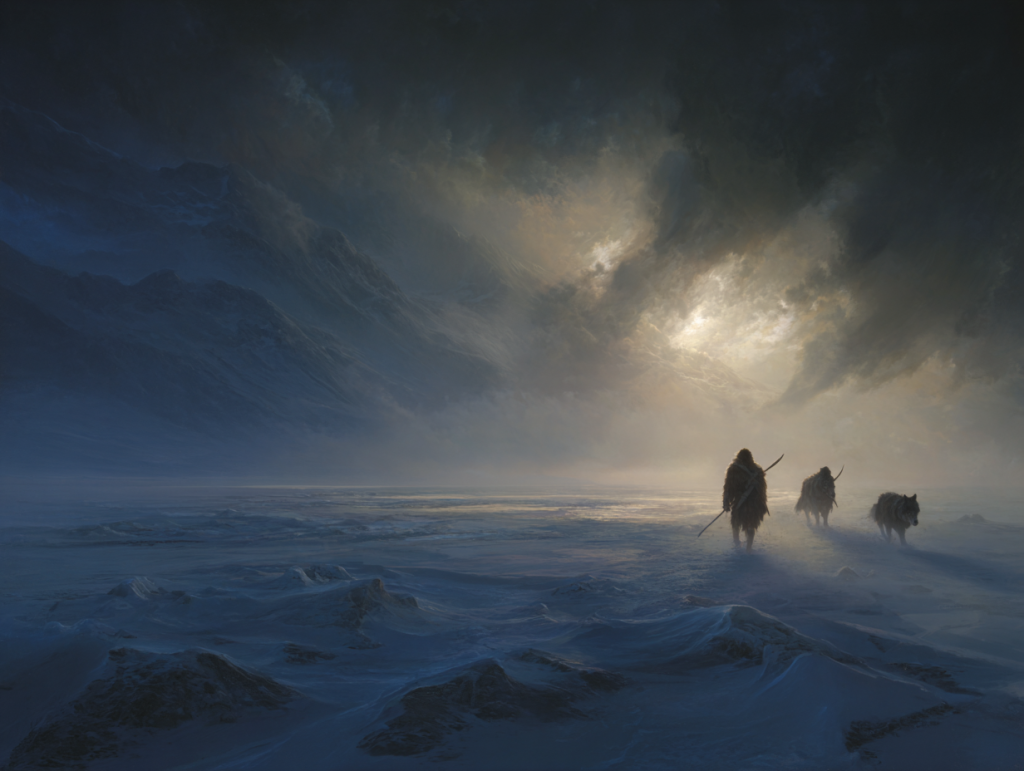
People could sleep more deeply. That has real consequences for survival.
And on nights when temperatures dropped dangerously, dogs provided body heat. The phrase “three dog night” — a night cold enough to require three dogs for warmth — preserves something genuine about the old arithmetic of survival.
From Wolves to Working Dogs to Show Dogs
As humans settled into villages and began farming, the dog’s role multiplied.
A flock of sheep represented wealth that could wander over a hill and never come back. Dogs that could hold a flock together, read the edges of the group, apply exactly the right pressure without causing a panic — those animals were invaluable. Over centuries, without deliberate breeding programs, function shaped form. The herding dog, the guardian, the hunter became visibly different animals, each one pressed into a particular shape by the demands of a particular human life.
Then came 1859. Newcastle, England. The first modern dog show.
For the first time, dogs were evaluated not on what they did but on how they looked. Appearance could be standardized, measured, ranked. The Kennel Club formed in 1873. Stud books opened. Pedigrees became documents.
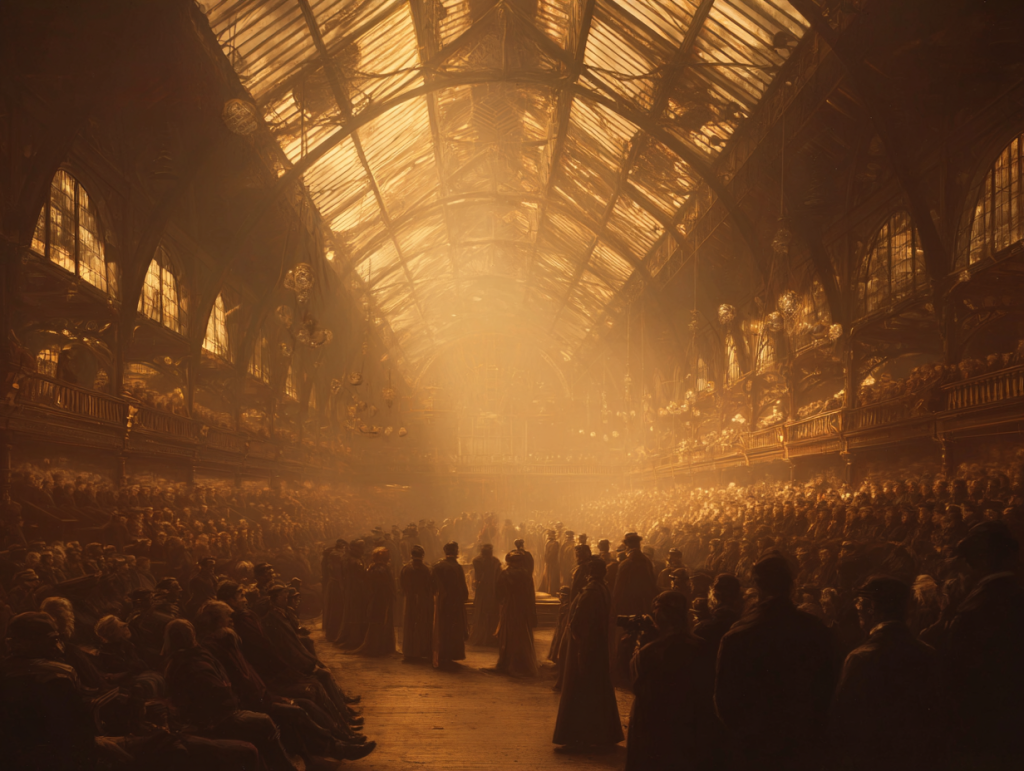
It was organized by people who genuinely loved dogs. And it had consequences nobody anticipated.
When breed registries closed their gene pools, they concentrated genetic vulnerabilities that compounded quietly over generations. Some of the most visually distinctive breeds today carry elevated risks for inherited illness — written into their genomes as surely as the shape of their ears.
The mixed-breed animal, dominant for most of the arrangement’s history, is returning to favor for exactly this reason.
The Dog at the Foot of the Bed
The story is still being told. Every year, ancient DNA extracted from prehistoric bones revises what researchers thought they understood. The exact timing and geography of domestication remains genuinely debated.
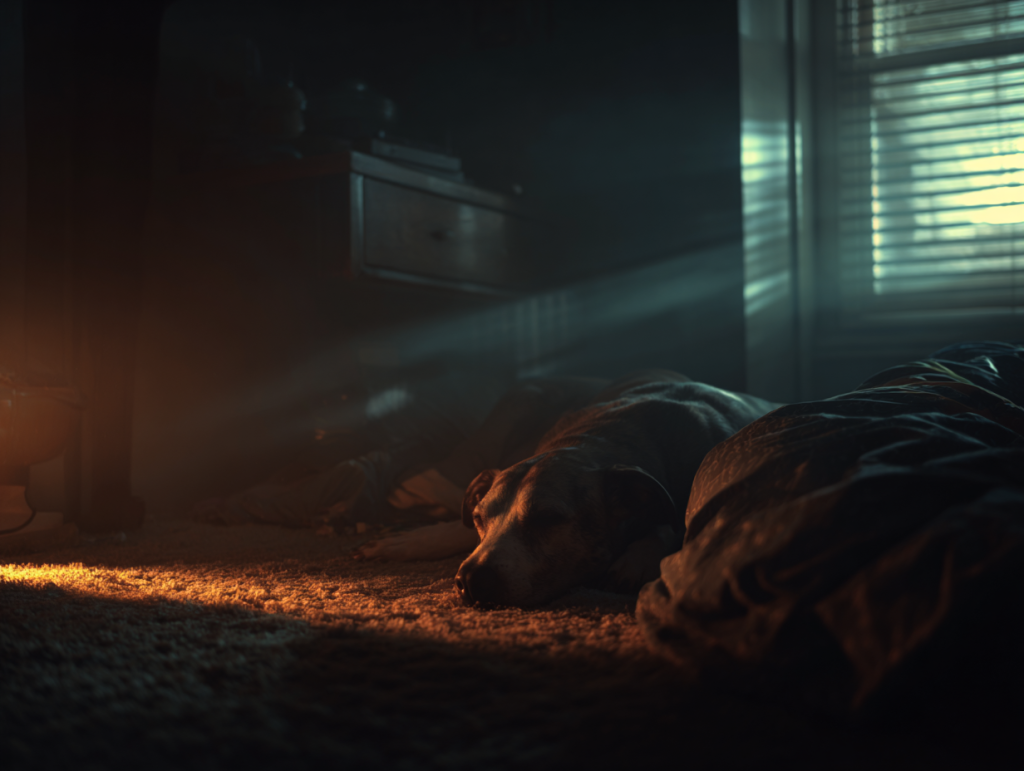
But here, in the present, where all of that history has arrived — there is a dog asleep at the foot of a bed.
The room is quiet. The breathing is slow. Whatever the world is doing outside, this dog is not attending to it.
Because it is warm and close to a person. And that is all the situation requires.
It is such a simple image. It is easy to forget what it contains.
30,000 years of incremental trust. Every fire that was approached and every hand that was extended. Every generation that came to terms with the presence of the other and found it worth continuing.
Somewhere in that long passage, wolves became dogs — not only because people shaped them, but because something in them moved toward the arrangement willingly.
They chose us back.
And the evidence of that choice is in every home, on every continent, in the weight of a sleeping animal that has decided this is where it belongs.