Filled With Violence: What Genesis 6:11 Says About the Flood
Biblical History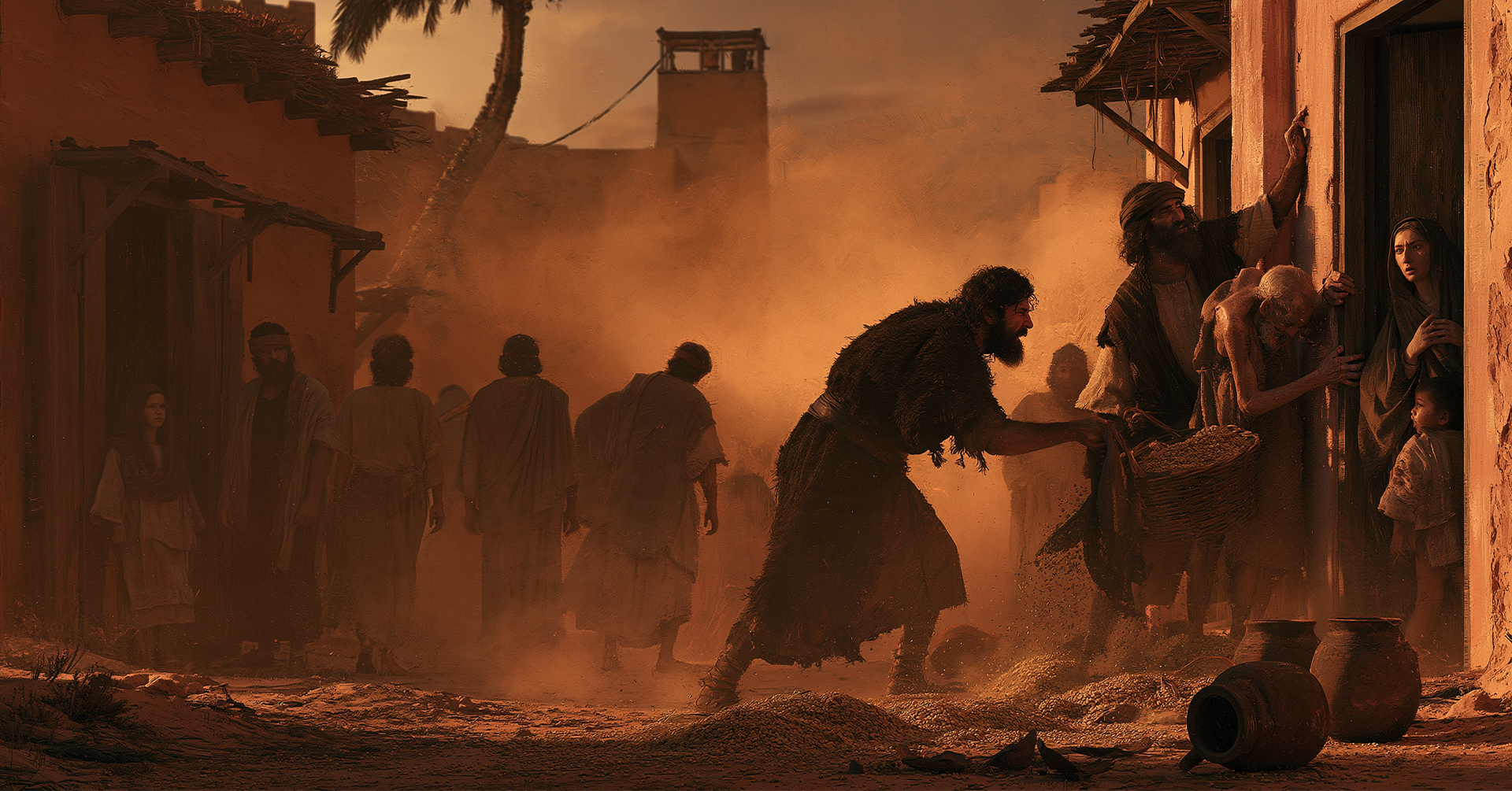
AI reconstruction, not a photograph.
Genesis 6:11 gives the cause of the flood in a single word. The King James Version says the earth “was corrupt before God” and “was filled with violence”, and God repeats the word to Noah in verse 13. The Hebrew is chamas. The verse does not define it, and Genesis supplies no example under it. This article sets out where else the word appears, how the prophets use it, how early readers filled the gap, what the rabbis made of it and what returns in Genesis 9.
One Word, Said Twice
In verse 12 God “looked upon the earth” and finds it corrupt, because “all flesh had corrupted his way upon the earth”. In verse 13 he tells Noah that “the earth is filled with violence through them”, and that he will “destroy them with the earth”. The verdict rests on that one noun.
Genesis uses chamas in only four verses, according to the lists on Bible Hub and OpenBible: 6:11, 6:13, 16:5 and 49:5. In 16:5 Sarai says to her husband “My wrong be upon thee”, a household grievance. In 49:5 Jacob says of Simeon and Levi that “instruments of cruelty are in their habitations”, and verse 6 adds that “in their anger they slew a man”. The same word therefore covers a complaint of wrong and a killing. Genesis 4 had already told of Cain’s killing of Abel (4:8) and Lamech’s boast “I have slain a man to my wounding” (4:23), but not with this word. Retellings often fill the gap with scenes of cruelty and deceit, as the picture at the head of this article does. Genesis contains no such scene.
What the Hebrew Word Covers
The Bible Hub lexicon entry for chamas gives Strong’s glosses “violence”, “(by implication) wrong” and “(by meton.) unjust gain”. Brown-Driver-Briggs, quoted there, has “violence, specifically of physical violence”, and adds “but also wrong, including injurious language, harsh treatment, etc.” The King James Version renders the word as cruelty, damage, false, injustice, oppressor, unrighteous, violence, violent and wrong. The page gives the NASB’s tally as “violence (48)”, “violent (6)”, “malicious (3)” and “wrong (3)”, and states 60 occurrences in all, so there is a large body of use to compare.
Speech and testimony are included. Exodus 23:1 forbids being “an unrighteous witness”, and Deuteronomy 19:16 speaks of “a false witness” who rises “against any man”. Both verses appear on OpenBible’s list of the word’s occurrences. A reader who takes chamas to mean physical violence alone therefore leaves out part of its range.
Merchants, Princes and the Rich
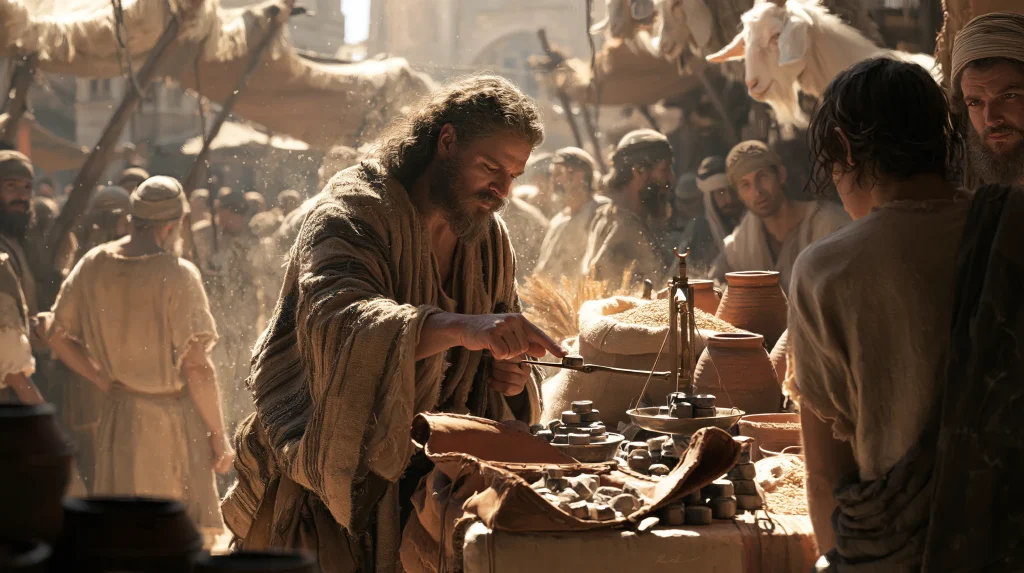
The prophets attach the word to trade and to the powerful. Ezekiel 28:16 says “By the multitude of thy merchandise they have filled the midst of thee with violence”, and Ezekiel 45:9 tells the “princes of Israel” to “remove violence and spoil, and execute judgment and justice”. Amos 3:10 says that people “store up violence and robbery in their palaces”. Micah 6:12 says “the rich men thereof are full of violence”, and the verses before it speak of “the scant measure that is abominable” and “the bag of deceitful weights”. Here the word sits beside cheating in the market and wealth in few hands.
Cities Full of Violence
Other uses concern whole cities. Ezekiel 7:11 pairs the word with judgment: “Violence is risen up into a rod of wickedness: none of them shall remain”. Ezekiel 7:23 says “the land is full of bloody crimes, and the city is full of violence”, and 8:17 says Judah has “filled the land with violence”. Habakkuk cries to God “of violence, and thou wilt not save!” and says that “spoiling and violence are before me” (1:2-3). In Jonah 3:8 Nineveh is told to turn “from the violence that is in their hands”.
The pattern is mixed. The verb “filled” that Genesis pairs with the word returns in Ezekiel 8:17 and 28:16, and several uses point to the strong at the expense of the weak. Others do not. Psalm 73:6 says of the proud that “violence covereth them as a garment”, and Isaiah 53:9 sets “no violence” beside “deceit in his mouth”. The prophets’ evidence points to oppression, bloodshed and cheating, but it does not reduce the word to a single formula.
How Early Readers Filled the Gap
Genesis 6:1-4 comes just before the verdict: “the sons of God saw the daughters of men that they were fair”, and “There were giants in the earth in those days”. The text does not say that either episode caused the violence of verse 11. Miryam Brand, writing on TheTorah.com on 3 November 2016, says that Genesis does not explicitly link the sons of God to violence, that “The Torah doesn’t say anything specific about this wickedness”, and that “early Jewish interpretation fills in the gaps”.
The Book of the Watchers, which Brand dates to 250 to 200 BCE, makes the link. In 1 Enoch 7, in one translation online, the giants “consumed all the acquisitions of men”, then “turned against them and devoured mankind”, and “began to sin against birds, and beasts, and reptiles, and fish” (7:3-5). Verse 6 adds that “the earth laid accusation against the lawless ones”. The intertextual.bible site presents a thematic link between Genesis 6:11 and 1 Enoch 7:5, and its notes cite 6:11 beside 7:3. Josephus, in Whiston’s translation, writes that “many angels of God accompanied with women” and “begat sons that proved unjust”, men whose deeds “resembled the acts of those whom the Grecians call giants” (Antiquities 1.73). Each is a later answer to a question that Genesis leaves open.
What the Rabbis Heard
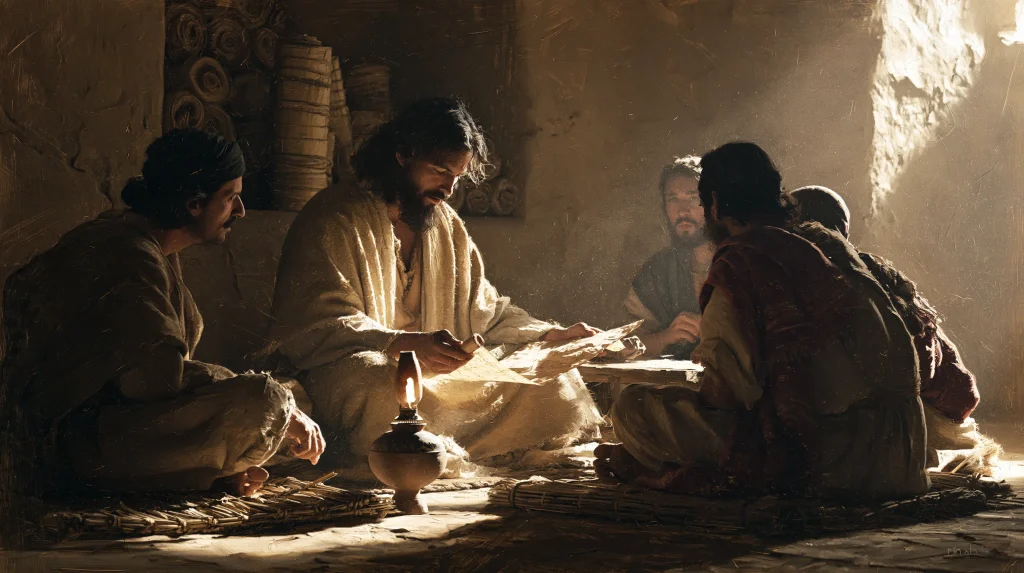
In the Chabad.org Torah reading with his commentary, Rashi, the medieval commentator, glosses chamas as “robbery”. On verse 13 he says “Their verdict was sealed only because of robbery.” He takes “corrupt” in verse 11 as “an expression of immorality and idolatry”, so in his reading the verse names two offences, corruption and robbery. The Talmud (Sanhedrin 108a, as shown on halakhah.com) has R. Johanan say “Come and see how great is the power of robbery”. The generation broke every law, yet “their decree of punishment was sealed only because” they “stretched out their hands to rob”, and he cites verse 13.
Translators split in the same way. Alan Cooper of the Jewish Theological Seminary notes that the Jewish Publication Society’s 1917 edition has “violence”, its 1985 edition “lawlessness” and the Judaica Press, following Rashi, “robbery”. He adds that the rabbinic link between the corruption and illicit sex comes from Genesis 6:1-4, and that Sanhedrin 57a reads “corruption” wherever it appears as illicit sex and idolatry.
What Returns in Genesis 9
After the flood God sets a rule about blood. Genesis 9:6 says “Whoso sheddeth man’s blood, by man shall his blood be shed”, and gives the reason: “in the image of God made he man”. Verse 5 widens the reckoning, saying that God will require a life “at the hand of every beast” as well as “at the hand of man”. The word chamas does not return. The lists on Bible Hub and OpenBible give Genesis only four occurrences, none in chapter 9, and OpenBible’s word-by-word listing of 9:5-6 shows the Hebrew for “shed” and “blood” with no entry for chamas.
What returns is the theme: human blood shed, and a penalty for it. Readers connect this rule to the violence before the flood, and the text suggests the link without stating it.
What Can Be Said
What Genesis gives plainly is narrow: one word, repeated, with no illustration under that word and a clear echo in the prophets. Whether it meant blows, theft, false witness or the rule of the strong, the verse does not say.

