The World’s Oldest Wooden Statue Was Once Twice as Tall
Origins & Prehistory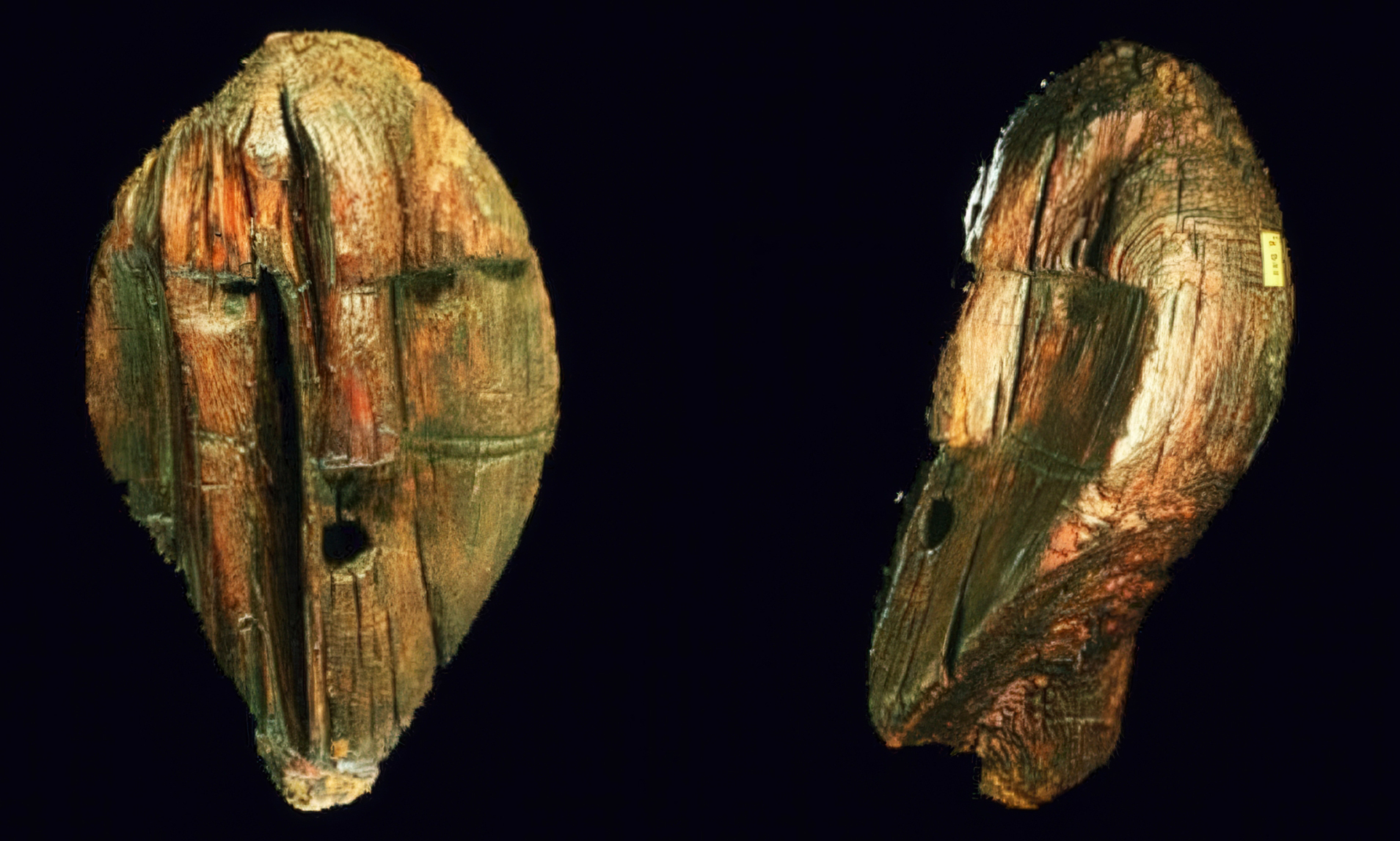
In January 1890, gold prospectors digging through a peat bog in Russia’s Ural Mountains hit something that had nothing to do with gold: a carved wooden figure that would turn out to be the oldest known wooden sculpture on Earth, older than Stonehenge and the pyramids of Egypt combined.
A Gold Mine Gives Up an Unexpected Find
The discovery happened at the Shigir bog, on the eastern slope of the Middle Urals near the village of Kalata, now the town of Kirovgrad, roughly 100 kilometres from Yekaterinburg. Workers were digging through an open-cast gold mine when they found the carved figure buried about four metres down, broken into ten separate fragments. The site had already drawn attention decades earlier, after other prehistoric objects turned up nearby during similar mining work, but nothing prepared researchers for a wooden sculpture this old, or this large. For much of the following century, the idol sat in a regional museum treated more as a curious local relic than as a find of global significance, its true age still entirely unsuspected.
An Age That Keeps Getting Older
When the idol first went on display, it was treated as a curiosity of uncertain but probably modest age, at most a few thousand years old, roughly in line with other prehistoric finds from the region. The first radiocarbon test, run in the 1990s, returned a startling result: roughly 9,500 years, a figure many researchers initially doubted simply because it seemed too old to be plausible for an object this well preserved and this elaborately carved by hunter-gatherers with no known permanent settlements. Advances in accelerator mass spectrometry eventually settled the question and pushed the date further back rather than closer to the original skeptical estimate. A 2018 study led by archaeologist Thomas Terberger at Germany’s Göttingen University put the carving at around 11,600 years old, and a follow-up reassessment by the same team a few years later revised that estimate again, to roughly 12,500 years, with the wood itself dating to somewhere around 12,250 years, meaning the tree it was carved from may already have been standing, or recently felled, at the very end of the last Ice Age. By any of these more recent figures, the Shigir Idol predates Stonehenge and Egypt’s pyramids by thousands of years, and it now stands as the oldest known work of wooden sculpture anywhere in the world, each new round of testing only widening that gap further.
Preserved by the Bog Itself
Wood this old almost never survives. What kept the Shigir Idol intact was the specific chemistry of the bog it was buried in, an oxygen-poor, acidic, waterlogged environment that slows the bacterial activity responsible for ordinary decay to a crawl. The figure was carved from larch, a wood with natural antimicrobial properties of its own, and the combination of that resistant timber with the bog’s tanning, low-oxygen conditions is what allowed a carved object to sit underground for roughly twelve thousand years and still come out recognizably intact.
A Taller Figure Than What Survives
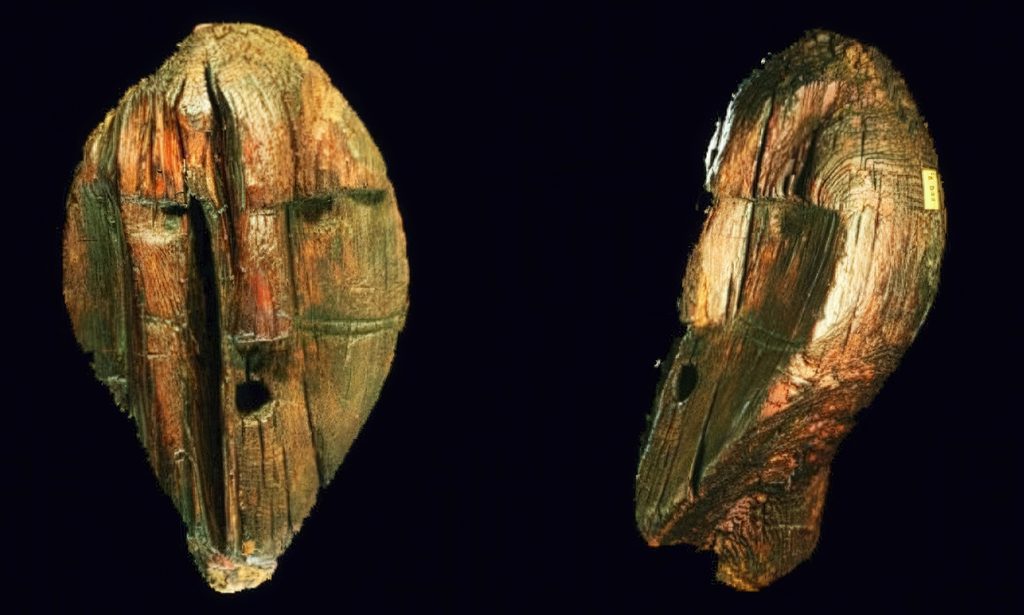
The sculpture on display today stands 2.8 metres tall, reconstructed from the recovered fragments by the Russian professor D. I. Lobanov. That is not, however, the figure’s full original height. In 1914, working from careful sketches he had made of every recovered piece, the Siberian archaeologist Vladimir Tolmachev incorporated additional fragments that had not been used in the earlier reconstruction, and estimated that the complete idol originally stood as tall as 5.3 metres, nearly twice its current height, a figure closer in scale to a modern telephone pole than to a human statue. Roughly two metres of the original figure appear to have gone missing at some point during the political upheaval of twentieth-century Russia, and those missing sections have never resurfaced or been located in any collection. What museum visitors see today is a genuine and remarkable survivor, but it is almost certainly a partial one, and the full scale of what Mesolithic carvers in the Urals originally produced may be permanently out of reach.

Faces, Hands, and Unanswered Questions
The surface of the idol is carved on both its front and back with a dense mix of imagery: stylized human faces, shapes that appear to represent hands, zigzag lines, and a set of horizontal bands running across the body at roughly the level of the ribs. Researchers have identified as many as seven distinct faces worked into the wood, arranged at different points along its length, giving the whole figure a layered, almost stacked composition rather than a single continuous portrait, closer to a sequence of separate scenes or figures than one unified image. What none of this imagery settles is what the object actually meant to the people who made it. Some researchers have compared it to the totem poles of the Pacific Northwest, meant to honor ancestors or spirits. Others have suggested the carvings represent local forest spirits, or even a kind of warning marker meant to signal a dangerous or forbidden place. A few have floated the idea that the zigzag patterns encode information of some kind, perhaps even a rough map or record of a journey, though nothing close to a shared symbolic system has been identified elsewhere to compare it against, leaving every reading essentially speculative. No single interpretation has won out, and researchers who have studied the piece closely tend to agree only that the effort behind it was clearly deliberate and significant to whoever commissioned it.
A Contemporary in Turkey
The Shigir Idol is not entirely alone in the archaeological record of this period, even if nothing quite like it survives nearby. Around the same span of centuries, and more than 2,500 kilometres away, hunter-gatherers at Göbekli Tepe in southeastern Turkey were carving stylized animal figures onto stone pillars more than five metres tall, gathering there for purposes that remain similarly debated. Neither site explains the other, but together they suggest that scattered hunter-gatherer communities across a wide stretch of Eurasia were independently producing large-scale symbolic art at roughly the same moment, long before agriculture, writing, or permanent cities existed anywhere.
Today the Shigir Idol is kept at the Sverdlovsk Regional Museum of Local Lore in Yekaterinburg, sealed in a case filled with inert gas to slow the decay that the bog itself once held off for twelve thousand years. It remains a genuinely unresolved artifact, old enough to predate almost everything else built by human hands that still stands today, and strange enough that no one has yet managed to say with confidence exactly what it was for.

