Dreams, Tablets and Defiance: The Giants’ Last Assembly
Texts & Traditions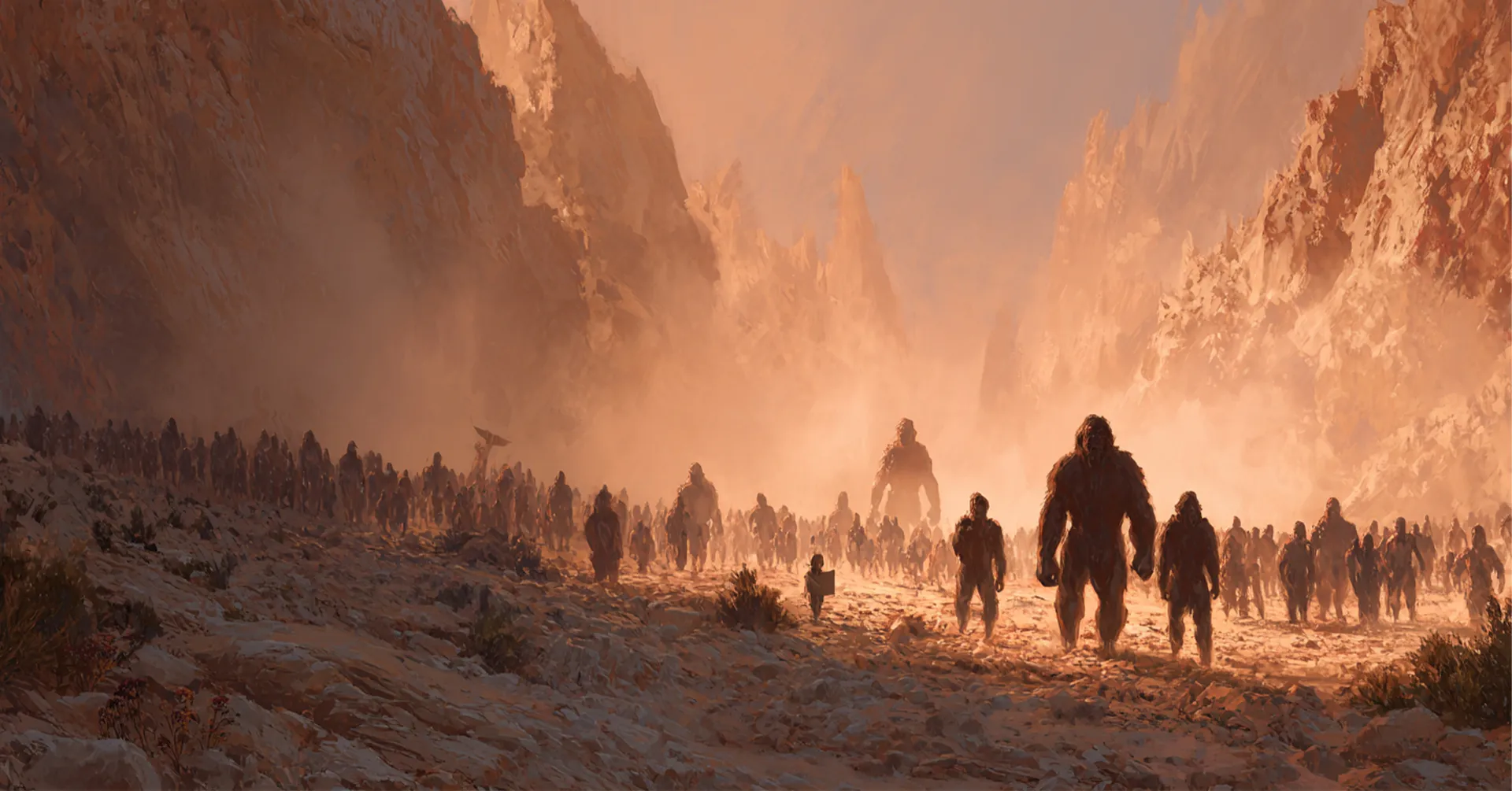
AI reconstruction, not a photograph.
The Book of Giants survives only in fragments, yet its outline is clear enough to ask what the giants did when they learned that they were doomed. A modern retelling of that moment has them gather in a ruined valley, Hahyah snatch a scroll and read it aloud, and the assembly split into those who would fight, those who would submit and those who would flee. This article sets out what the fragments and related texts preserve, who read what to whom, how the giants responded and which parts of the retelling go beyond the evidence.
A Book in Fragments
The book was written in Aramaic and was found at Qumran. Wikipedia lists the manuscripts as 1Q23, 1Q24, 2Q26, 4Q203, 4Q530, 4Q531, 4Q532, 4Q556, 4Q206 and 6Q8, from caves 1, 2, 4 and 6, and says some fragments are in Hebrew. James Davila, in the Eerdmans collection of noncanonical scriptures, counts nine or ten manuscripts, more than survive for any book of 1 Enoch.
The date is uncertain. Wikipedia says the text is older than the second century BCE and notes Klaus Beyer’s third-century suggestion. A reference entry on the book says Józef Milik proposed 125 to 100 BCE, calls that date problematic, and gives Beyer’s late third century as an alternative. A second version survives in Middle Persian, Parthian, Sogdian and Old Turkic fragments from Turfan, which Wikipedia says W. B. Henning published in 1943. That Manichaean edition is the one with a complete ending. In it Ohyah and Hahyah are renamed Sam and Nariman.
Dreams and a Journey
In the surviving story, two hundred Watchers under Shemihazah take wives and their giant sons devastate humanity. Davila’s summary says the giants enslave and slaughter humans and damage the natural order, and that humans call on God and the archangels. The reference entry says that Enoch petitions God for judgment, and that God plans a flood but first offers the giants a chance to repent by sending dreams to Ohyah and Hahyah. Davila describes the brothers as sons of the Watcher Shemihazah. Hahyah dreams of gardeners tending a garden that fire destroys. Ohyah dreams of God descending, thrones set up and books opened for judgment, a scene Davila compares with Daniel 7. Wikipedia says the assembly that hears the dreams is perplexed. The dreams are the book’s way of showing that the giants were warned.
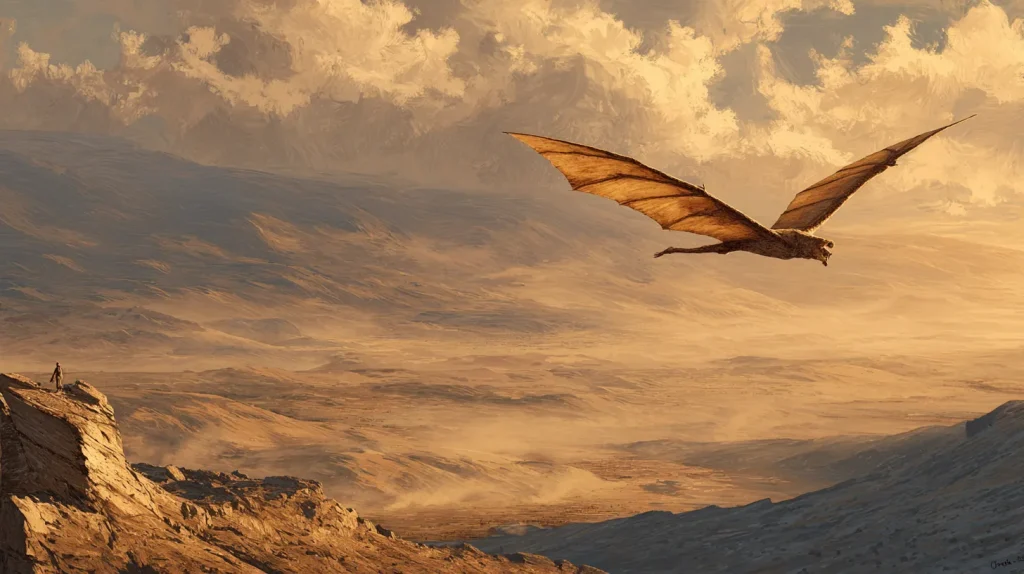
The giants then send Mahaway, son of the Watcher Baraq’el, to Enoch. The reference entry places Enoch “beyond the wastelands”, and in Davila’s account Mahaway flies there. In the Old Turkic version a voice warns him to come down before the sun sets his wings on fire. Wikipedia adds that he must first hear the prophet speak before he can ask for the oracle. Enoch interprets the dreams, and Davila says Mahaway makes a second trip later.
Tablets, Not a Scroll
The message Mahaway brings back is written on stone. Davila describes two tablets. The first announces that the Watchers and the giants will not be forgiven. The second is a letter to Shemihazah and his companions, warning them of their sins and of ruin, and it is read only after the giants have discussed the first. The reference entry says the tablets are read aloud to the assembled giants. None of the pages consulted says who reads them.
The retelling differs on three points. It has a scroll, where the sources have tablets. It names Hahyah as the reader. And it has the text say that all the giants will drown and that their spirits will wander as demons. The flood is attested elsewhere: 1 Enoch 10:2 warns “that the whole earth will be destroyed, and a deluge is about to come”. The demons belong to 1 Enoch 15, where the giants “shall be called evil spirits upon the earth” (15:8). Whether either idea stood in Enoch’s tablets cannot be told from the surviving fragments.
How the Giants Responded
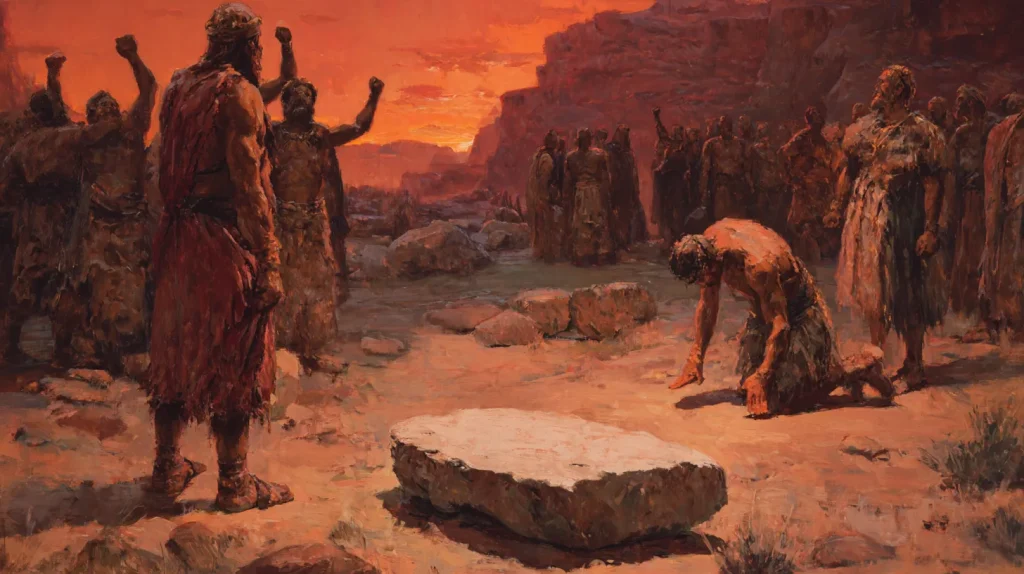
Davila gives the sequence of feeling. The giants are first demoralised by Enoch’s message and then cheered by a message from Gilgamesh and Hobabish, two of their number. The Watchers promise to repent and ask Enoch for mercy, but Enoch warns that ruin is near. The reference entry says some of the giants are chastened and urge repentance, while the majority “arrogantly challenge God to act against them”. Wikipedia agrees that many refuse repentance out of pride and defy God.
Wikipedia adds that Enoch preaches repentance. In the Manichaean version, Davila says, the giants are too sorrowful to eat and fall asleep. The order matters: the doom comes first from the dreams, then from Enoch, and only then from the assembly’s own discussion.
That gives the retelling two of its three factions a footing. Defiance and repentance are both in the sources. A flight to mountains and caves is not in any page consulted, nor is a council that ends with a war party prevailing through the strength of Ohyah and Hahyah. In the fragments the brothers carry the dreams. The retelling turns them into leaders.
What Happens to the Giants Next
The Qumran fragments break off at the point of defiance, and the reference entry says hints in the surviving text suggest the flood was eventually described. Other texts say how the giants end. Davila’s summary of the whole plot has the four archangels eventually incite the giants to fight each other, and the Watchers are bound. In 1 Enoch 10:9 Gabriel is told to “send them one against the other that they may destroy each other in battle”, and in 10:11 Michael is told “Go, bind Semjaza and his associates who have united themselves with women”. Jubilees 5:9 says that “they began to slay each other till they all fell by the sword”. In the Manichaean ending, the entry says, God’s archangelic hosts fight the giants in “fierce battles”, and Wikipedia says four angels linked to Michael, Gabriel, Raphael and Uriel subdue them.
Why the Book Was Kept
The number of copies suggests that the book mattered to its readers. Davila says the Qumran sectarians were evidently fond of it, and Wikipedia adds that the Damascus Document may quote it. Wikipedia also says the book explains why God was justified in sending the flood. Read that way, the giants’ choice in the assembly is the hinge of the book. They are warned, they are offered a way out, and they refuse. The dreams and the tablets make the later destruction a response to a decision, not an arbitrary act.
What the Retelling Adds
The valley once fertile and now barren, the hundreds arriving from four directions, the earth trembling under their weight, the grieving who strike the ground or each other, the speech about dying as warriors and the order to join the war or be named an enemy are all absent from the sources consulted. The silent Mahaway who knows there is no hiding is also absent; in Davila’s account he is a messenger who makes two journeys. These are the work of the retelling, and they read as plausible fiction built around a real gap in the evidence. They also fit the text’s mood, since Genesis 6:4 says only that “There were giants in the earth in those days”, and everything about their last councils has to be imagined.
What Can Be Said
What survives is narrow: two dreams, a messenger who flies to Enoch, two stone tablets, a split between repentance and defiance, and a text that breaks off. Everything else about the assembly is imagination.

