The Alaskan Bison So Well Preserved Scientists Ate It
Origins & Prehistory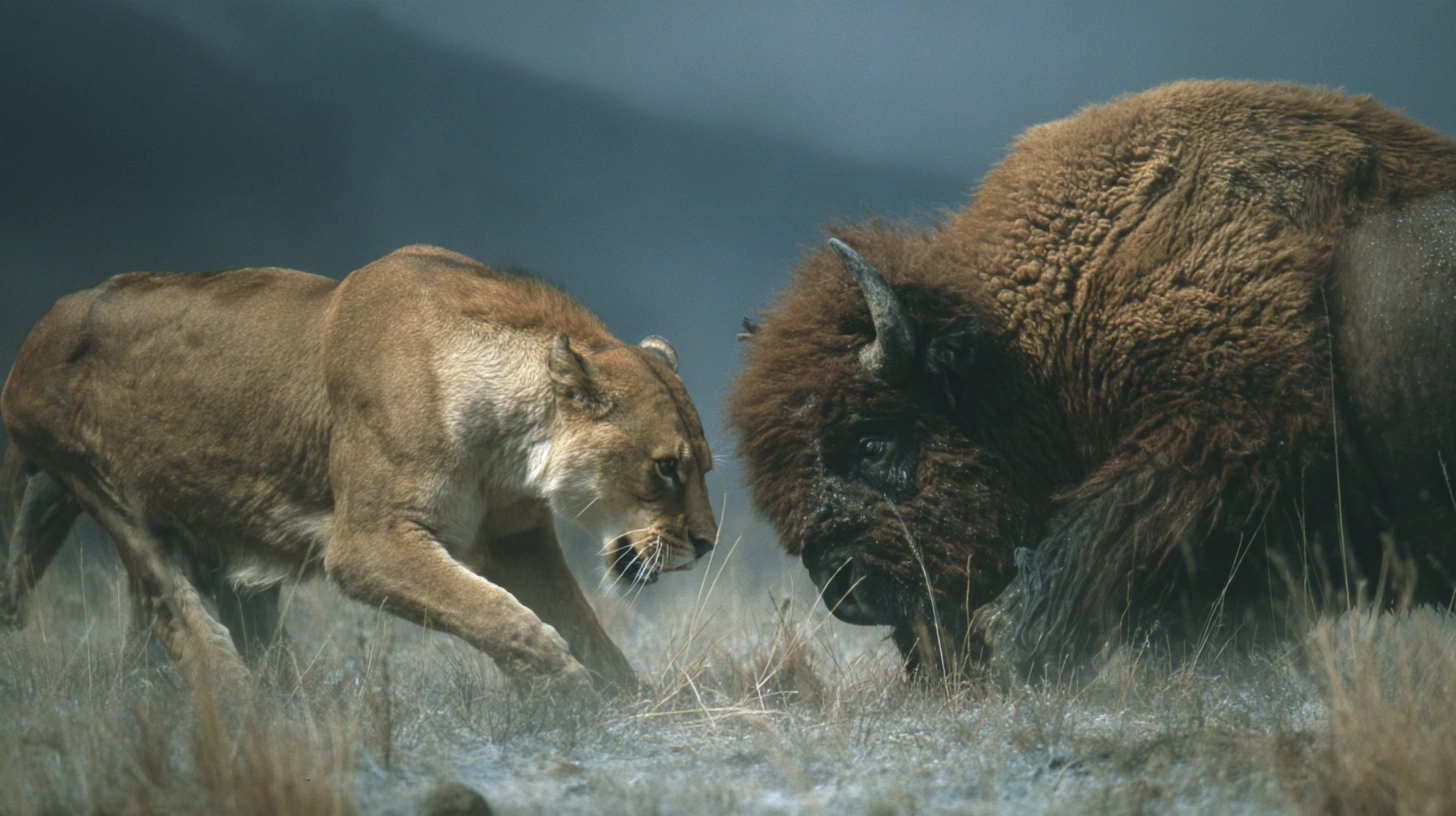
AI reconstruction, not a photograph.
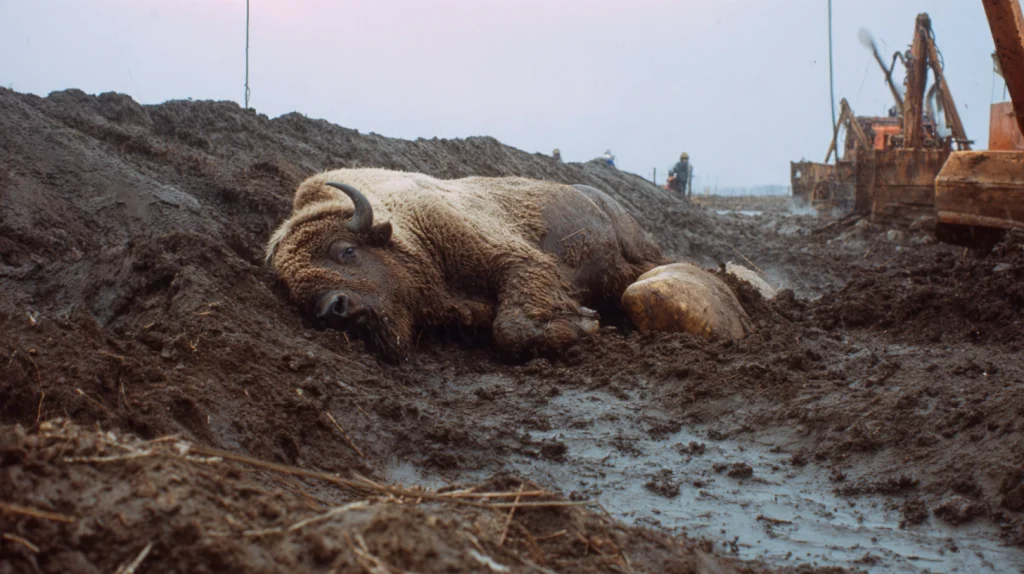
In July 1979, gold miners working the permafrost near Fairbanks, Alaska aimed a hydraulic hose at a wall of frozen muck and uncovered a pair of bison feet instead of gold. What they had found was one of the most complete Ice Age mammals ever recovered in North America, a carcass so well preserved that researchers would eventually taste it.
A Hydraulic Hose Finds a Bison, Not Gold
The miners, Walter and Ruth Roman and their sons, were placer mining, using pressurized water to strip away frozen soil in search of gold buried in the gravel beneath it. Miners in this part of Alaska routinely ran into mummified remains of Ice Age animals this way and generally pushed them aside to keep working, since a frozen carcass was an obstacle rather than a prize on a gold claim. This time, the family recognized that what they had exposed was worth a second look, and they contacted the University of Alaska. Paleontologist Dale Guthrie came out to examine the find and quickly determined it was the frozen carcass of a steppe bison, Bison priscus, a heavier, more thickly built relative of the modern American bison that had been locked in the ground since the Ice Age. Recognizing how quickly a partially exposed carcass could begin to decompose once thawed, Guthrie moved to excavate it immediately rather than risk losing the specimen to the same forces that had preserved it for so long.
Naming Blue Babe
The animal earned its nickname from its own hide. During its tens of thousands of years underground, a blue mineral called vivianite had formed across the carcass’s skin, a reaction between phosphate released by the decaying body and iron in the surrounding soil. The blue tint reminded the people working on it of Babe, the giant blue ox from the American folk tales of Paul Bunyan, and the name stuck. Even the carcass’s sex was clear from the remains themselves, and the annual growth pattern visible in what was left of the horns gave researchers a rough sense of the animal’s age at the time it died.
A Body Frozen in Time
What made the find scientifically important was not just its age but its condition. Skin, muscle, and traces of internal tissue had survived intact, an exceptionally rare degree of preservation for an animal this old. Permafrost, ground that stays frozen year-round, can hold soft tissue this way when an animal dies and is buried quickly enough that ordinary decay never gets a real foothold before the cold locks everything in place. Bacteria and scavengers both need time and warmth to do their work, and a carcass that freezes solid within days, rather than lying exposed through a thaw, effectively gets removed from that process altogether, sometimes for tens of thousands of years at a stretch. For a paleontologist, a specimen like this offers something a skeleton alone cannot: a direct physical window into how an Ice Age animal actually looked, and in this case, into exactly how it died.
Killed by an American Lion
The carcass itself told a violent story. Claw marks and puncture wounds scarred the hide, concentrated toward the animal’s hindquarters and neck, and researchers recovered something even more direct: a broken fragment of tooth embedded in the bison’s neck, consistent with an attack by an American lion, a powerful predator considerably larger than any lion alive today that once hunted across Ice Age Alaska alongside other large carnivores like the short-faced bear. The evidence suggests the bison was attacked, and either died from its wounds or was already dying, before the carcass froze quickly enough to prevent the kind of scavenging and decomposition that would normally have destroyed it within days. Guthrie’s later analysis pointed to a death in the cold months of the year, when a carcass had the best chance of freezing before other predators or the elements could break it down.

A Date That Kept Changing
Early tests placed the bison’s death at roughly 36,000 years ago, a figure that circulated widely once the find became public. Later radiocarbon analysis, run at a specialized isotope lab at the University of Georgia, pushed that estimate considerably further back, to somewhere between 50,000 and 55,000 years old, close to the outer limit of what radiocarbon dating can reliably measure at all. The revision is a useful reminder that even a well-studied specimen’s age can shift substantially as dating techniques improve, and that an early published figure is not always the final word.
Years of Preservation, Then a Dinner
Getting Blue Babe ready for permanent display took years of careful work. Guthrie oversaw the recovery and stabilization of the remains, keeping the carcass frozen in stages as it was excavated to prevent the very decay that had been held off for tens of thousands of years, and the detailed taxidermy and mounting was ultimately completed in 1984 by the Finnish taxidermist Eirik Granqvist, of the Zoological Museum in Helsinki. Guthrie later wrote a full account of the discovery and its significance in a 1990 book, Frozen Fauna of the Mammoth Steppe, which used Blue Babe as a case study for understanding the wider ecosystem of grazing animals and predators that once occupied the cold, dry grassland environment scientists call the mammoth steppe. To mark the end of that long restoration process, Guthrie organized a dinner, and in an unusual tradition among paleontologists working with frozen specimens, a small piece of meat cut from the bison’s neck was cooked into a stew with onions, garlic, potatoes, and carrots, and served to roughly a dozen guests, among them the Finnish paleontologist Björn Kurtén. Guthrie later described the meat as tough, with an aroma somewhere between beef and mushrooms, and by most accounts of the evening, everyone who tried a bowl came away unharmed.
What Blue Babe Still Teaches
Blue Babe now stands on permanent display at the University of Alaska Museum of the North in Fairbanks, mounted to show the animal’s Ice Age proportions, including the heavy shoulder hump and thick, short horns typical of the steppe bison. It remains one of the only mounted Pleistocene bison specimens recovered intact from permafrost anywhere in the world, and one of the clearest physical records available of the animals, and predators, that once shared the Alaskan landscape with the earliest humans to reach the region. Long after the miners who found it moved on to other claims, Blue Babe has continued to draw scientists and visitors alike, a single frozen death from tens of thousands of years ago that still has more to say about the mammoth steppe than almost any bone yard could on its own.

