Lot’s Wife: Josephus, Mount Sodom and the Salt Pillar
Archaeology & Sites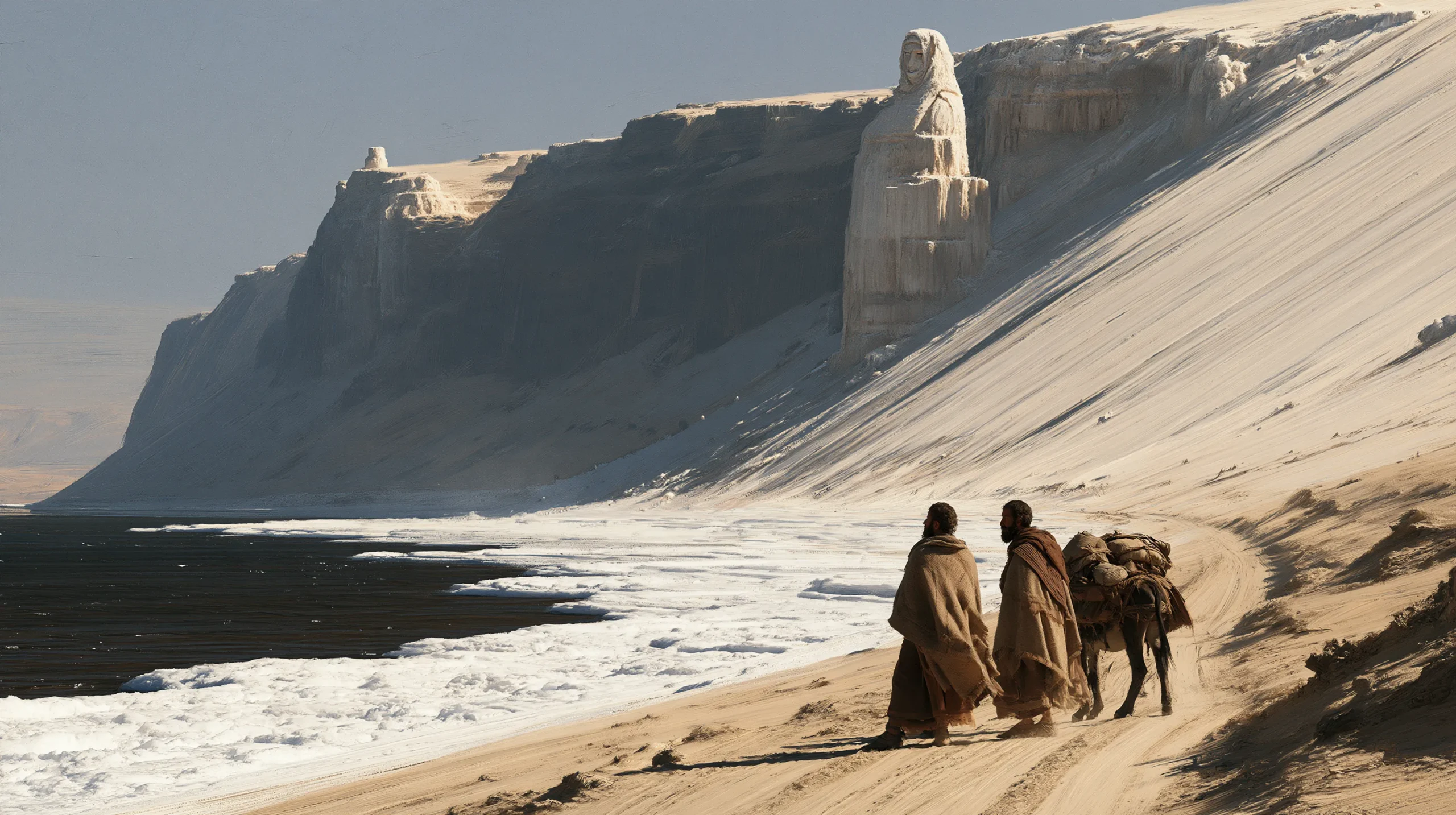
AI reconstruction, not a photograph.
Genesis gives Lot’s wife a single sentence about her fate, yet Josephus wrote that he had seen her pillar of salt, and a salt column at Mount Sodom on the Dead Sea carries her name today. The story has a text, an eyewitness claim and a landform, and they do not all say the same thing. This article sets out what Genesis says, what Josephus and the church fathers claim, what the geology of Mount Sodom shows, why Jewish tradition says she looked back, and what the evidence can support.
What Genesis Says
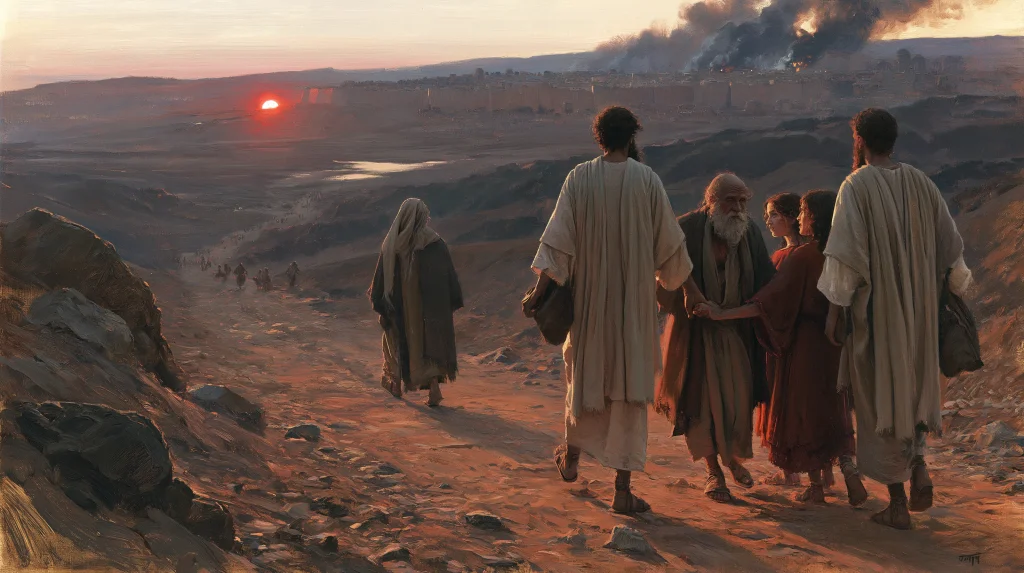
Two angels hurry Lot out of Sodom at dawn. They take hold of “the hand of his wife” and the hands of his two daughters (19:16), and one of them warns: “look not behind thee” (19:17). The fate comes in one sentence: “But his wife looked back from behind him, and she became a pillar of salt.” (19:26).
That is all the chapter offers. She is never named in Genesis; a Wikipedia article notes that “She is not named in the Bible” and that some Jewish traditions call her Ado or Edith, and the Jewish Women’s Archive encyclopedia says the Rabbis knew her as Idit. The verse gives no reason for her look and no place for the pillar. Luke 17:32 reduces the story to three words: “Remember Lot’s wife.” Wisdom 10:7 calls the pillar “a pillar of salt standing as a monument to an unbelieving soul”.
Josephus Says He Saw It
In his Antiquities, Josephus retells the verse with a reason added: Lot’s wife was “being too nicely inquisitive what would become of it”, “although God had forbidden her so to do”. He then adds: “for I have seen it, and it remains at this day.” A footnote in the Whiston translation says Clement of Rome, “contemporary with Josephus”, attests that the pillar was standing, and that “it was so in the next century, is attested by Irenaeus”. Wikipedia repeats this, saying Josephus “claimed to have seen the pillar of salt which was Lot’s wife”.
These are reports that a pillar was pointed out, not descriptions of which rock it was. The sources reached do not say whether the pillar Josephus saw is the one shown at Mount Sodom today.
Mount Sodom and Its Pillar
Mount Sodom is “a hill along the southwestern part of the Dead Sea” in Israel. A Hebrew University communique calls it an 11 km mountain that sits 170 metres below sea level. A Biblical Archaeology Review caption describes it as “a constantly rising and ever-expanding mountain of salt and rock”, the kind of rising salt body called a diapir. One pillar there is named Lot’s Wife, and the same magazine calls it “strikingly human shaped”.
Salt pillars of this size do not last easily in rain. A teaching page by Frumkin, hosted by Carleton College, says “Halite is the most soluble common mineral on Earth’s surface”, and a Biblical Archaeology Review piece says “Rainwater dissolves the salt over time, creating deep furrows and caves.” The Carleton page adds that Mount Sodom revealed “only one large salt pillar”, which is “preserved due to its caprock cover”.
The 2009 Study
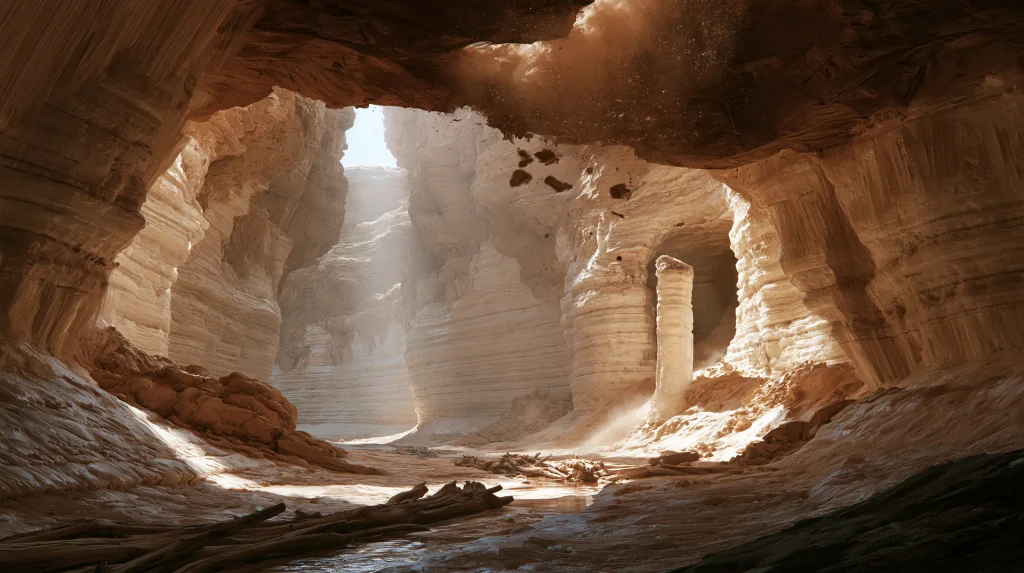
In 2009 the geologist Amos Frumkin analysed and dated a salt pillar twenty metres high on Mount Sodom. His abstract says “Contrary to earlier assumptions”, the pillar was not “formed by direct rainfall”; the notches in the salt and the shape of the neighbouring chasm point to “a karstic cave that collapsed”. The pillar was once part of the cave’s eastern wall, and the sudden collapse was “probably triggered by a catastrophic earthquake”.
A caption in Biblical Archaeology Review describes the process. A stream cut an outlet through the cave wall, and over time more water flowed through, “leaving only a narrow column of salt to support the cave’s caprock ceiling”. The roof then fell, the caption says, “under stress of an earthquake that may have reached 8.0 on the Richter scale”. What stood afterwards was an unroofed void and a withered strip of the old wall, high on the slope.
Because the mountain is rising, at 9.3 mm a year with a margin of 3.5, the abstract adds that when the pillar formed “it was much closer to the base of Mount Sedom”, the abstract’s spelling of the name. Carbon-14 dates on wood that washed into the cave, the same magazine says, show “the cave collapsed about 2000 B.C.E.”, and Frumkin thinks the quake “may have given rise to the Biblical traditions of Sodom’s destruction”. The abstract itself gives no date, so the 2000 BCE figure rests on the caption.
Under the mountain runs Malham Cave. A 2019 survey reported that it “stretches more than 10 kilometers”, the longest known salt cave, and its main outlet lies not far from the pillar.
Why Did She Look Back?
Genesis gives no reason, and Jewish tradition supplies several. One holds that she looked behind her to see whether her married daughters were following. The version on a Sefaria source sheet reads: “she looked back behind her to see if they were coming after her or not.” The sheet attributes it to Pirkei de-Rabbi Eliezer, and Wikipedia gives the same explanation.
Another reading ties salt to the earlier night. The Jewish Women’s Archive account, citing Genesis Rabbah 51:5, says “Because she sinned through salt” she was punished by becoming salt. In a story it takes from Midrash Aggadah, she went to her neighbours for salt for the guests, and when they asked “Why do you need salt, why didn’t you prepare enough beforehand?” the town learned who was in Lot’s house. A third view is that, by looking back at the evil cities, “she betrayed her secret longing for that way of life”.
Some scholars think the story began elsewhere. Wikipedia says it is “based in part on a folk legend explaining a geographic feature”, and Frumkin’s earthquake suggestion points in the same direction.
What Can Be Said
Genesis says one thing about her: she looked back and became a pillar of salt. It never names her, never says where the pillar stood and never says why she looked. The link to Mount Sodom is tradition, not text.
Josephus wrote that the pillar existed in his time, and later writers say the same. A pillar of Mount Sodom salt stands today and carries her name, but a pillar on a rising mountain, wearing under rain and left by a collapse, is a changing object. Wikipedia says a second pillar is shown to tourists across the sea in Jordan, so the name is not tied to one rock, and the sources do not show that today’s pillar is the one Josephus described. Frumkin’s work explains how such a pillar could form, and he suggests that an earthquake may lie behind the Sodom story. It does not show that anyone stood on that ridge and saw a woman.
The story keeps its force because it fits a landscape: a salt-crusted sea, a mountain of salt, and a column that looks, to many visitors, like a person glancing over her shoulder.

