Genesis 15: The Firepot That Passed Between the Pieces
Biblical History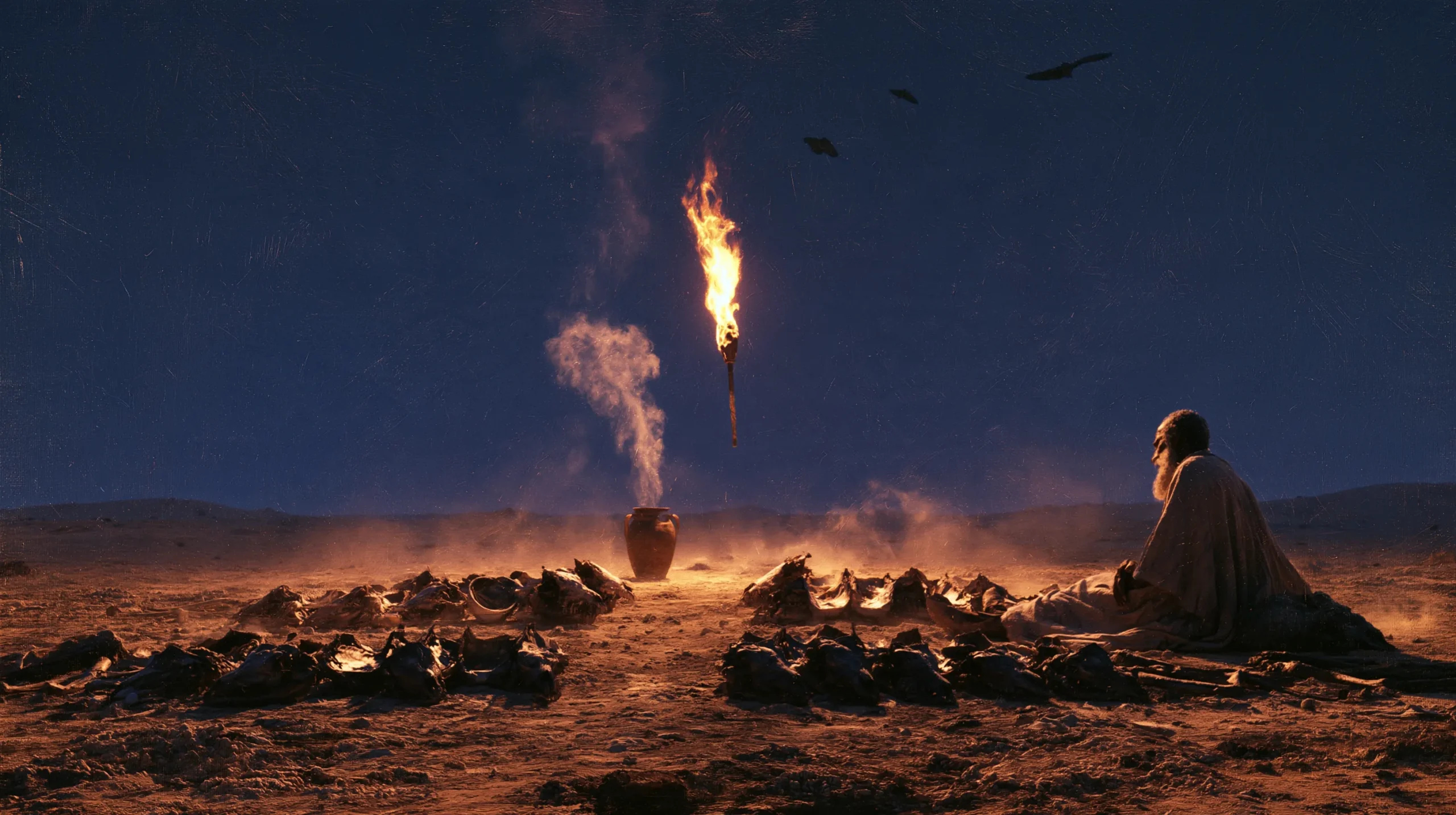
AI reconstruction, not a photograph.
Genesis 15 describes a covenant sealed in a way that looks strange to modern readers: animals cut in two, a deep sleep, a “horror of great darkness” and a smoking firepot with a torch passing between the pieces. The scene echoes treaty customs known from the ancient Near East, and the Hebrew idiom for making a covenant is literally to cut one. What sets Genesis 15 apart from the parallels is who passes between the pieces. This article sets out what the chapter says, the Hebrew idiom, a letter from Mari, the Sefire treaty, the calf in Jeremiah 34, and the question of who walks through.
What Genesis 15 Describes
Abram has been promised descendants and a land, and he asks how he will know. The answer is a list of animals: a heifer, a she goat and a ram, each three years old, with a turtledove and a young pigeon (15:9). Abram “divided them in the midst, and laid each piece one against another”, but “the birds divided he not” (15:10). When birds come down on the carcases, “Abram drove them away” (15:11).
Then “a deep sleep fell upon Abram” and “an horror of great darkness fell upon him” (15:12). God speaks of descendants who will be strangers in a land not theirs for four hundred years (15:13). At nightfall comes the sign: “behold a smoking furnace, and a burning lamp that passed between those pieces” (15:17). Modern versions often say firepot and torch; the NIV has “a smoking firepot with a blazing torch appeared and passed between the pieces”. One lexicon lists the Hebrew word behind the first as furnace, oven, fire-pot or portable stove. The chapter closes with the statement that “the LORD made a covenant with Abram” (15:18).
A Covenant Is Cut
In the Old Testament, the English phrase “make a covenant” is most often a translation of the Hebrew karat berit, which literally means “cut a covenant”. A Brigham Young University article says the verb means “cut off, cut down” and that it occurs ninety times in the Hebrew Bible for making covenants. A Wikipedia article on the covenant of the pieces also notes that in Hebrew the verb for sealing a covenant is literally to cut.
The BYU article points out the limit of the biblical record: these passages “do not explain why the events occurred as they did or what they meant”. Any account of what the ritual meant therefore comes from comparison with other texts.
A Letter from Mari
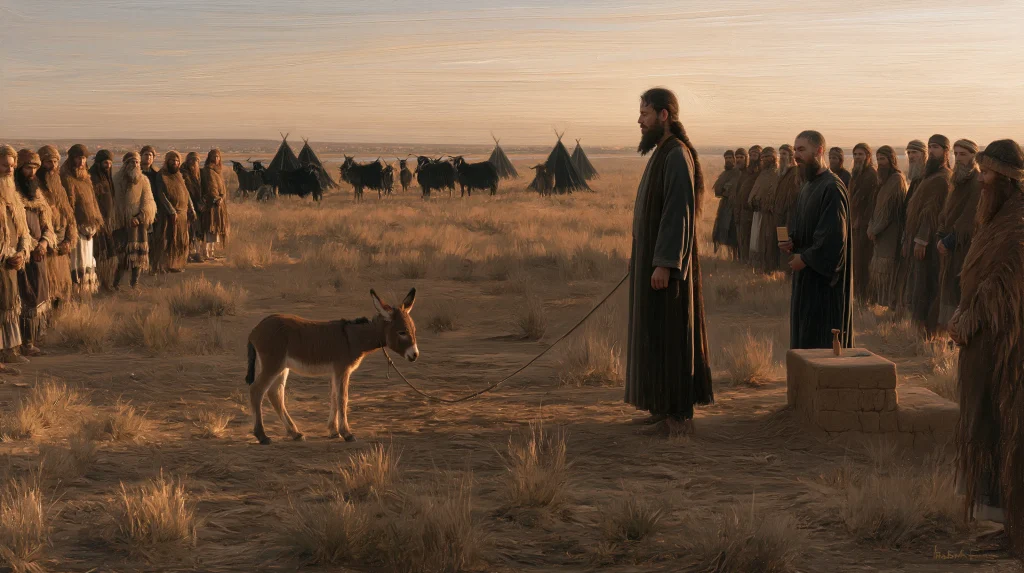
One of the oldest comparisons the BYU article offers comes from the eighteenth century BC, from the city of Mari in modern Syria. A reviewer of Wolfgang Heimpel’s translation of the Mari letters dates most of them to the middle of that century. In one letter an official named Ibal-Il reports to King Zimri-Lim: “I went to Aslakka to ‘kill an ass’ between the Hanu and Idamaras”.
He goes on: “I caused the foal of an ass to be slaughtered” and “I established peace between the Hanu and Idamaras”. The BYU article says the expression apparently means simply to make a treaty, solemnised by killing a young donkey. The passage quoted describes no walk between halves of the animal. What it shares with Genesis 15 is the link between killing an animal and making a binding agreement.
The Sefire Calf
A treaty from the Sefire inscription, which the BYU article dates to the eighth century BC, spells out the meaning. It is between King Barga’yah and Matti’el and includes the line “this calf is cut up, thus Matti’el and his nobles shall be cut up”. The animal’s fate is declared to be the fate of the human parties if they break the agreement. The same article lists further examples of animal sacrifice in Hittite, Alalakh and Assyrian treaties.
Jeremiah 34 and the Calf
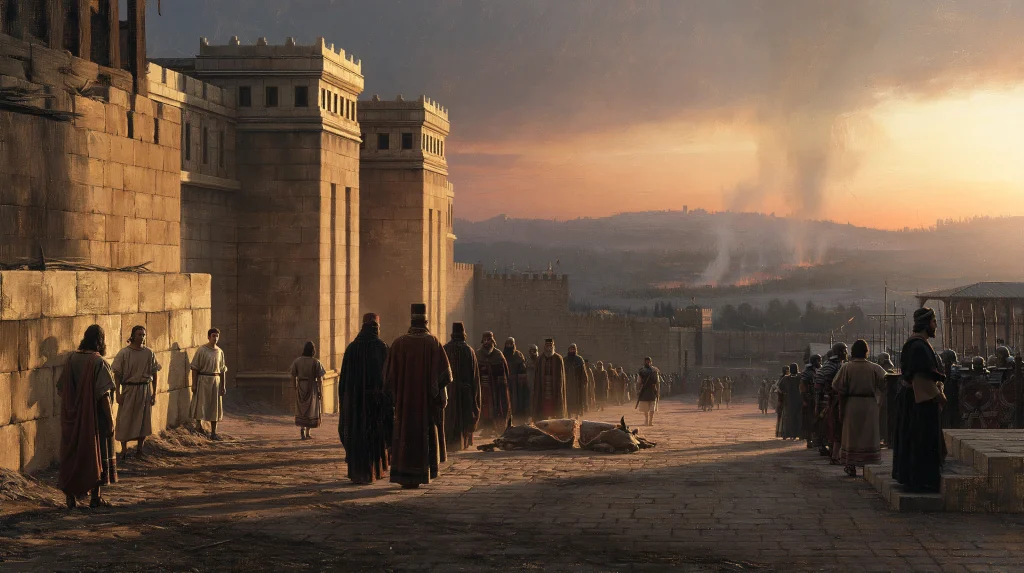
Jeremiah 34 sets a calf ceremony inside a datable crisis. The Babylonian siege of Jerusalem is dated about 589 to 587 BC. King Zedekiah made a covenant with all the people in Jerusalem “to proclaim liberty unto them” (34:8), and Hebrew slaves were set free. Then “afterward they turned” and took them back (34:11). One chronology places the release in autumn 588 BC and the reversal when the Babylonians lifted the siege as an Egyptian army approached; the chapter itself says the Babylonian army had “gone up” from the city.
The prophet’s judgment names the ritual. The men who broke the covenant are those “when they cut the calf in twain, and passed between the parts thereof” (34:18). They include “all the people of the land, which passed between the parts of the calf” (34:19), and their bodies “shall be for meat unto the fowls of the heaven” (34:20). Chapter 34 quotes no spoken oath, so any curse is read from the punishment. The birds are a point of contact: in Genesis 15:11 fowls come down on the carcases, and in Jeremiah they are promised the bodies of the covenant breakers.
Who Passes Through
The usual explanation is a self-curse: whoever walks between the pieces invokes the animal’s fate if the promise is broken. An article on a Jewish educational site says “The less powerful party was to walk between the cut pieces”, indicating, in light of Jeremiah, that one’s fate would be that of the pieces if one broke the terms.
In Genesis 15 the pattern changes. Abram is asleep, and only the furnace and lamp pass. Many readers take fire and smoke as signs of God, as at least one study-Bible note does, and on that reading the party who takes the curse is God, so the burden of keeping the promise of land and descendants falls on the one who passed through. The BYU article reads it that way, says the text gives no sign that Abram passed through, and answers the objection that a divine self-curse would be out of place because the lesser party usually swore. An older commentator, Robert Payne Smith, quoted on Wikipedia, suggested instead that Abram had probably passed between the pieces himself after arranging them, before the sleep. The chapter does not say.
What Can Be Said
Genesis 15 describes an animal division at night with a smoking furnace and a burning lamp passing between the pieces, and its Hebrew idiom for covenant means to cut. A letter from Mari tells of killing an ass foal to make peace, Sefire spells out a calf curse, and Jeremiah 34 shows leaders who passed between the parts of a calf and broke their word.
That the passing in Genesis 15 is a self-curse, and that the fire stands for God, are readings and not statements of the text. The BYU article places the covenant at about 1900 BC, but Genesis gives no calendar date, so this article leaves it open. What does differ from the parallels is plain: the one asleep is the one who asked how he would know, and the oath rests with the party who walked through.

