Why Maya Kings Timed Their Most Brutal Wars to Venus
Maya & Mesoamerica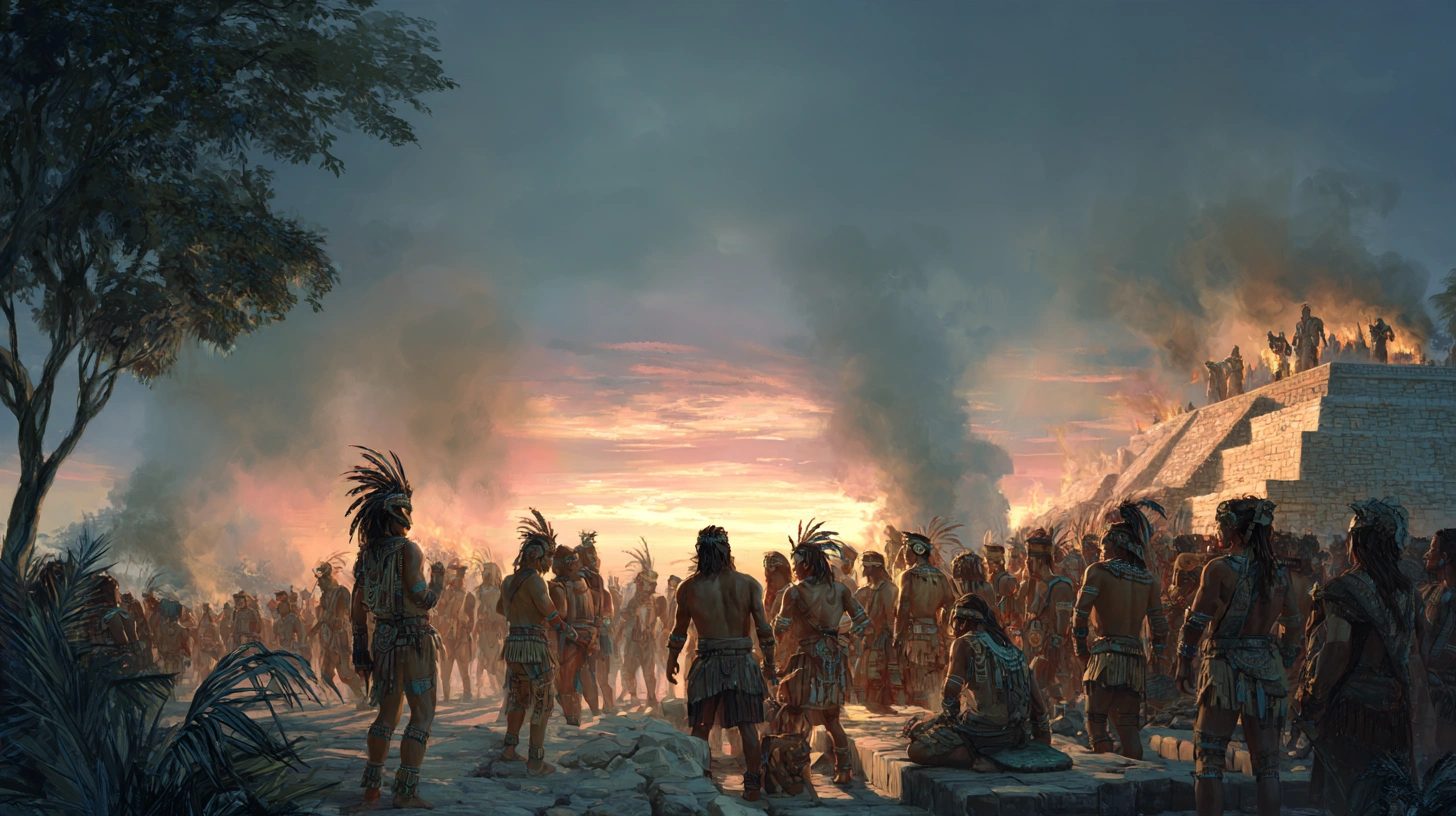
AI reconstruction, not a photograph.
A category of Maya warfare recorded in stone carries a nickname borrowed from modern pop culture: the Star War. Epigraphers gave it that name because the glyph marking these events shows a star positioned over a place sign, and because the dates attached to them line up, in case after case, with the visible movements of the planet Venus. These were not the routine skirmishes that fill much of Classic Maya warfare, recorded almost in passing on stairways and lintels. The texts single them out as unusually total campaigns, and they present them as timed to moments in the sky that Maya priests had been tracking for generations.
A Name Epigraphers Gave a Glyph
The glyph itself, sometimes called “star-over-earth” or “shell-over-star,” depicts a star symbol raining down onto the emblem glyph of a city, the sign that identified a particular royal dynasty and its seat of power. Where ordinary war-related glyphs in Maya texts might record a capture, a battle, or the burning of a place, this specific combination appears attached to campaigns the texts treat as unusually decisive: not a raid or a border skirmish, but a total defeat, often ending in the capture, and likely the execution, of a rival king. The connection to Venus was first proposed in the early 1980s by the epigrapher Floyd Lounsbury, and later epigraphers, including Simon Martin, went on to document specific cases where a named city recorded a star war against a named rival.
Why Venus, Specifically
Of everything visible in the Maya night sky, Venus received a level of attention that set it apart from the stars and other planets. The Maya called it Chak Ek’, “Great Star,” and tracked its two distinct phases with care: its stretch as the Morning Star, appearing just before sunrise, and its later stretch as the Evening Star, appearing just after sunset, separated by periods when the planet disappeared from view entirely as it passed near the sun. Across Mesoamerican mythology more broadly, Venus was tied to both creation and destruction, capable of representing renewal in one context and violent danger in another. Its reappearance after a period of invisibility, especially its return as Morning Star, was treated as a moment charged with meaning, a planet that had gone into the underworld and come back.
A Calendar Built for This Kind of Timing
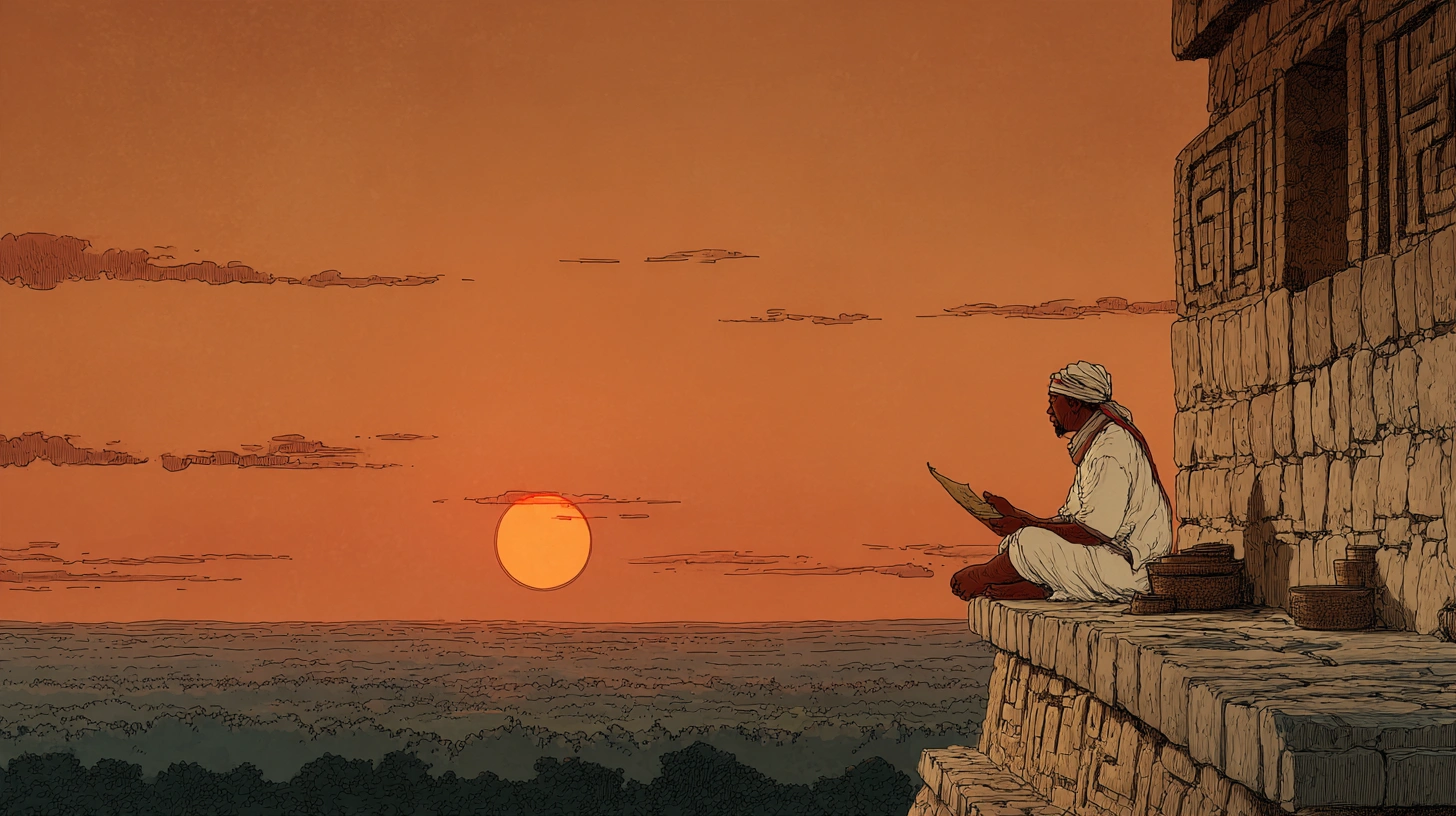
None of this tracking was casual. The clearest surviving evidence is a table in the Dresden Codex, one of the few Maya bark-paper books to survive the colonial period, which lays out Venus’s synodic cycle, the roughly 584 days it takes to return to the same position relative to the sun, broken into its component phases as morning star, disappearance, evening star, and a second disappearance. Maya astronomer-priests maintained this table alongside the same calendar system used to schedule coronations, dedications, and other royal ceremonies. Warfare, in other words, was not tracked on some separate, secular timeline. It ran through the same religious calendar as everything else a Maya king did in public.
The Attack on Tikal, Written in the Sky
The clearest documented case sits at the start of the Maya Late Classic period. In 562 CE, the city of Caracol, in what is now Belize, recorded a star war against Tikal, one of the most powerful cities in the southern lowlands at the time. The event appears on Caracol’s Altar 21, carved with the star-over-earth glyph, and it coincides with backing from the Kaan dynasty, the royal house then based at Dzibanché that would later rule from the city of Calakmul. Tikal’s king, known by the title Wak Chan K’awiil, was defeated and likely put to death. In the years that followed, Tikal stopped erecting new monuments almost entirely, a gap in the record modern archaeologists call the Tikal hiatus, which lasted roughly 130 years before the city recovered its former standing and eventually reversed the balance of power against the Kaan dynasty in the following century.
A Pattern That Peaks in the Eighth Century
The 562 CE attack on Tikal was not an isolated case. Epigraphers have identified a string of similarly labeled events through the following two centuries, involving cities across the southern lowlands: a Calakmul-backed defeat of Naranjo around 631 CE, a Caracol victory over Naranjo in 636 CE, a Dos Pilas defeat of Tikal around 670 CE, and further exchanges between Tikal, Dos Pilas, La Corona, and Naranjo running into the early 700s. These references cluster in the same period, the 8th century, when warfare across the southern lowlands generally intensifies and when captive-taking imagery, kings standing over bound, kneeling prisoners, becomes far more common on carved monuments and lintels than it had been in earlier centuries. Rulers of this era were not simply fighting more. They were commissioning more art that said so, and choosing, again and again, to link their bloodiest victories to the same glyph that pointed toward the sky.
Astronomy as Political Argument
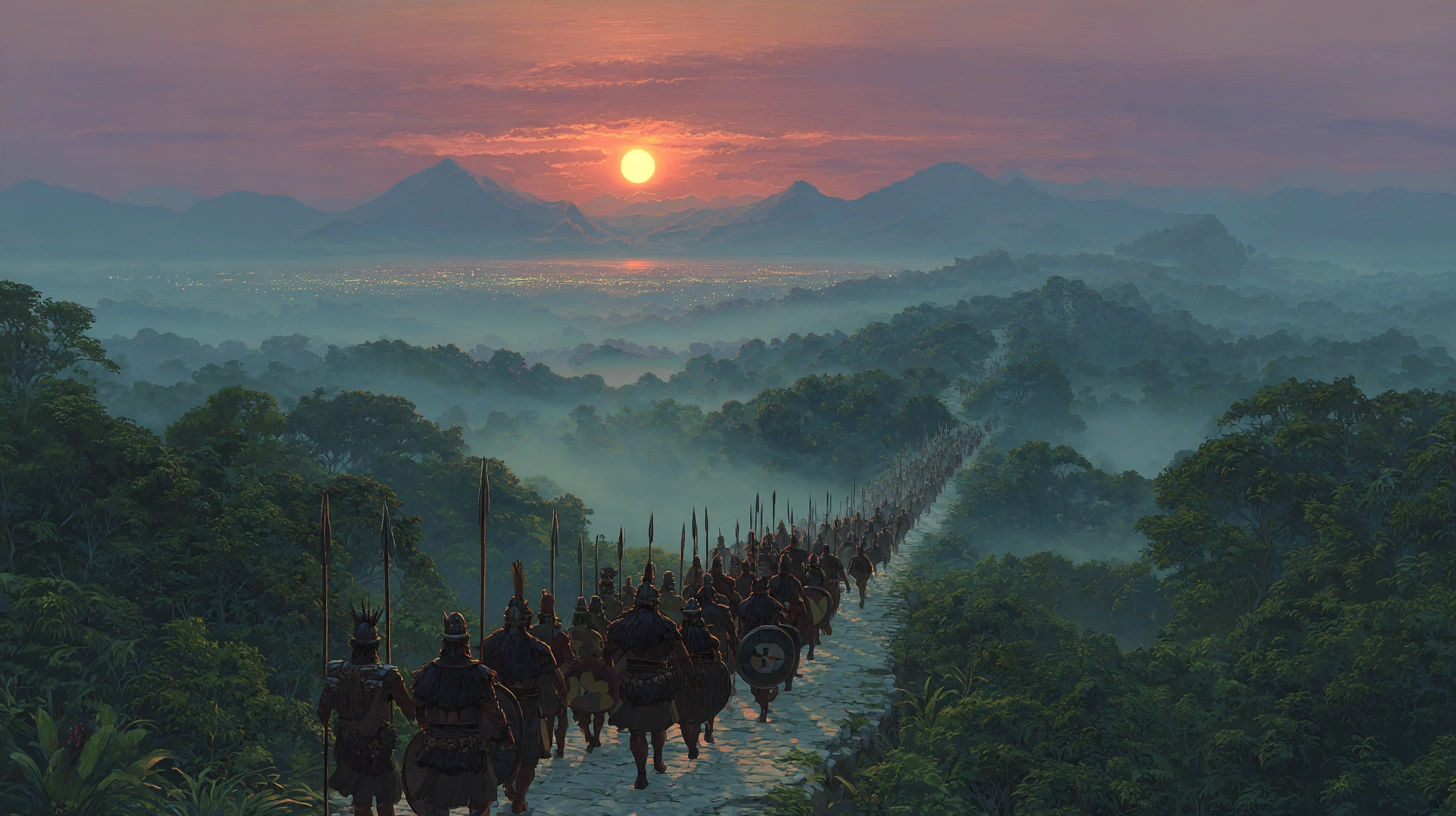
Launching a campaign on a date tied to Venus’s reappearance let a ruler make a claim that went beyond ordinary military boasting. It framed the attack as more than one city’s decision to strike another. A king moving against a rival on a Venus-linked date was presenting his own political and territorial ambitions as something the heavens themselves had scheduled, borrowing the same cosmic authority that justified his rituals, his bloodletting ceremonies, and his claim to rule in the first place. Astronomy, tracked with genuine precision by Maya priests for calendrical and agricultural reasons as well, was put to work here as something closer to political argument: proof that a war had been sanctioned before the first spear was thrown.
A Debate That Continues
Not every specialist accepts the Venus connection with equal confidence in every case. Later reassessments of the star war glyph have pointed out that the “star” sign in Maya writing sometimes stands for a celestial body in a general sense rather than Venus specifically, and that the dates attached to some star war events do not align as neatly with Venus’s actual position as the earliest proposals suggested. That kind of revision is normal in a field built on decoding a script only fully cracked within living memory, and it does not erase the pattern so much as sharpen it. What remains widely accepted is the broader point this article describes: that Maya elites, even in their most destructive campaigns, kept reaching for the same ritual and calendrical language that governed the rest of royal life. Whether or not every recorded star war lines up precisely with Venus overhead, the Maya scribes who carved these events clearly wanted their audience to believe that it did.

