How Cenotes Helped Chichen Itza Outlast the Maya Collapse
Maya & Mesoamerica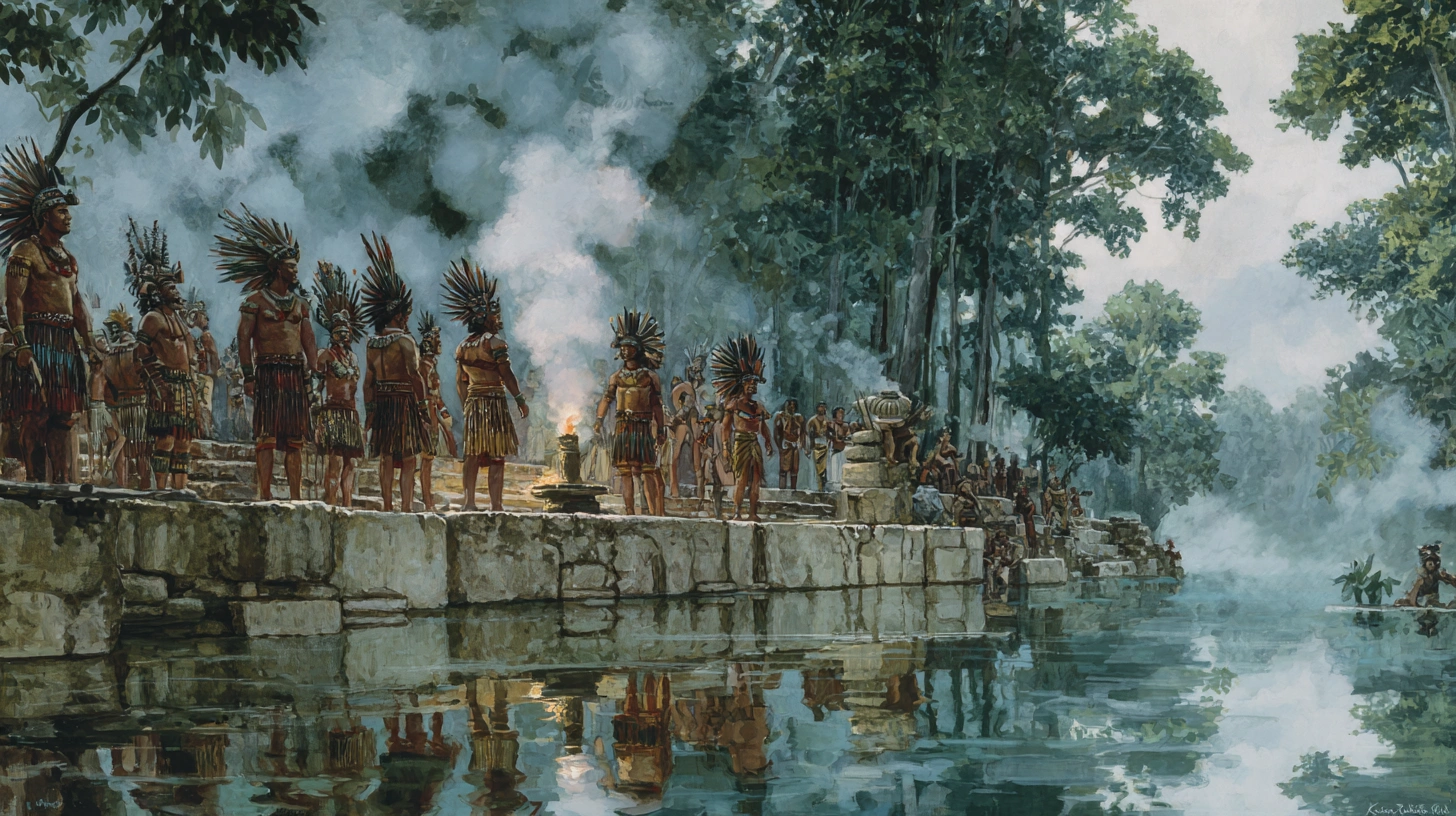
AI reconstruction, not a photograph.
When southern Maya cities emptied out during the Terminal Classic, roughly the ninth and early tenth centuries, cities in the northern Yucatan, Chichen Itza among them, kept growing for generations longer. One reason sits directly beneath their plazas: a kind of water source the south largely did not have.
Two Ways to Store Water in a Land Without Rivers
The Yucatan Peninsula has almost no permanent rivers and only a handful of marshy lakes. Rain falls hard for several months of the year and then stops almost entirely for the rest of it, and because the bedrock across the peninsula is porous limestone, that rainwater drains straight through the surface rather than collecting in streams or ponds. Every Maya city in this landscape faced the same basic problem, storing enough water to survive a long dry season, and every region answered it differently depending on what the local geology allowed.
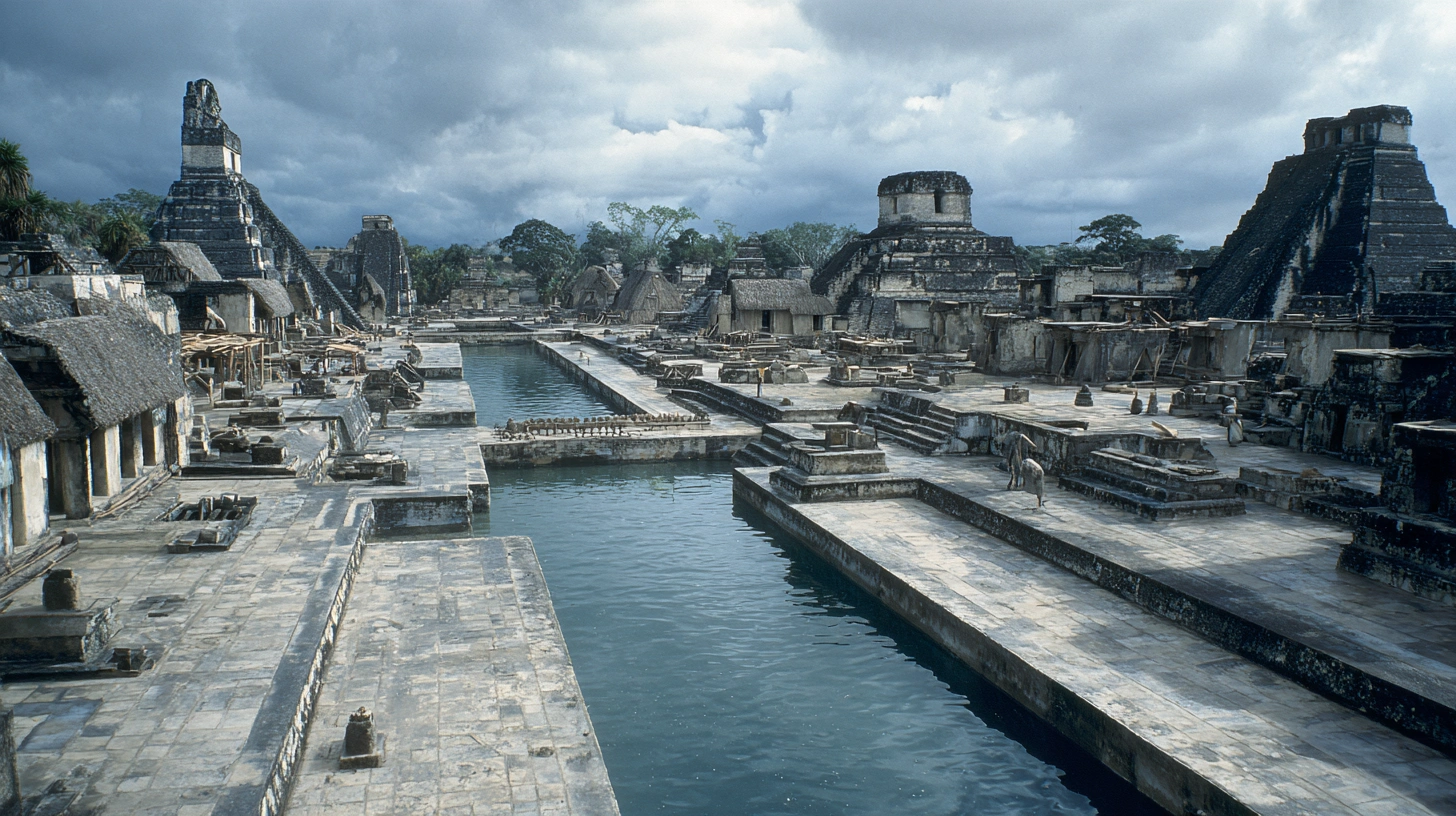
In the southern lowlands, cities like Tikal built their own solution from scratch. Engineers there paved plazas, courtyards, and even causeway surfaces, then connected them with plastered channels that funneled rainwater downhill into a series of large reservoirs, artificial basins lined with clay or plaster to keep the water from simply soaking back into the ground. Some of these systems were genuinely large-scale engineering projects, capable of holding enough water to carry a dense urban population through months without rain. It was a sophisticated solution, and it worked for centuries. But it depended entirely on that year’s rainfall being enough to refill the reservoirs, and on the reservoirs themselves staying clear of the silt that gradually built up in still water and reduced how much they could hold.
What a Cenote Actually Is
Farther north, the same limestone that starved the south of surface water behaves differently. Across large parts of the Yucatan, the roof of an underground cave has collapsed at some point in the past, exposing the water table below as an open, often startlingly deep, pool. These sinkholes are cenotes, from a Yucatec Mayan word for well. Unlike a plastered reservoir, a cenote is not filled by that year’s rainfall alone. It draws on the regional groundwater table itself, a body of water fed by rain that fell over a much wider area and a much longer stretch of time, and it does not silt up, evaporate at the surface, or crack the way an engineered surface tank eventually can.
That distinction mattered enormously during a multi-year drought. A reservoir-dependent city could do everything right, keep its channels clear and its plaster maintained, and still watch its water supply fail if the rains simply did not come for several seasons running. A city with reliable access to a major cenote had, in effect, a backup system built directly into the ground it stood on, one that a few bad harvests could not empty.
Two Cenotes, Two Jobs at Chichen Itza
Chichen Itza sat near two large cenotes, and they did not serve the same purpose. Cenote Xtoloc, the second largest at the site, supplied ordinary drinking water to the city’s population, with a stairway cut into its wall so people could reach the water directly. A short distance away, along a raised causeway, lay a second, larger sinkhole that the Maya and later the Spanish called the Sacred Cenote, or the Well of Sacrifice, a site Maya tradition treated as too important, and too dangerous, for daily household use.
That split between a practical well and a sacred one has long been treated as a clean division, though recent reexamination of the area around Xtoloc, including a temple built directly beside it, suggests the line was probably blurrier than earlier accounts assumed. Even the well Chichen Itza’s residents drank from every day appears to have carried some ritual weight of its own.
What Divers Found in the Sacred Well
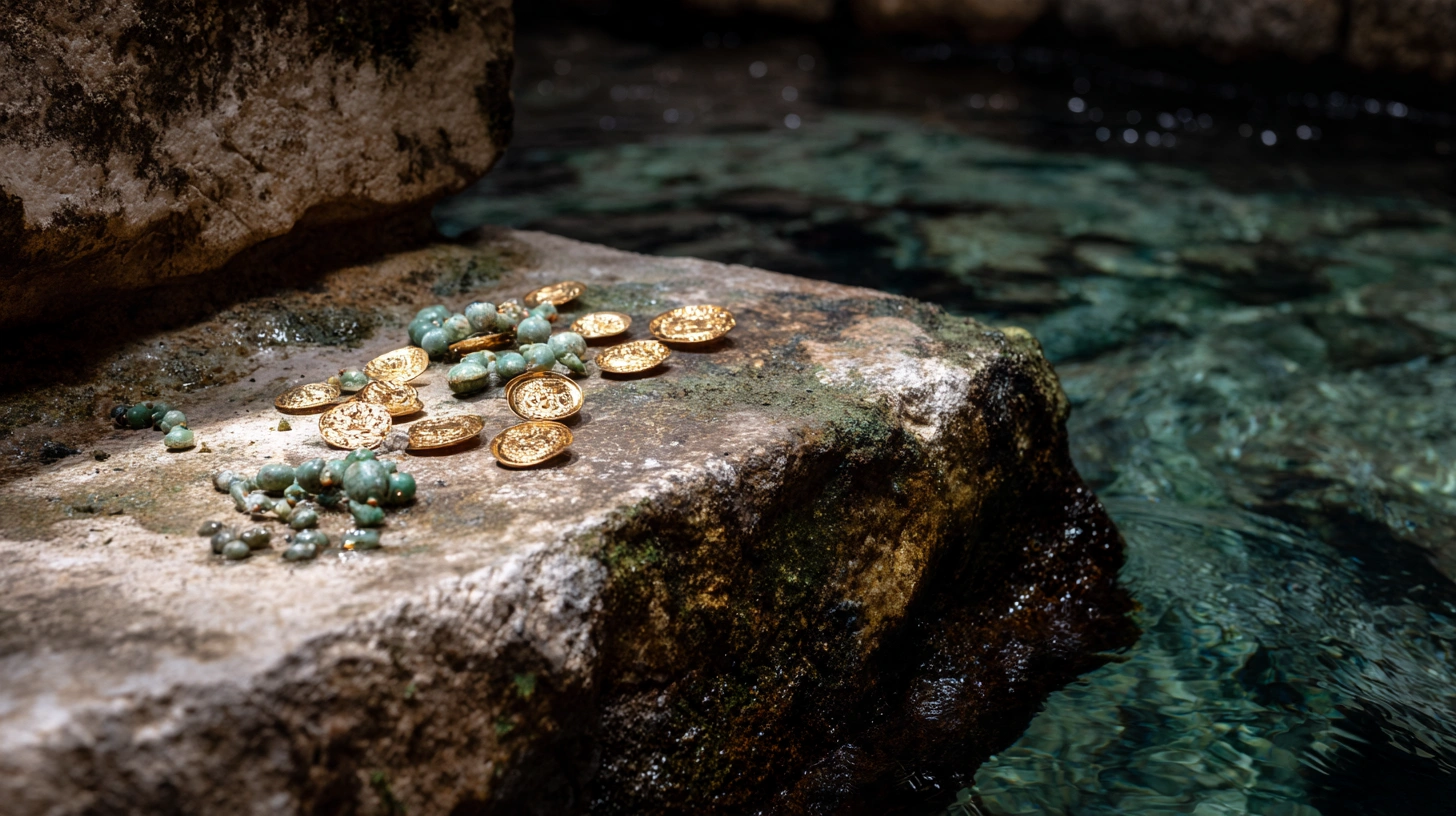
The Sacred Cenote earned its reputation for a reason. Maya tradition held that cenotes were points where water, and by extension the rain god Chaac, emerged from the underworld, which made throwing something into one a way of returning it directly to the gods. The Spanish friar Diego de Landa, writing in the 1560s after visiting the site, recorded that the Maya threw people and precious objects into the well during times of drought, in the belief that the offerings would not truly die but would go on living beneath the water. Beginning in 1904, the American excavator Edward Herbert Thompson dredged the Sacred Cenote and recovered jade ornaments, gold and copper disks, ceramic vessels, and human remains from its depths, offerings consistent with a site used for sacrifice over a long span of time. Later study of those remains complicated the old assumption, popularized by colonial-era writers and repeated for generations afterward, that the victims were mostly young women. The skeletal evidence instead points to a mix of children and adults, male and female, thrown in across many generations, likely in response to droughts much like the ones this article is otherwise concerned with.
Groundwater’s Limits, Too
None of this made the north immune to drought forever. Paleoclimate records taken from cave formations and lake sediments in the region show that a serious dry period did eventually reach the northern Yucatan as well, intensifying through the tenth and eleventh centuries. By that point, Chichen Itza and the nearby city of Uxmal had themselves entered decline, well after the wave of abandonments that emptied out the southern lowlands a century or so earlier. Groundwater access bought the north time. It did not buy it permanent shelter from a landscape that could still turn dry for years at a stretch.
One Advantage Among Several
Cenotes alone did not decide which Maya cities survived the Terminal Classic and which did not. Trade routes shifted, political alliances broke down, and populations that had grown for centuries in the south were straining local farmland even before the driest years arrived. Historians and archaeologists still debate how much weight to put on any single cause, and drought itself is only one thread in a larger, still-argued story about why the southern lowlands emptied out when they did. But among the advantages that let northern centers like Chichen Itza keep functioning while southern capitals emptied out, a dependable supply of groundwater, sitting open and accessible in the landscape itself, was one that no amount of engineering in the south could fully replace. The same feature the Maya treated as a gateway to the underworld also happened to be the one thing an engineered reservoir could never be: a water source that did not depend on that year’s rain.

