Mahaway and the Flood: What the Book of Giants Preserves
Texts & Traditions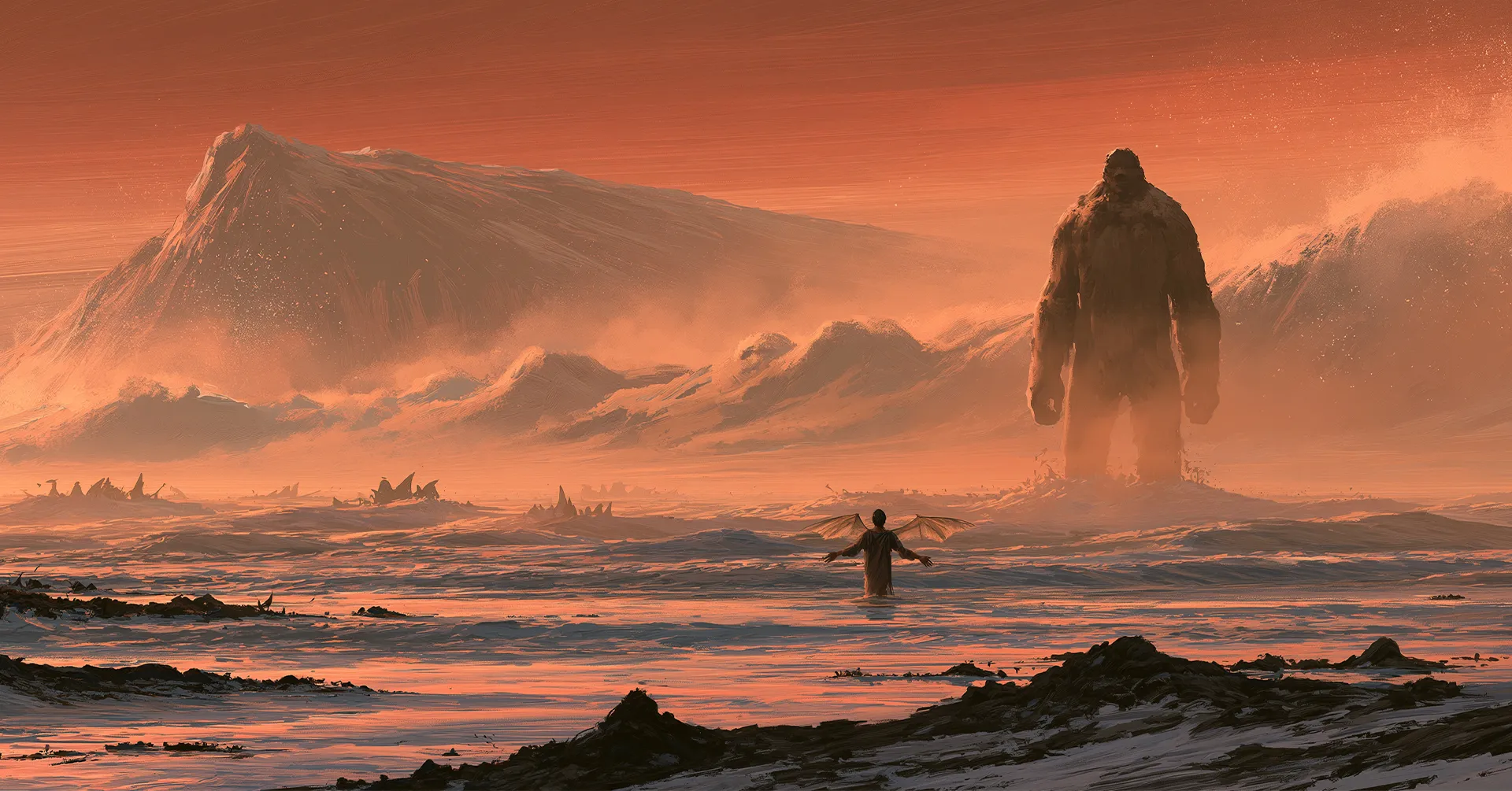
AI reconstruction, not a photograph.
A modern retelling puts Mahaway in rising floodwater, calm and unwilling to run, while his father, the Watcher Barakel, begs him to fly to the highest mountain. Mahaway answers that no mountain is beyond the flood, the two part with sorrow, and the archangel Raphael binds Barakel and the earth swallows him. The Qumran fragments of the Book of Giants break off before the flood, so that scene cannot come from them. This article sets out who Mahaway and his father are in the fragments, what the judgment on the giants says about the flood, which angels bind which Watchers, and which details belong to the retelling.
Mahaway in the Fragments
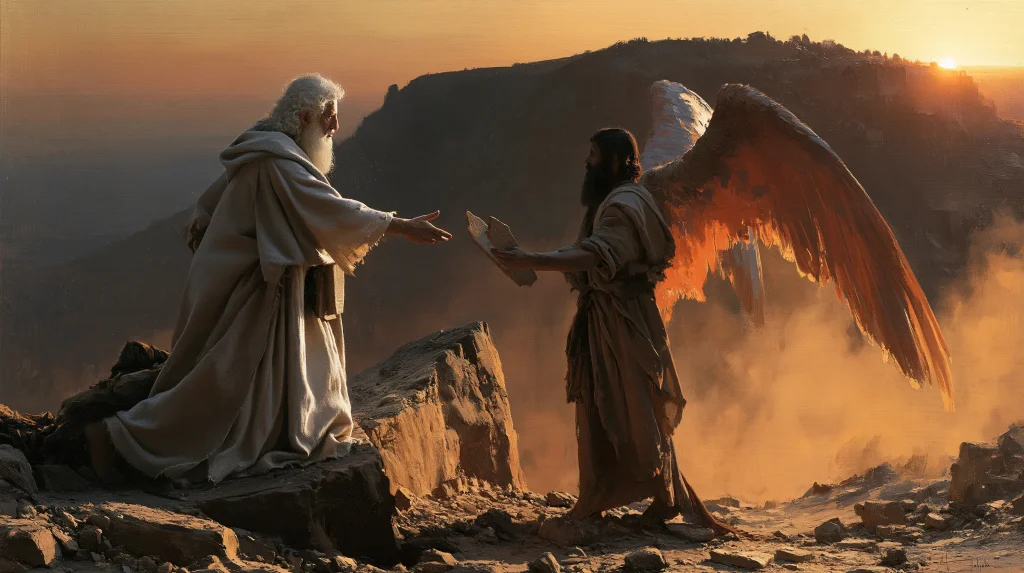
Mahaway is the messenger of the book. James Davila’s introduction in the Eerdmans collection of noncanonical scriptures describes him as the son of the Watcher Baraq’el, sent by the giants to the distant Enoch to have the dreams of Ohyah and Hahyah interpreted. A reference entry on the book places Enoch “beyond the wastelands”. In Davila’s account Mahaway flies there, and in the Old Turkic version a voice warns him to come down before the sun sets his wings on fire.
Wikipedia, which spells the name Mahway, adds that he must first hear the prophet speak before he can ask for the oracle. Enoch then provides the oracle and the twin tablets that explain the dreams and the coming judgment. Davila says Mahaway makes a second trip later. Nothing in these summaries has him refuse an order, stand in a flood or speak with his father at the end. What they show is a go-between, who carries the giants’ questions to Enoch and Enoch’s answers back.
The Watcher Baraq’el
Davila calls Baraq’el a Watcher and the father of Mahaway, and says he is mentioned in the conversations between the giants and in Mahaway’s trips. The summary does not say what he says or does there. The Enoch text consulted names a Baraqijal among the teachers of forbidden arts, who in 8:3 “taught astrology”. The spelling differs, and the pages do not say the two are the same Watcher, though they very likely are. Ancient names reach English in several forms, so Baraq’el, Baraqijal and Barakel may all be the same name in different hands.
The retelling has Barakel say that he wanted to give humanity knowledge and share the wonders of heaven with the earth, which fits a Watcher remembered as a teacher. It also has him urge his son to use what he had taught him to fly to the highest mountain. The pages consulted do not say how Mahaway flies or who taught him. His flight is attested; the lesson is not.
What the Judgment Says About the Flood
The retelling has Mahaway explain that the flood is not local but global, that every mountain will be covered and every valley filled. Two older texts lie behind that idea. In 1 Enoch 10:2 the warning is “that the whole earth will be destroyed, and a deluge is about to come”. In Genesis 7:19-20 the waters cover “all the high hills, that were under the whole heaven”, rising “Fifteen cubits upward” until “the mountains were covered”, and Genesis 7:21 says that “all flesh died that moved upon the earth”.
The Book of Giants adds a particular fate for the giants. Davila’s second tablet is a letter to Shemihazah and his companions, warning them of their sins and of ruin. The reference entry says God plans a flood but first offers the giants a chance to repent, and Davila says the first tablet announces that the Watchers and the giants will not be forgiven. The retelling goes further when it says the giants were doomed from conception. No page consulted says that, though 1 Enoch 15 has the giants become evil spirits, saying they “shall be called evil spirits upon the earth” (15:8). Doom in the sources follows a refusal to repent. It is not set at birth.
Who Binds Whom
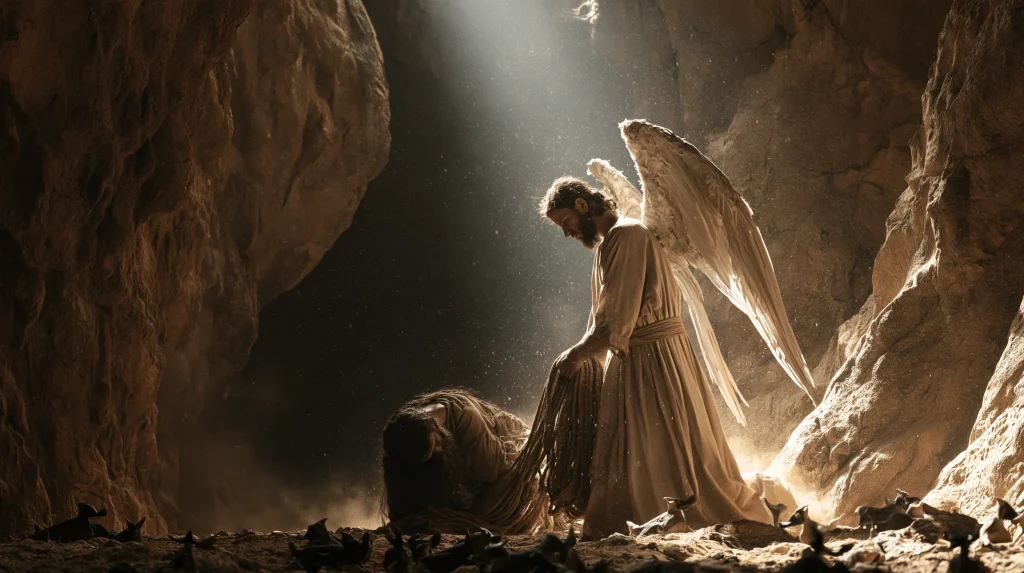
The retelling’s Raphael comes for Barakel, binds him and lets the earth swallow him. In the Enoch text consulted the archangels have separate tasks. In 10:4 Raphael is told “Bind Azazel hand and foot, and cast him into the darkness”. In 10:11 Michael is told “Go, bind Semjaza and his associates who have united themselves with women”. Jubilees 5:6, in R. H. Charles’s translation, has an angel report that God “bade us to bind them in the depths of the earth”. Wikipedia says that in the Manichaean ending four angels linked to Michael, Gabriel, Raphael and Uriel subdue the demons.
So Raphael does bind a fallen Watcher, but the one named is Azazel. Baraqijal is one of the teaching Watchers named in chapter 8 and so is plausibly part of the company that Michael is told to bind, but the pages consulted do not say which archangel binds him. The picture of the Watchers captured one by one and dragged away in chains of light is also the retelling’s. The Enoch text speaks of darkness for Azazel, not of light.
Father and Son at the End
The father and son scene draws its force from something the sources leave open. Mahaway is the one giant who goes to Enoch and hears the judgment at first hand, and Baraq’el is a Watcher who is named in the conversations around those journeys. A story that lets the two meet at the moment of the flood adds speech: the plea to fly, the answer that there is nowhere to go, the father’s regret at having begotten a child for suffering, the son’s reply that his father loved unwisely, and the farewell.
None of that dialogue is in the pages consulted. The nearest thing is in Davila’s summary of the responses to Enoch’s message, where the Watchers promise to repent and ask Enoch for mercy, and Enoch warns that ruin is imminent. That is a collective plea, and the summary does not say whether Baraq’el joined it or whether anyone tried to save a child.
The retelling therefore makes a Watcher into a grieving parent and a giant into a calm witness, which is a modern reading of the sources, not a record of them. It also sets aside what the sources emphasise about Mahaway, which is that his role in the book is to carry a message, twice, and not to make a last stand.
What the Fragments Cannot Say
The Qumran fragments break off where the giants defy God, and the reference entry says hints in the surviving text suggest the flood was eventually described. Any conversation between Mahaway and Baraq’el at that point is lost, if it ever existed. What does survive suggests that the book’s concern was the choice the giants made, not a catalogue of deaths: warnings come by dream, by tablet and by messenger before any water rises, and the sources then treat the judgment as the answer to a refusal. The Manichaean edition has a complete ending, but in it the giants are subdued in battle by forces of Light.
What Can Be Said
What survives is narrow: a messenger who flies to Enoch and back, a Watcher father, a deluge announced, and Watchers bound in darkness. The meeting at the flood and the binding of Barakel are the retelling’s.

