The Tower of Babel Was Built, Destroyed, and Rebuilt for Centuries
Ancient Near East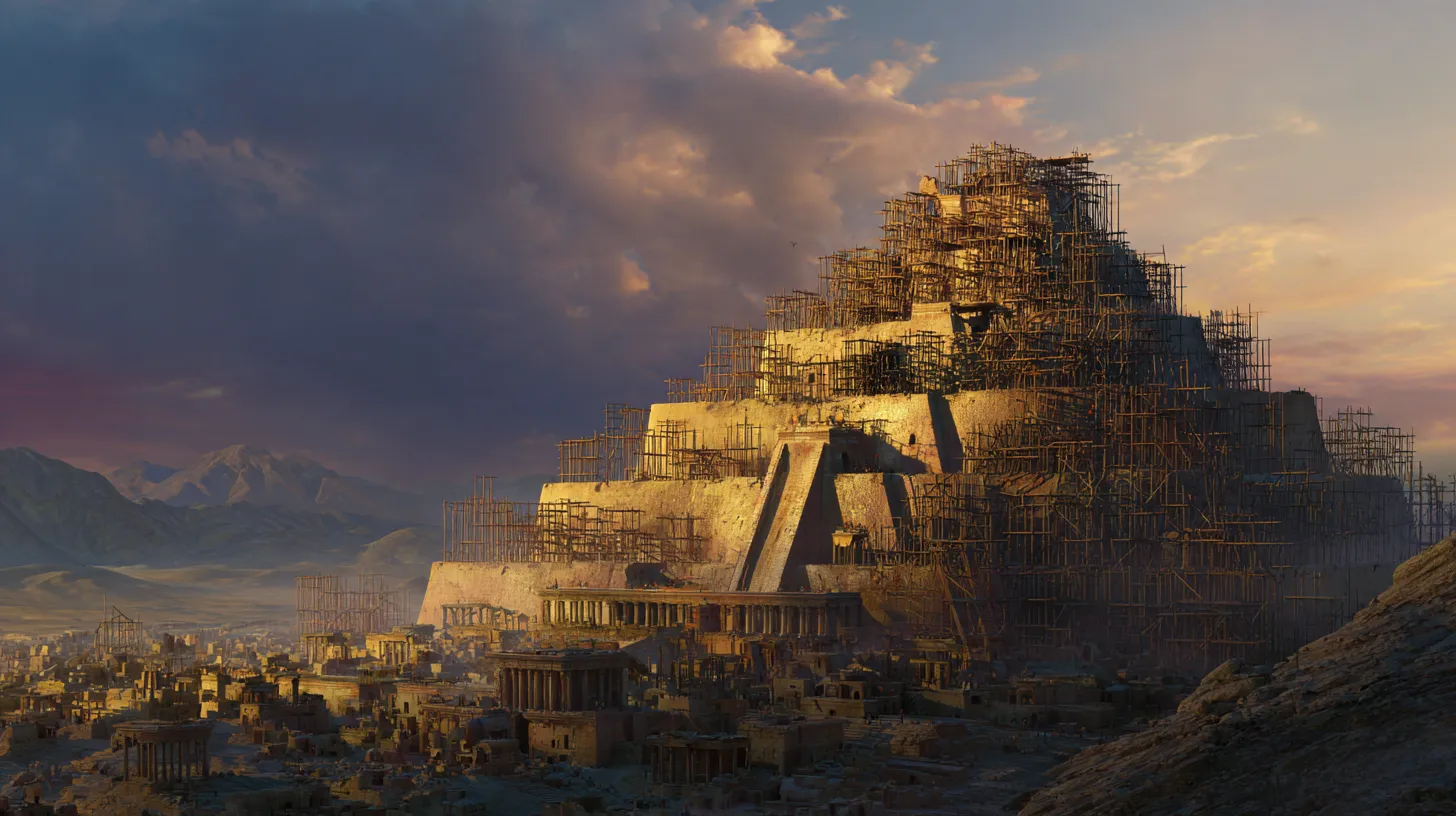
AI reconstruction, not a photograph.
The Tower of Babel was not built once. It was built, destroyed, and rebuilt so many times across so many centuries that its history reads less like a single event and more like a recurring compulsion.
That is not a theological observation. It is the archaeological record.
Scholars studying the Etemenanki — the great ziggurat of Babylon identified by most historians as the structure behind the Genesis account — describe its history as a complex succession of construction phases, destructions, and restorations spanning from the reign of Hammurabi in the early 2nd millennium BCE to Alexander the Great’s arrival in 323 BCE. That is a documented building history of roughly 1,500 years, involving some of the ancient world’s most powerful rulers, each apparently compelled to add their name to the same structure.
The First Builder: Hammurabi
The earliest phase of the Etemenanki’s documented history traces to Hammurabi, the Babylonian king best known for his law code, who ruled from approximately 1792 to 1750 BCE. Evidence for this phase is partly textual — Babylonian sources reference the ziggurat’s existence during his reign — and partly inferred from the stratigraphic layers archaeologists have identified at the Babylon site.
This is the foundation on which everything that followed was built, destroyed, and rebuilt. Whatever Hammurabi constructed was not the last word. It was the first in a sequence.
Sennacherib’s Destruction
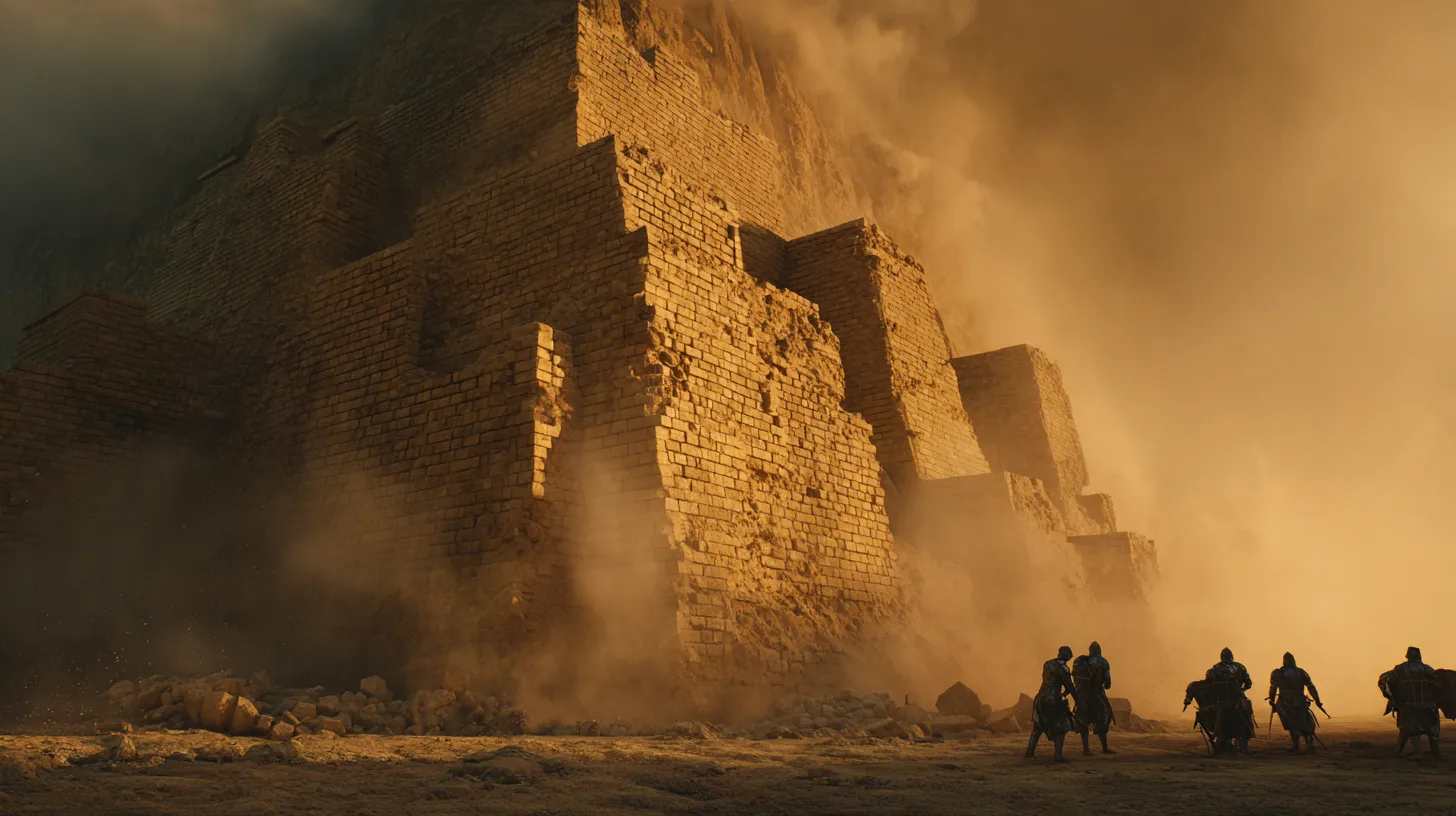
In 689 BCE, the Assyrian king Sennacherib sacked Babylon in an act of deliberate, comprehensive destruction. Ancient sources describe him dismantling the city’s major structures, diverting water channels to flood the ruins, and symbolically scattering the debris. The Etemenanki was among the structures destroyed.
Sennacherib’s own annals record the destruction with the kind of detail that suggests he understood what he was doing — not merely military conquest but the symbolic erasure of a civilization’s central monument.
The Cycle of Restoration
Sennacherib’s son Esarhaddon reversed course entirely. Seeking to legitimize his rule through Babylonian support, he initiated restoration of the city and its monuments — including the ziggurat — presenting himself as the rightful heir to Babylonian tradition rather than its destroyer.
His grandson Nabopolassar, founder of the Neo-Babylonian Empire, continued the restoration project and left his own inscription recording his contributions to the Etemenanki. The text describes him being called by the gods to rebuild the tower, a framing that positioned the reconstruction as divine mandate rather than royal ambition — though the distinction was largely rhetorical.
His son Nebuchadnezzar II finished what his father started — or claimed to. His inscription recording that he “raised its top to heaven” and covered it with bitumen and brick represents the most complete surviving account of any single ruler’s contribution to the structure. Nebuchadnezzar’s building campaigns at Babylon were among the most extensive in the ancient world, and the Etemenanki was their centerpiece.
Alexander and the Final Demolition
When Alexander the Great entered Babylon in 331 BCE, the Etemenanki was standing but deteriorating. Ancient sources, including Arrian and Strabo, record that Alexander ordered its rubble cleared as the first stage of a full restoration — a project he intended to complete on a scale befitting the new capital of his empire.
The clearing operation reportedly required 10,000 men working for an extended period just to move the accumulated debris from the existing structure.
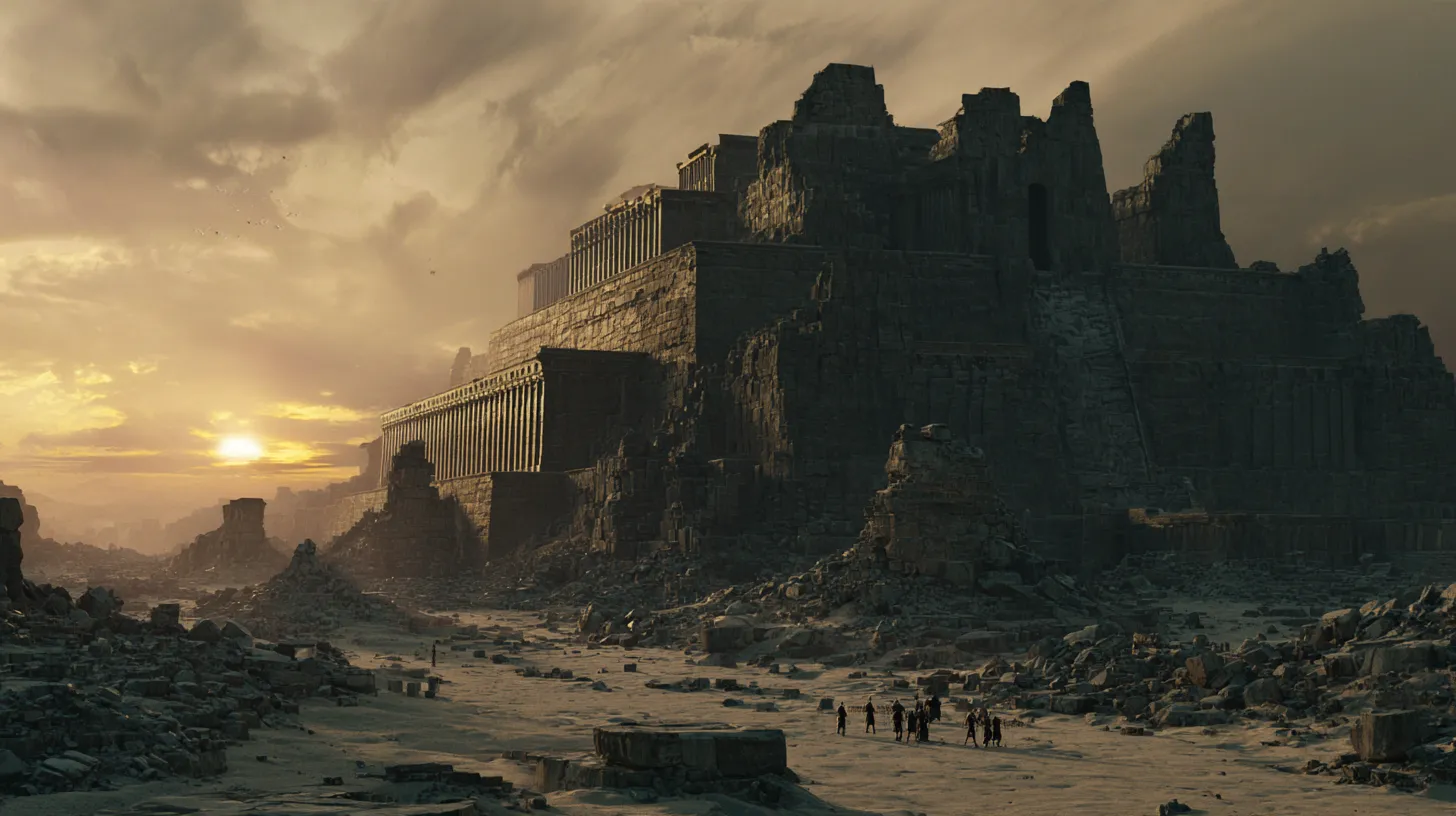
Alexander died in Babylon in 323 BCE. His generals abandoned the restoration project. The cleared rubble was never replaced. The Etemenanki, stripped of its outer layers in preparation for rebuilding, was left exposed to the elements. Within generations it had deteriorated beyond recovery.
The last ruler who intended to restore it had inadvertently completed its destruction.
What the Cycle Reveals
The Etemenanki’s history covers the reigns of Hammurabi, Sennacherib, Esarhaddon, Nabopolassar, Nebuchadnezzar II, and Alexander the Great. Six rulers across roughly fifteen centuries, each engaging with the same structure — building it, destroying it, or restoring it — each leaving a record of having done so.
What the record shows is not the story of a single act of pride followed by a single divine judgment. It is the story of an ambition that proved impossible to permanently resolve in either direction. Sennacherib’s destruction did not end it. Nebuchadnezzar’s completion did not secure it. Alexander’s restoration attempt did not save it.
Each generation apparently found the same monument worth the same extraordinary investment of resources, for reasons that varied — theological legitimacy, political symbolism, military prestige, personal legacy — but that consistently produced the same result: a king’s name attached to a structure already bearing the names of every king before him.
The tower was never simply built. It was built over and over, by rulers who each believed, as Nebuchadnezzar’s inscription records so plainly, that this time the top would finally reach heaven.
None of them were wrong about the ambition. All of them were wrong about the permanence.
The depression in the ground at Babylon today — a rectangular hole roughly 91 meters on each side, surrounded by the modern Iraqi landscape — is what fifteen centuries of that cycle eventually produced.
Not ruins. An absence. The place where the rebuilding finally stopped.

