Why the Monks of Tana Kirkos Will Not Say Where the Ark Is
Archaeology & Sites, Biblical History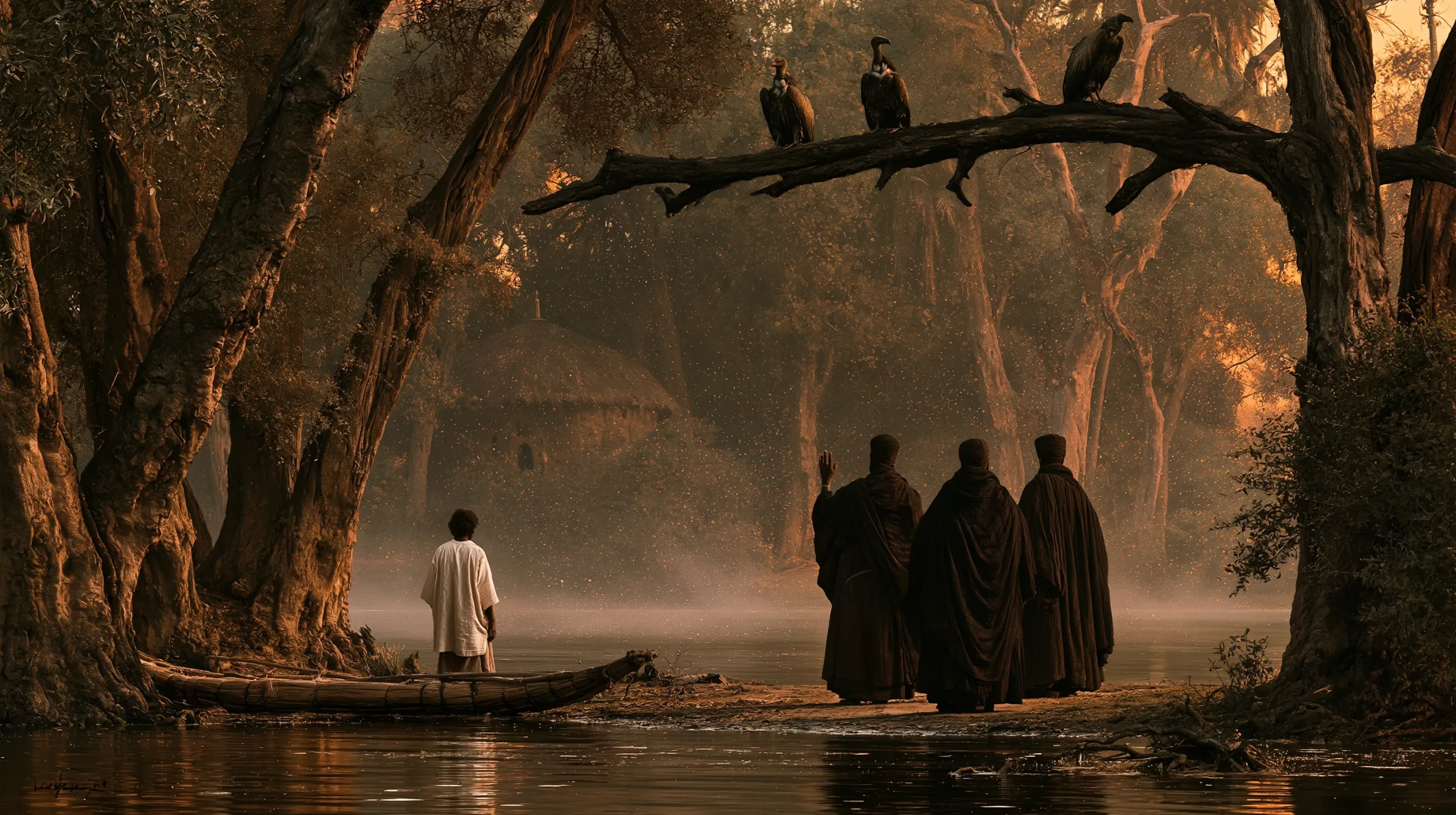
AI reconstruction, not a photograph.
The monks of Tana Kirkos, on an island in Lake Tana in northern Ethiopia, would not say where the Ark of the Covenant is, according to a photojournalist who says he asked them directly. The reason he was given is that invaders had tried to steal it. The account names no thieves and gives no dates, and the secret it describes cannot be tested. This article sets out what the photojournalist says he was told, what the island and its Ark traditions are, what Ethiopia’s record shows about attacks on sacred places and what a secret of this kind can and cannot show.
What the Photojournalist Says He Was Told
The photojournalist says he paddled to the island and asked the monks directly where the Ark is. The mood turned cool. A deacon explained that invaders had tried to steal it, so the monks had to hide it by putting it under divine protection. The account does not say what that protection involves.
The story he was given is that the Ark is somewhere on the island, in one of the buildings, but that no one knows where. He concluded that even if the monks did know, they would not tell him. Their attitude, as he reports it, was simple: the other arks in Ethiopia are copies used to fool thieves, the real one is here, and they do not have to prove it to anyone. He also noted that the monks were not angry, only firm, and he says he left feeling that he was dealing with a legend and not with reality.
The account is one traveller’s report. The sources consulted for this article contain no second witness to the visit and no record of it made at the time, so it is treated here as what it is: a refusal given to a visitor by people who keep a secret.
The Island and Its Ark Traditions
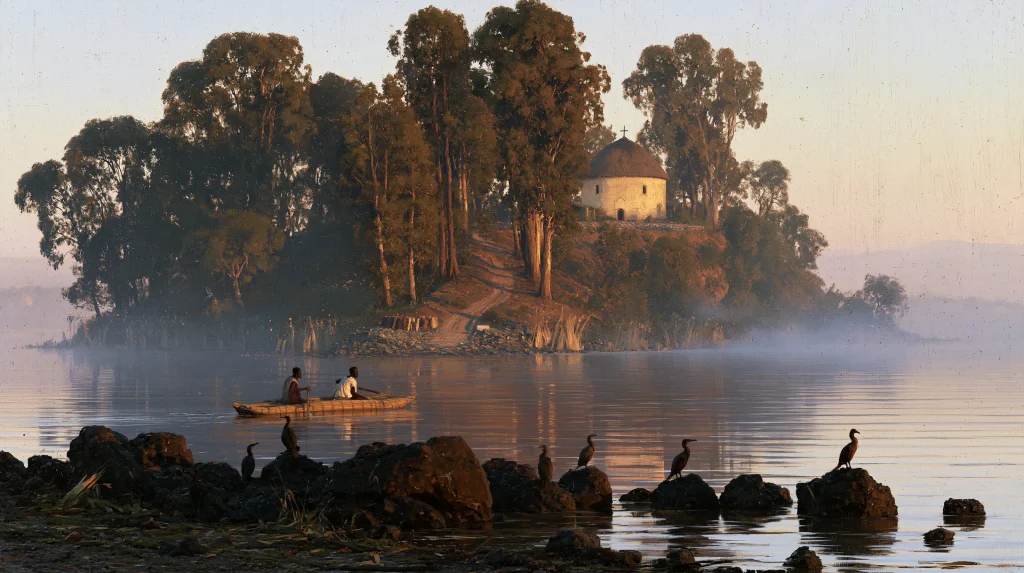
Tana Kirkos, which Wikipedia spells Tana Qirqos and Lonely Planet Tana Cherkos, “is an island in the eastern part of Lake Tana”, “near the mouth of the Gumara River”, and “only monks of the Ethiopian Church live there”. Lonely Planet says it lies two and a half hours from Bahir Dar by boat, with a thirty-minute walk uphill from the landing, and repeats the legend: “It’s said the Ark of the Covenant was hidden at Tana Cherkos for 800 years”.
The traditions about the Ark differ. Wikipedia says the monks believe the island “was once the resting place of the Ark of the Covenant” and, in the tradition it records, that the Ark “remained on the island until it was transported to” the church at Axum. It also reports Graham Hancock’s speculation that the Ark was carried to the island from Elephantine in Egypt, and adds that “some specialists consider the theory unfounded”.
Paul Raffaele, who crossed the lake for Smithsonian magazine, heard a different version. The Ethiopian patriarch Abuna Paulos told him that “some monks hid it for 400 years to keep it out of invaders’ hands”. A monk on the island, Abba Gebre Maryam, then said that “The ark came here from Aksum for safekeeping from enemies” well before Jesus was born, and that King Ezana later “took the ark back to Aksum”. Set side by side, the versions say that the Ark was once on the island and later moved, which is what Wikipedia and Raffaele’s monk say, and that it is there now, somewhere among the buildings, which is what the photojournalist was told. The article does not choose between them.
Copies, Claims and a Rival Site
The monks’ claim, as reported, has a rival. According to Wikipedia, the Church of Saint Mary of Zion at Axum “claims to contain the original Ark of the Covenant”, and its guardian monk told Raffaele: “No king or patriarch or bishop or ruler can ever see it, only me.” Two sites cannot both hold the original, and neither claim can be examined. Wikipedia’s article on the Ark itself says “no verified evidence conclusively confirms its location today”.
The idea of copies is not new. Wikipedia describes a tabot as “a replica of the Ark of the Covenant, and represents the presence of God”, and a priest told Raffaele that tabots are what make a church holy. In these descriptions the replicas serve the church and are not decoys. The explanation that the other arks exist to fool thieves is the monks’ own, as the photojournalist reports it. A popular history site says the Italians who occupied Ethiopia in the 1930s believed the real Ark was being hidden among copies kept in churches.
Thieves and Invaders in the Record
The account does not say who the thieves were or when they came, so the monks’ version of the attacks cannot be dated. Ethiopia’s history does record attacks on sacred places, so the fear has a basis, but none can be tied to the deacon’s story.
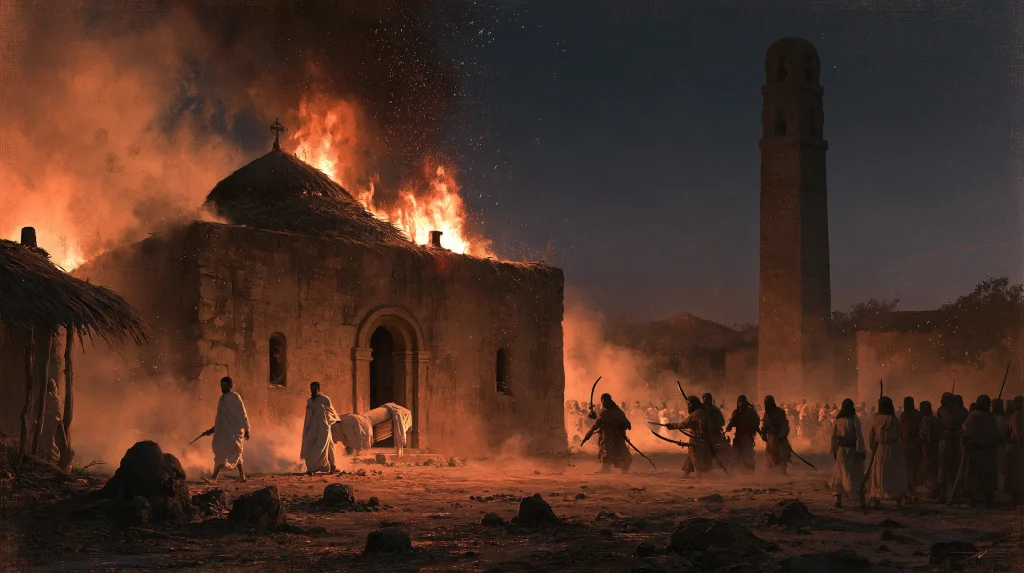
Wikipedia’s article on the church at Axum says tradition blames Queen Gudit for destroying it in the 10th century, which historians have not confirmed, and that its first confirmed destruction came “in the 16th century at the hands of Ahmad ibn Ibrahim al-Ghazi”. The Ethiopian-Adal War, fought between the Ethiopian Empire and the Adal Sultanate from 1529 to 1543, saw Adal forces enter the highlands, where they “began to sack and burn numerous churches”. Raffaele reports the high priest at Axum saying that “It held the ark, but Arab invaders destroyed it”, and that priests had hidden the Ark from them.
In 1868, according to The Art Newspaper, British troops seized at Maqdala the tabots that the British Museum now holds. The same history site says historians suggest that Italy “made significant efforts to find” the Ark before the Second World War, then adds: “There are no official records that confirm this.” In December 2020, during the Tigray War, the Europe External Programme with Africa reported, according to Wikipedia, that 750 people sheltering in the church at Axum were killed by militants. Wikipedia says “Locals suspected an intention to steal the Ark of the Covenant”, but that “no evidence of that allegation has been found to date”, and adds that the reports of the killings have not been confirmed by independent investigation.
Sacred objects have been taken from churches and monasteries elsewhere too. When Crusaders sacked Constantinople in 1204, Wikipedia says, “The Crusaders even sacked churches, monasteries and convents”, and “The Venetians stole religious relics and works of art”.
What a Secret Cannot Show
The deacon’s explanation is coherent, because an object that invaders wanted is safest when nobody can say where it is. It is also impossible to test. Three situations would look the same from outside the monastery: the Ark is on the island, a venerated tabot or other object stands for it, or nothing is there. The monks gave the photojournalist no way to tell these apart.
Secrecy of this kind is not unique to the island. At Axum, Raffaele reports, the guardian told him: “I can’t tell you anything about it.” A calm refusal is not evidence either way, and a claim that cannot be examined can be neither confirmed nor refuted.
What Can Be Said
The island’s Ark tradition is old and is told in several versions, Ethiopia’s record includes real attacks on sacred places, and the monks, as reported, offer no way to test their claim. What can be said plainly is narrow: a guarded secret protects a claim that no outsider can check.

