A 4,000-Year-Old Tuft of Hair Is All That Remains of a Vanished Arctic People
Archaeology & Sites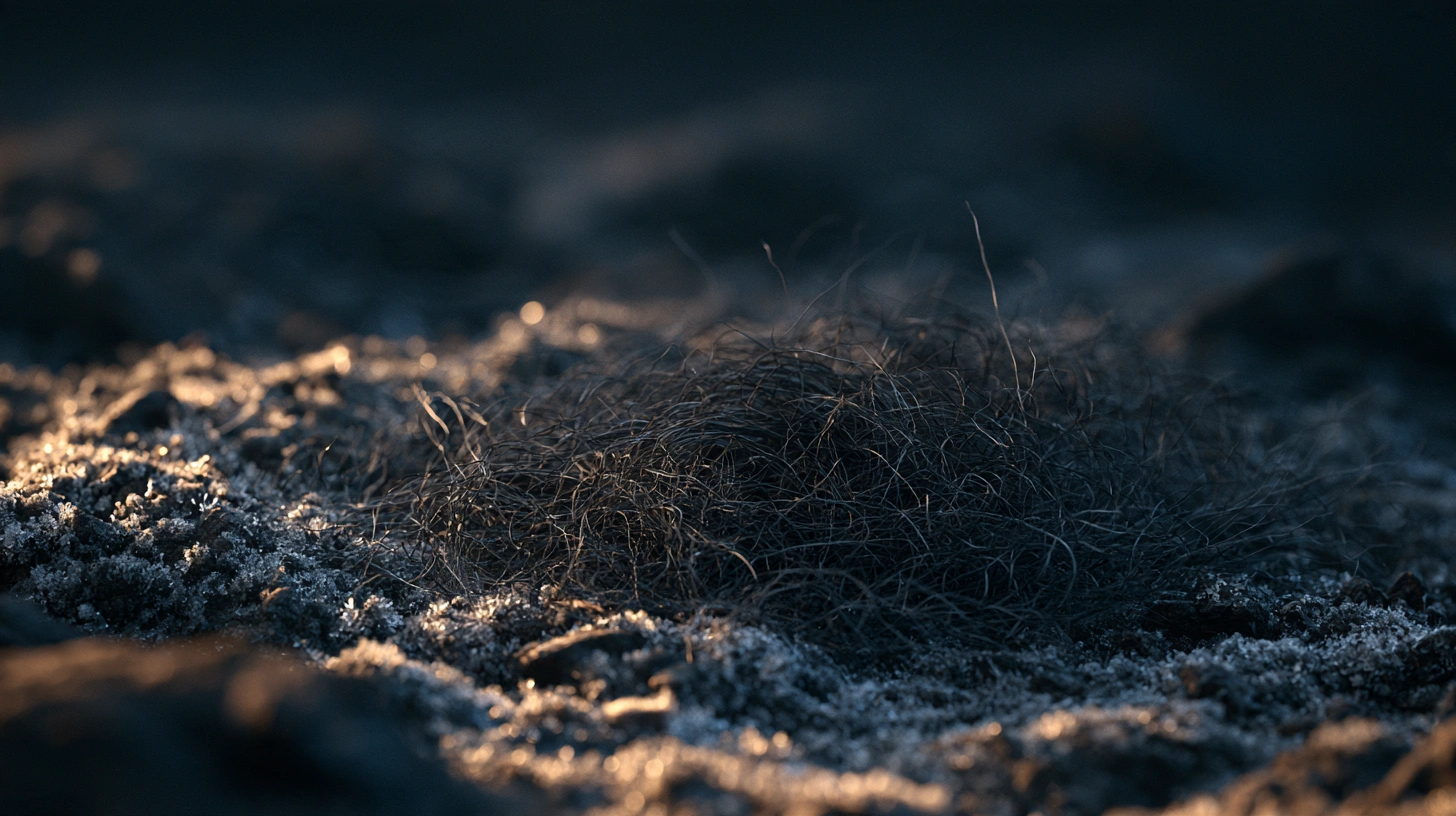
AI reconstruction, not a photograph.
Not a skeleton. Not a grave marker. Not a single written word. What the permafrost at Qeqertasussuk in western Greenland preserved for 4,000 years was a tuft of hair — a few frozen strands left behind by someone who lived and died there long before any European had imagined crossing the North Atlantic.
That is the entire physical record of an individual human being from a culture that has otherwise vanished completely. And it turned out to be enough.
What the Permafrost Kept
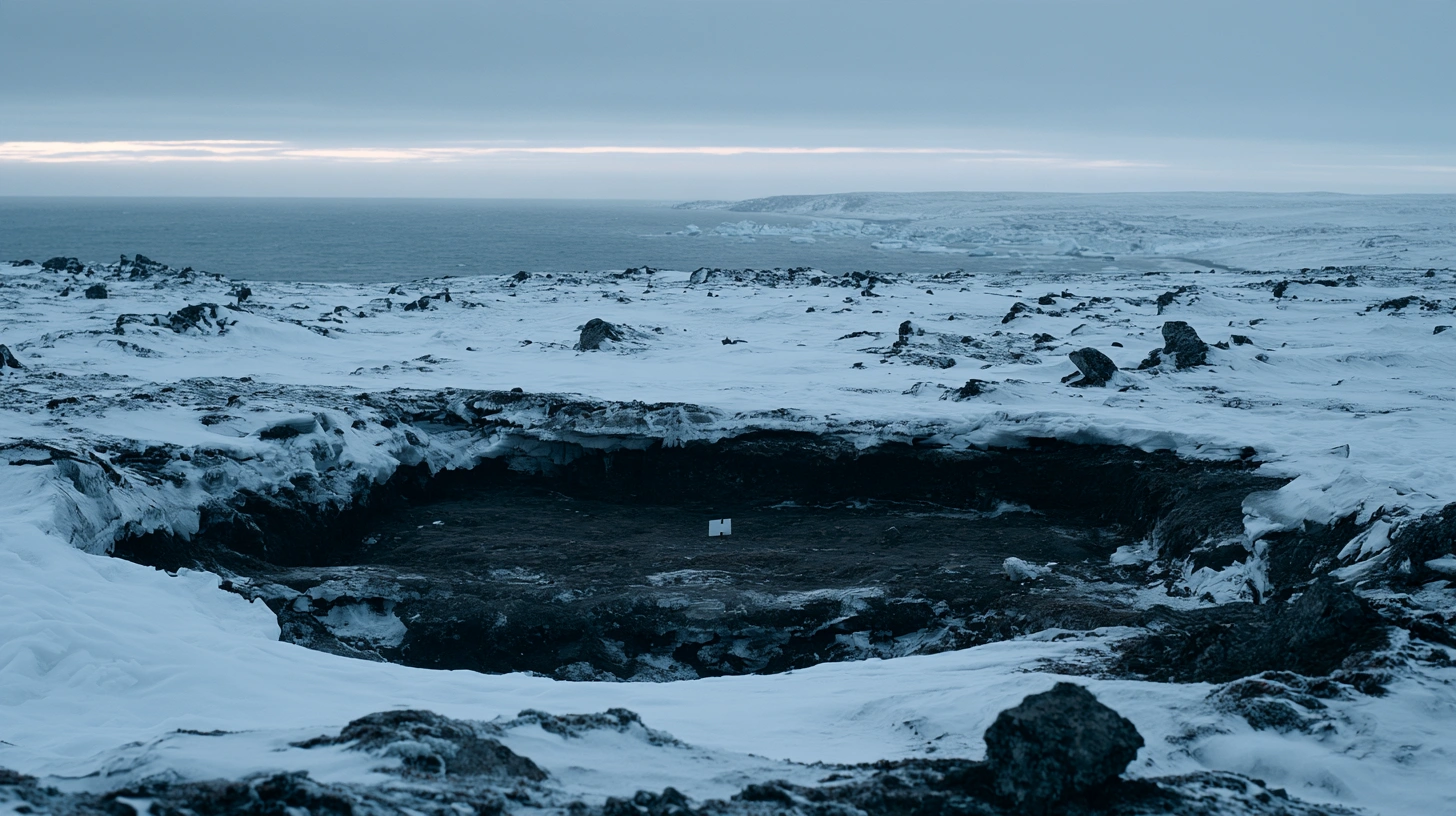
The site at Qeqertasussuk belongs to the Saqqaq culture, the earliest known inhabitants of western Greenland. Archaeologists working the site found the hair preserved in conditions that exist almost nowhere else on earth: Arctic permafrost, cold and dry enough to prevent the bacterial activity that breaks down organic material everywhere else. The strands were not degraded. They were not mineralized. They were hair, still recognizable as hair, after four millennia.
For most of archaeological history, a find like this would have been catalogued and stored. Interesting, but limited. No face attached to it. No name. No way to connect a few strands to a broader human story.
Then ancient DNA sequencing changed what a sample like this could tell.
What Ancient DNA Requires
Extracting usable genetic information from 4,000-year-old hair is not straightforward. Ancient DNA degrades over time — it breaks into shorter and shorter fragments, accumulates chemical damage at predictable sites, and becomes increasingly difficult to distinguish from contamination introduced during excavation, handling, or laboratory work. A modern fingerprint left on the sample. A breath. A stray hair from a lab technician. Any of these can overwhelm the ancient signal.
The research team working on the Qeqertasussuk hair had to confirm two things before the results meant anything. First, that the chemical damage patterns in the recovered DNA matched what is expected only in genuinely ancient material — specific degradation signatures that modern contamination does not replicate. Second, that the sequence was internally consistent with a single individual rather than a mixture of ancient and modern sources.
Both conditions were met.

What the Strands Said
The individual was male. He likely had dark hair and dark eyes. His physiology showed adaptations consistent with life in a cold northern climate — metabolic and body-composition markers that appear in populations long established in Arctic or sub-Arctic environments, not in populations that recently migrated from warmer regions.
But the finding that rewrote the map was his ancestry.
His closest genetic relatives were not the Inuit who inhabit Greenland today. They were not the Norse settlers who arrived roughly 3,000 years after him. They were ancient populations from northeastern Siberia — specifically, a lineage connected to what geneticists now identify as the Paleo-Eskimo migration, a distinct population movement that crossed into the Arctic from Asia and populated the far north long before the ancestors of modern Inuit made the same crossing by a different route.
This confirmed something that had been suspected from the archaeology — that the Saqqaq people and the later Inuit were not the same population, not continuous, not related by direct descent — but the confirmation from a single hair sample was decisive in a way that stone tools and tent rings could not be.
The Saqqaq were a separate branch of human expansion into the Arctic. They arrived, adapted, survived for roughly 2,000 years, and disappeared from the record before anyone else reached Greenland. The people who came after them — the Dorset culture, then the Thule, the ancestors of modern Inuit — were not their descendants. They were a later, separate wave, arriving into a coastline the Saqqaq had already abandoned.
Why Permafrost Is the World’s Most Important Archive
The conditions at Qeqertasussuk are not unique to that site. Arctic and sub-Arctic permafrost preserves organic material that would survive nowhere else — plant matter, animal remains, food waste, clothing, and occasionally human tissue — in a cold that prevents decomposition indefinitely as long as the ground stays frozen.
This makes permafrost one of archaeology’s most valuable environments and, increasingly, one of its most urgent. As Arctic temperatures rise and permafrost thaws across Greenland, Siberia, Alaska, and northern Canada, organic material that has been sealed for thousands of years is being exposed to the air for the first time. Some of it is being recovered by archaeologists. Much of it is simply decomposing, irreversibly, before anyone reaches it.
The hair at Qeqertasussuk survived because the ground around it stayed cold for 4,000 years. That condition is no longer guaranteed anywhere in the Arctic. What the permafrost is still holding — how many more individuals, how many more population histories, how many more complete reversals of the story we think we know about Arctic migration — is impossible to quantify, because we do not yet know what we are losing before we find it.
The Weight of a Few Strands
The Saqqaq individual whose hair was found at Qeqertasussuk left nothing else. No burial. No monument. No account of what his world looked like or what ended it. A few strands of hair, dropped or left behind at a settlement on the western Greenland coast, preserved by cold that lasted longer than any civilization that came after him.
Those strands placed him in a specific genetic lineage, connected him to a migration route from northeastern Siberia, confirmed that the people who later inhabited the same coastline were not his descendants, and established that Greenland’s human history is older, more complex, and more layered than the Norse sagas — the version that ended up in textbooks — ever suggested.
A tuft of hair was enough to rewrite the migration map of an entire continent. What the permafrost is still keeping, we do not yet know.

