Why Only Utnapishtim Became Immortal, Not Gilgamesh
Texts & Traditions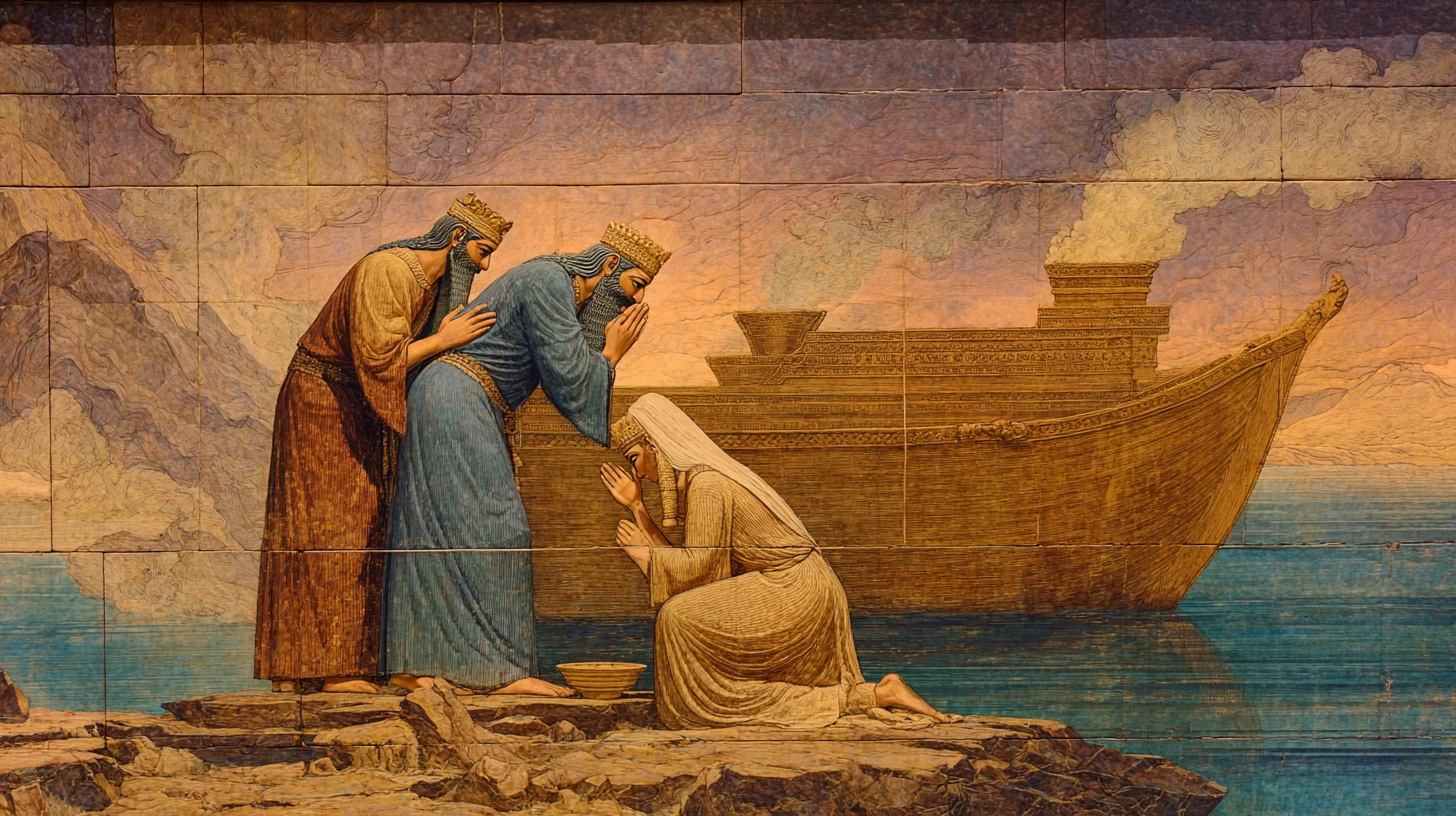
AI reconstruction, not a photograph.
Utnapishtim became the only human being in the Epic of Gilgamesh to receive eternal life, and the poem is direct about why: he never asked for it, and the circumstances that won it for him could never happen again.
A King Who Never Sought Immortality
By the time Gilgamesh reaches him, in the eleventh tablet of the standard Babylonian version of the epic, Utnapishtim is already living apart from the rest of humanity, at the edge of the world where the rivers begin. Gilgamesh has spent much of the poem searching for a way to escape death after watching his closest companion, Enkidu, sicken and die as punishment for deeds the two of them had done together. That loss is what drives him across a mountain range, a sea of death, and waters no living man is meant to cross, all to ask Utnapishtim one question: how did an ordinary mortal come to stand in the assembly of the gods and walk away with eternal life?
Utnapishtim’s answer is not a lesson in ambition. He tells Gilgamesh that he was once a king in the city of Shuruppak, on the bank of the Euphrates, living an unremarkable life, when the great gods met and decided, for reasons of their own, to send a flood that would wipe out humanity entirely.
A Warning Through a Wall
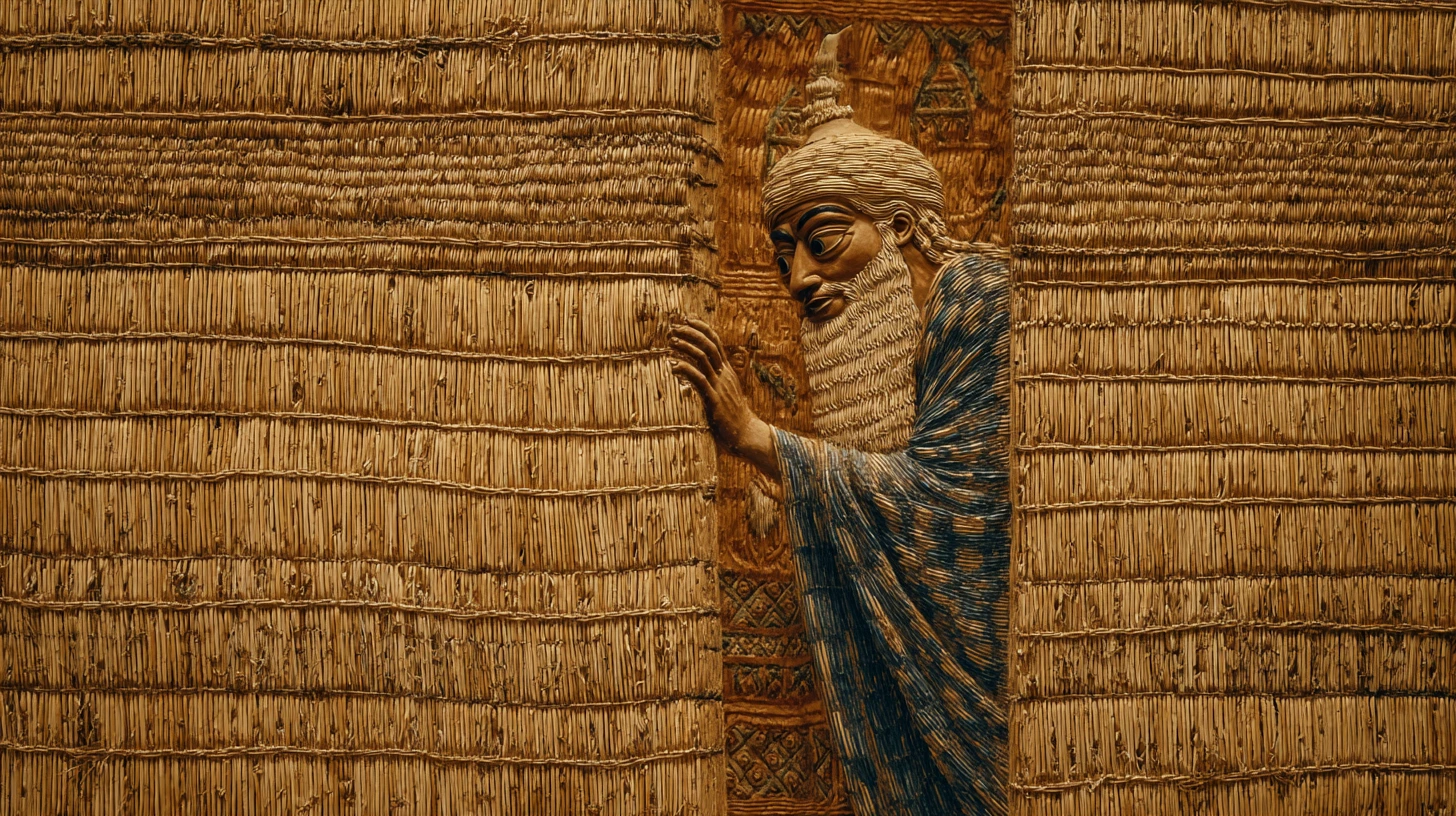
The gods who made that decision swore an oath of secrecy, binding themselves not to tell any human being what was coming. One god, Ea, broke that oath without technically breaking it. Rather than speak to Utnapishtim directly, Ea spoke to the reed-built wall of Utnapishtim’s house, so that Utnapishtim overheard instructions meant, on paper, for the wall alone: tear down his house, and use the timber to build a boat.
Utnapishtim did as he was told, sealing family, craftsmen, and animals inside a boat built to his exact specifications, while telling his neighbors only a vague cover story about needing to leave the city. He survived the flood because a god broke the rules to warn him, not because he earned advance knowledge through any virtue of his own.
The Flood Enlil Sent
The flood itself, once it came, terrified even the gods who had ordered it. The text describes a storm so total that the gods retreated to the highest heaven and cowered there, watching a destruction they had authorized but had not fully understood the scale of. One goddess, Ishtar, is described wailing over the destruction of her own people, regretting the words she had spoken in favor of it. For six days and seven nights, the storm flattened the land. When it finally stopped, Utnapishtim opened a hatch on his boat to a silence broken only by his own weeping, looking out at a world where, in the poem’s own image, all of humanity had turned back to clay.
Offerings for Starving Gods
Once his boat came to rest, Utnapishtim’s first act was to make an offering, burning incense on a mountaintop altar. The gods, who had gone without the offerings mortals normally gave them for the length of the flood, gathered around the smell of the sacrifice, hungry in a way that exposed an uncomfortable truth: the gods depended on human worship more than the flood’s architects had accounted for. Wiping out humanity had cost them something too.
Enlil Discovers a Survivor
It was at this offering that Enlil, the god who had pushed hardest for the flood, realized that a human being had lived through what was supposed to be total annihilation. His reaction, in Utnapishtim’s account, was fury. The flood had been meant to leave no witnesses and no survivors of any kind, and Utnapishtim’s presence at that altar was proof the plan had failed.
Ea’s Argument for Proportion
It was Ea, the same god who had risked breaking his oath to warn Utnapishtim, who stepped in to defend him. Ea did not deny that Enlil had the right to punish humanity. His objection was to the method. A flood, he argued, could not tell the difference between the guilty and the innocent, and Enlil had let everyone drown together rather than direct his anger at whoever or whatever had actually provoked it. Better, Ea said, to have sent a lion, a famine, or a plague, punishments narrow enough to fall on the deserving without erasing the species. The other gods, hearing the argument laid out plainly, sided with Ea.

Marked Like the Gods
Faced with that consensus, Enlil changed course. He boarded Utnapishtim’s boat himself, took Utnapishtim and his wife by the hand, and had them kneel between him and his own wife. Touching their foreheads, Enlil declared that Utnapishtim, once a mortal man, and his wife would now be like the gods, and granted them life without end. He then settled them far away, at the mouth of the rivers, apart from the rest of humanity they had once belonged to.
A Gift That Could Not Be Repeated
This is the detail Utnapishtim wants Gilgamesh to understand above all else. He does not tell Gilgamesh that immortality is impossible in general. He tells him that his own case was the result of one specific gathering of the gods, called to settle one specific injustice, and that nothing like it will happen again, because the flood that made it necessary will not happen again. Utnapishtim was not rewarded for bravery, wisdom, or effort. He was compensated for having survived a catastrophe the gods themselves came to regret ordering, and the compensation was only possible because that catastrophe, and the argument it produced among the gods, were unrepeatable events.
Gilgamesh has spent most of the epic proving that he is stronger, braver, and more determined than any other man alive, killing monsters and defying gods to get to this point. None of it matters here, because none of it is the qualification Utnapishtim actually had. There is no test of strength Gilgamesh could pass, no monster he could kill, that would recreate a flood, a divine assembly, and a god arguing that an entire species had been punished too harshly. Immortality, in the terms the poem itself lays out, was never a reward on offer. It was a settlement paid once, to one couple, for a mistake the gods have no reason to make twice.
Utnapishtim underlines the point by giving Gilgamesh a test he can actually attempt: stay awake for six days and seven nights, the same span the flood itself lasted. Gilgamesh fails almost immediately, falling asleep within moments of sitting down, and Utnapishtim’s wife has to mark the days on the wall with loaves of bread so that Gilgamesh cannot later deny how badly he failed. If a man cannot conquer sleep, the poem suggests, he has no business imagining he could conquer death. Gilgamesh’s quest fails not because he lacks what it takes, but because the thing he is chasing was never a prize to begin with. It was a debt the gods paid off once, under conditions written into the story itself as unrepeatable, and no amount of courage on Gilgamesh’s part could reopen that particular account.

