Greenland Had 4,000 Years of Human History Before the Vikings Arrived
Archaeology & Sites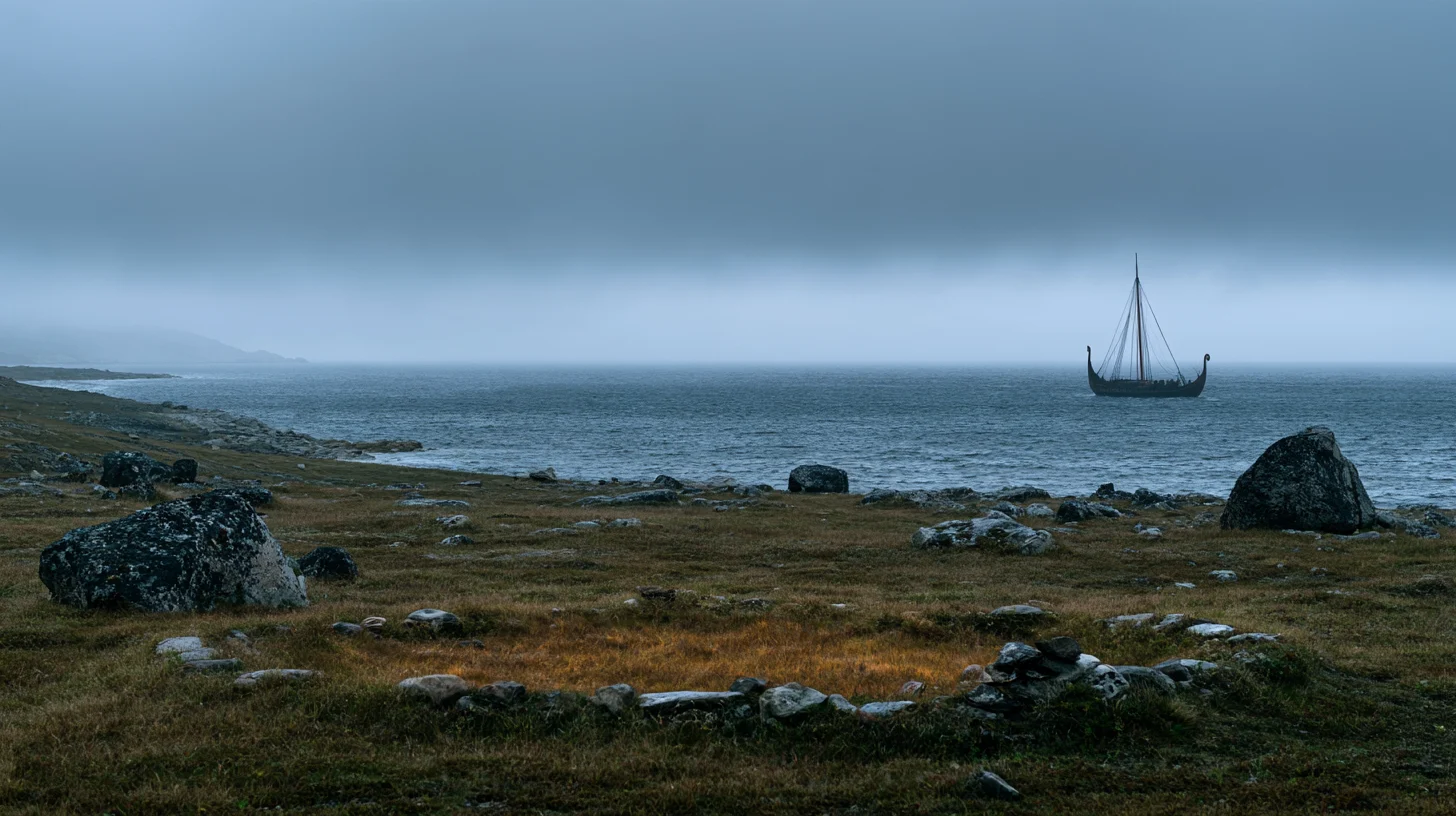
AI reconstruction, not a photograph.
Eric the Red reached Greenland around 985 CE and named it to make it sound inviting. It became the version of the story that ended up in textbooks. But the Vikings were not first. They were not even close.
By the time Norse ships appeared on Greenland’s horizon, the people who had first settled the island had already been gone for roughly 2,000 years.
The Saqqaq: Greenland’s Forgotten First Inhabitants
The Saqqaq culture arrived in Greenland approximately 4,000 years ago — around 2500 BCE — crossing from the Canadian Arctic into western and southwestern Greenland. Their settlements were not temporary camps. Archaeological sites across western Greenland, including the well-documented site at Qeqertasussuk, show sustained occupation: tent rings, stone hearths, food refuse, and tool assemblages consistent with a people who had developed sophisticated strategies for surviving one of the harshest environments on earth.
They hunted ringed seal and harp seal from the ice edge. They took beluga whale and narwhal. They fished arctic char in the rivers and caught seabirds along the coastal cliffs. Their tools — made from stone, antler, and bone — show a toolkit refined over generations for cold-water hunting in conditions that would be extreme by any measure.
What ended them is not fully understood. The archaeological record simply stops. Around 800 BCE, Saqqaq sites go quiet across the regions they had inhabited. No destruction layer. No mass burial. No dramatic event preserved in the evidence. They were present for roughly 1,700 years, and then they were not.
Before the Saqqaq: The Independence I People
The Saqqaq were not even the first. Before them — and overlapping with their earliest period in different parts of the island — the Independence I people inhabited the far northeastern reaches of Greenland, in conditions so severe that the region is almost entirely uninhabited even today.
Independence I sites, concentrated around Independence Fjord in the island’s extreme northeast, date to roughly 2400–1800 BCE. The environment there is among the most hostile in the Arctic: long polar winters, minimal vegetation, almost no marine mammals accessible from shore during the coldest months. Survival required hunting musk ox on the tundra with stone-tipped weapons, using driftwood and bone as fuel in a landscape with no trees, and maintaining body heat through clothing and shelter construction that has left almost no trace.
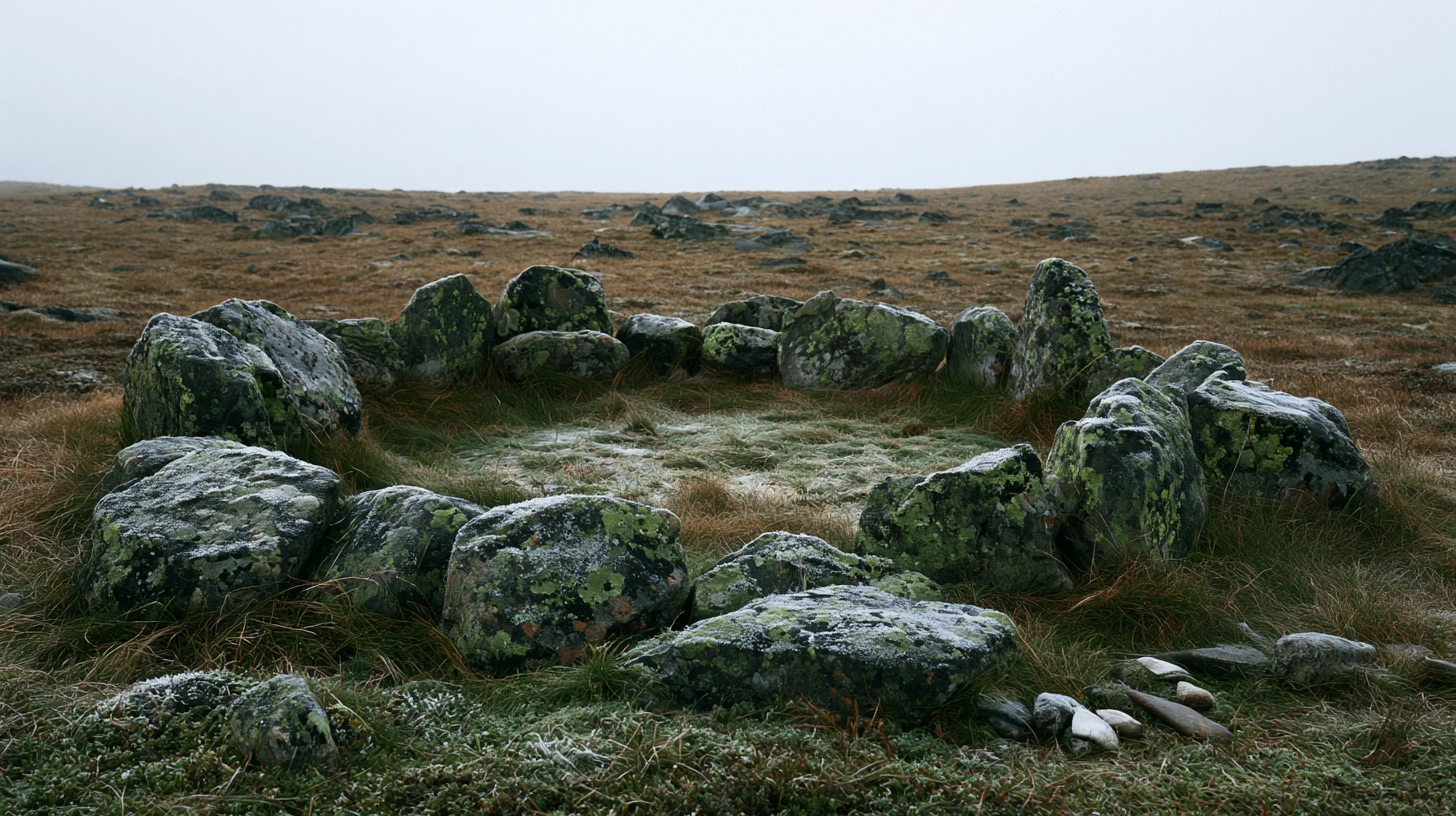
Their hearths — the small stone arrangements built to burn musk ox fat and bone as fuel — are the primary evidence of their presence. Tiny, careful, precisely constructed against the cold. A civilization expressed almost entirely in the arrangement of stones around a fire.
The Dorset Interval
After the Saqqaq disappeared from the record, a second wave of Arctic migrants — the Dorset culture, originating in Canada — moved into Greenland around 500 BCE. The Dorset people occupied parts of western, southern, and eastern Greenland for roughly a thousand years, developing their own distinct tool traditions and hunting strategies before they too began to fade from the record around 1000 CE.
The Dorset and the Norse overlapped briefly in the eastern Arctic and possibly in Greenland itself. Norse sagas reference encounters with people they called Skraelings — a contemptuous term applied to any indigenous people they met. Whether these encounters involved Dorset people, early Thule migrants, or both is still debated.
What is clear is that the Dorset were also gone before the Norse settlements in Greenland peaked.
What the Norse Left That the Others Did Not
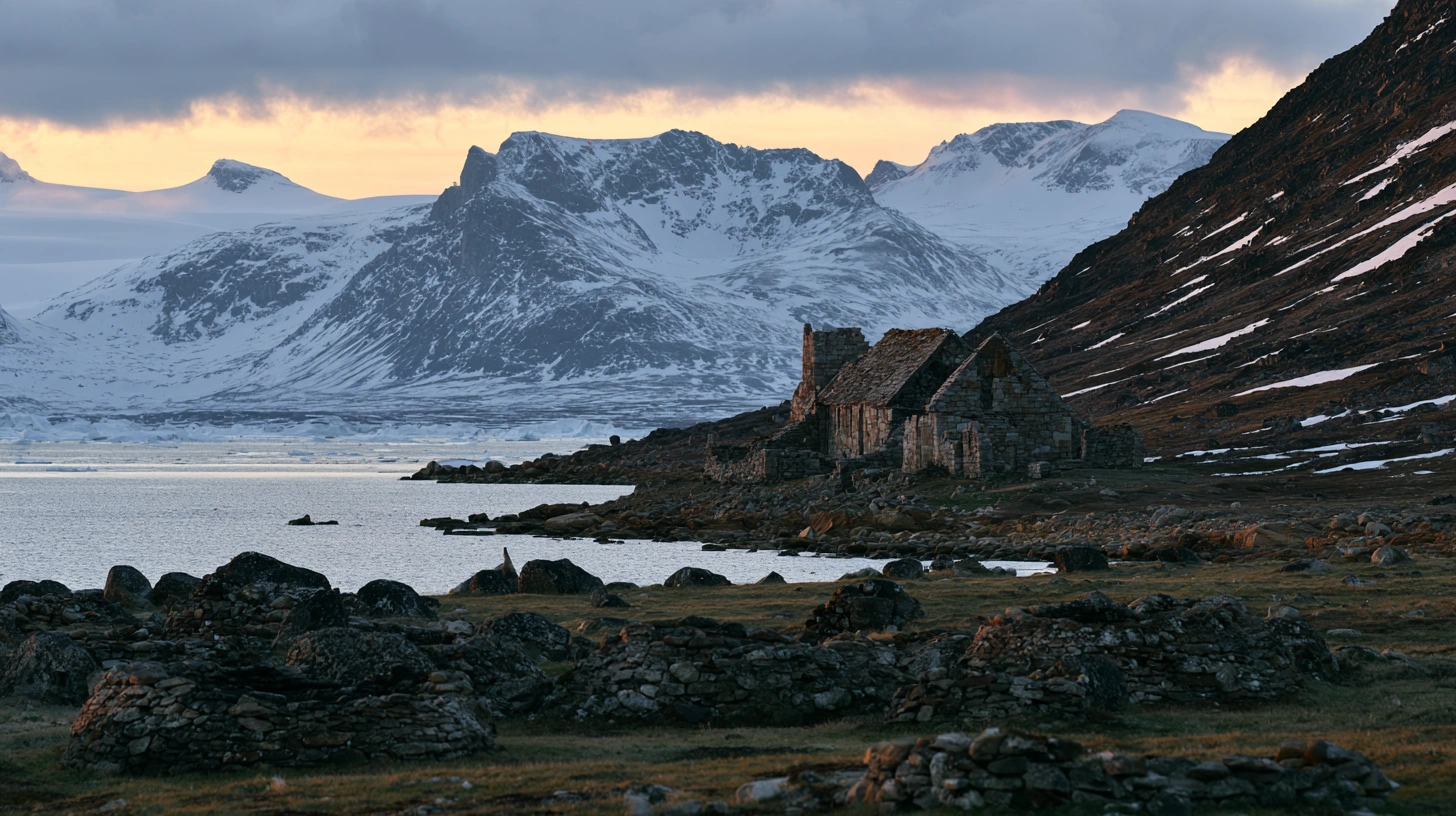
The Saqqaq, Independence I, and Dorset people left stone tools, tent rings, cold hearths, and — in one extraordinary case — a tuft of frozen hair. The Norse left church ruins, written sagas, named individuals, livestock bones, and enough documentary evidence to populate history books.
This asymmetry in the record is not evidence that the Norse story was more significant. It is evidence that literacy and stone architecture survive in ways that organic material and oral tradition do not. The Saqqaq lived in Greenland for nearly 1,700 years — roughly twice as long as the Norse settlements lasted before they too disappeared from the island around 1400 CE.
By any measure of duration, the Saqqaq were Greenland’s most successful settlers. They are also its most forgotten, because they left the kind of evidence that only archaeology can read and only permafrost can preserve.
The Norse became the textbook version of Greenland’s story because they wrote it down themselves. The people who were there first had been gone for two millennia before anyone arrived with a pen.
Greenland’s human history is 4,000 years old. The Viking chapter is its most recent — and its most famous — and its most misleading, if you read it as the beginning.

