A Bronze Age Helmet Made from Up to 40 Wild Boars
Archaeology & Sites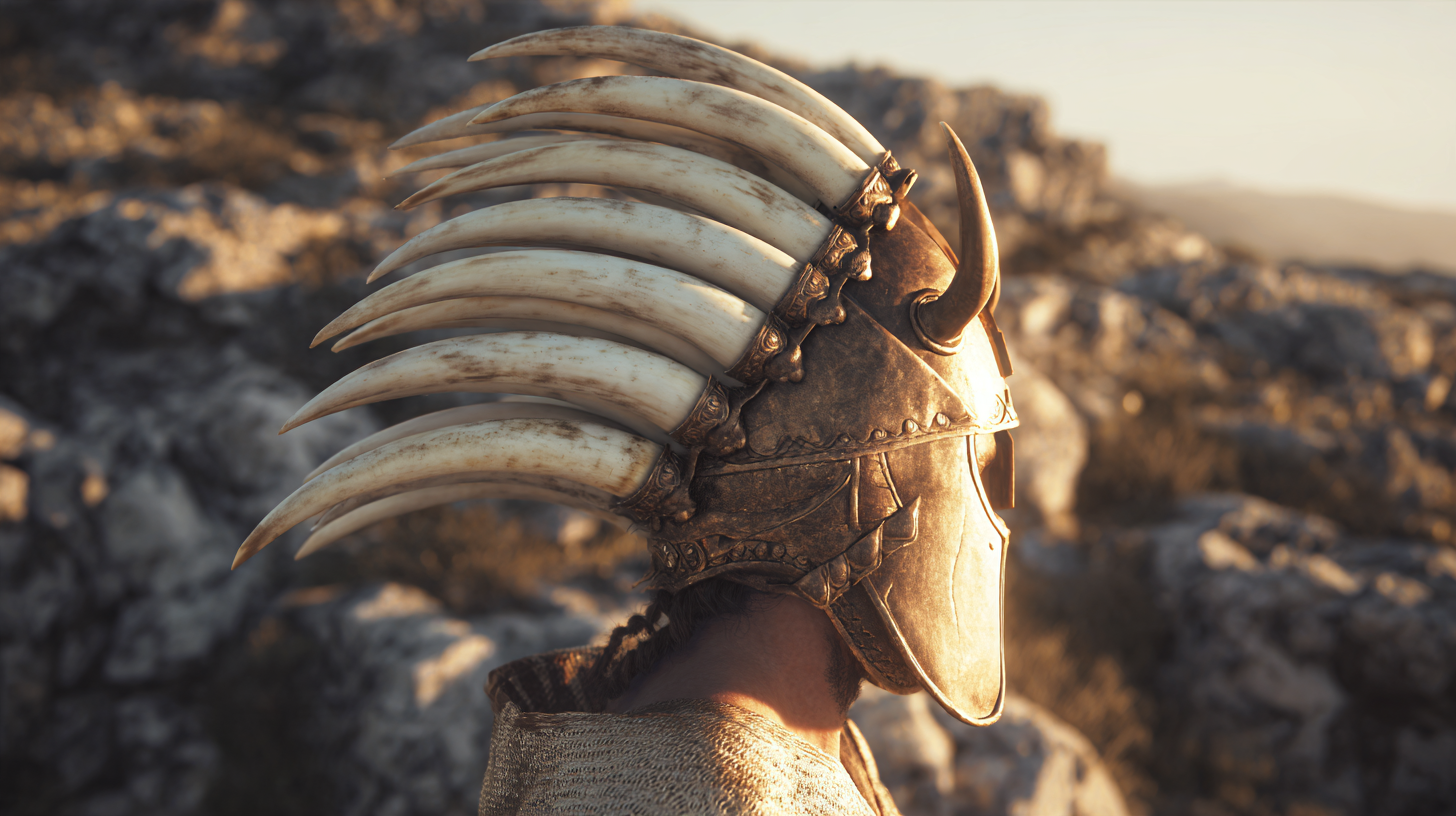
The man who wore this helmet had killed at least 20 wild boars to make it — and everyone who saw it on the battlefield knew exactly what that meant.
The boar’s tusk helmet is the most archaeologically documented and literarily celebrated piece of headgear from the Bronze Age Greek world. It was not mass-produced. It could not be. Each one required hunting down between 20 and 40 mature wild boars, extracting their curved tusks intact, cutting those tusks into thin curved plates, and layering them in overlapping rows across a fitted leather cap — each row alternating direction to create a surface that was simultaneously functional armor and an unmistakable declaration of status.
What Homer Recorded — and What Archaeology Confirmed
Homer describes the helmet in the Iliad with unusual technical precision. In Book 10, he depicts Odysseus being given a helmet “of leather, with many a thong it was stiffened within, while outside the white teeth of a boar of shining tusk were close sewn, thick and overlapping.” The description is specific enough to be a manufacturing note, not just poetic decoration.
For a long time, scholars treated this as Homeric invention — vivid but not necessarily grounded in real Bronze Age practice. Then archaeology answered definitively.
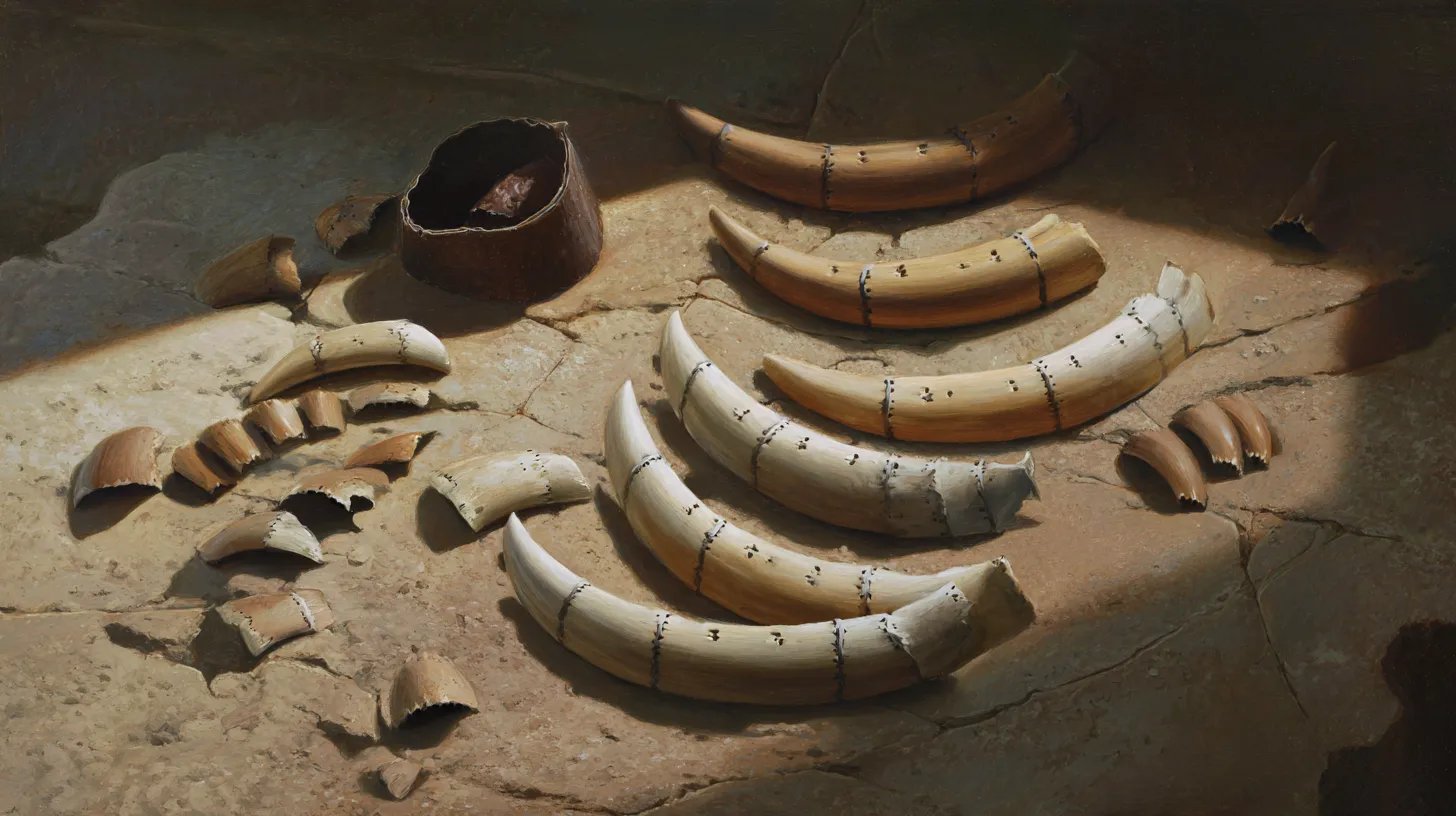
Excavations at Mycenae, Tiryns, Spata, and several other Late Bronze Age sites across Greece produced physical remains of these helmets: actual boar tusks with their flat inner surfaces still showing the drill holes used to attach them to the backing, and in some cases enough pieces recovered together to reconstruct the layering pattern. Frescoes from Mycenaean palace sites depict warriors wearing them. Ivory carvings from the same period show them in detail.
The Shaft Graves at Mycenae, excavated by Heinrich Schliemann in the 1870s and dated to approximately 1600–1500 BCE, contained tusk fragments consistent with helmet construction. Later excavations at Dendra, near Midea in the Argolid, produced a complete bronze panoply — the most intact Bronze Age Greek armor ever found — alongside contextual evidence confirming that boar’s tusk helmets were the standard elite headgear of the same warrior class who wore such armor.
The Manufacturing Process: What 40 Boars Actually Produced
Wild boar tusks grow in a natural curve and taper to a sharp point. For helmet construction, only the thick lower section of each tusk was usable — the part with enough material to cut into a flat-backed curved plate without cracking. From each boar, a craftsman could realistically extract two to four usable plates, depending on the animal’s age and the size required.
This arithmetic drives the 20–40 boar figure. A finished helmet required approximately 60 to 80 individual tusk plates arranged in four to six horizontal rows around the cap, with each row alternating its orientation — concave side up in one row, concave side down in the next — to create an interlocking surface that distributed impact force across the structure rather than concentrating it at any single point. The alternating pattern was not decorative. It was engineering.
Each plate was drilled along its edges with small holes and laced or sewn onto the leather backing with sinew or thin leather cord. The backing itself was typically constructed from multiple layers of hide — stiff enough to hold its shape, padded enough to absorb impact. A bronze or boar-hide cheek guard was sometimes attached, and a horsehair crest could be added to the crown.
The complete construction process, from raw tusks to finished helmet, required skilled craftsmen working for what would have been weeks. The labor cost alone made these objects significant. Combined with the hunting required to source the material, a single helmet represented an investment of resources that placed it firmly in the category of elite warrior equipment — comparable in its social signaling to a warship or a chariot.
What It Signaled on the Battlefield
In Mycenaean Greece, warfare and hunting were not separate categories of male aristocratic activity — they were the same activity viewed from different angles. Hunting dangerous game, particularly the wild boar, was both physical training for combat and a ritual demonstration of the qualities required in battle: courage, coordination, endurance, and the ability to kill something that was actively trying to kill you.
Wild boar hunts were not casual. European wild boar (Sus scrofa) in their natural habitat are aggressive, fast, and capable of killing a hunting dog in seconds with their tusks. Hunting them with the weapons available in the Bronze Age — spears, javelins, nets, and dogs — required organized group tactics and considerable personal risk. Boar hunting injuries appear in Mycenaean iconography and are referenced in Homer, who describes Odysseus receiving a significant thigh scar from a boar tusk during a hunt in his youth.
A warrior wearing a boar’s tusk helmet was therefore advertising something specific and verifiable: he had either personally participated in the killing of dozens of these animals, or he commanded the resources and social network to have had them killed on his behalf. Either message was significant. Together, they communicated exactly what Mycenaean elite society valued in a warrior.
The helmet was armor, status symbol, and résumé worn simultaneously.
The Helmet as Heirloom
Homer’s description of Odysseus’s helmet includes a detail that receives less attention than the tusks themselves: it had passed through multiple owners across generations before reaching Odysseus. The helmet was old when he wore it. It was an heirloom with a documented lineage.
This is consistent with what the archaeology suggests. These helmets were not disposable battlefield equipment replaced after each campaign. They were maintained, repaired, and passed down. Individual tusk plates that cracked or wore out could be replaced without reconstructing the entire helmet — the drill-hole attachment system made individual plate replacement straightforward.
A warrior’s helmet could therefore accumulate a history: tusks from different hunts, repairs made by different craftsmen, ownership by different men across different generations. By the time it sat on a warrior’s head in battle, it might represent not just his own hunting achievements but those of his father and grandfather.
That accumulated history was part of what it meant.

