Bronze Age Chariots Weighed 30 kg and Worked as Taxis, Not Tanks
Archaeology & Sites
AI reconstruction, not a photograph.
The chariot that carried Achilles into battle weighed about as much as a modern bicycle. That single fact changes everything Homer described.
For centuries, readers of the Iliad pictured Bronze Age warfare as chariot-dominated — armored vehicles crashing through enemy infantry in mass charges, warriors fighting from moving platforms the way later generations fought from horseback. The heroic poetry supported the image. The archaeology does not.
Mycenaean chariots were not heavy war machines. They were precision transport — lightweight, fast, and designed to solve a specific battlefield problem that had nothing to do with charging.
What the Vehicles Actually Were
Surviving Linear B tablets from Mycenaean palace archives at Knossos, Pylos, and Tiryns contain detailed chariot inventories — wheel counts, body counts, records of vehicles under repair and in storage. These administrative documents are among the most valuable sources for understanding how Bronze Age Greeks actually thought about their chariots: as managed fleet assets, maintained and counted like ships, not like cavalry.
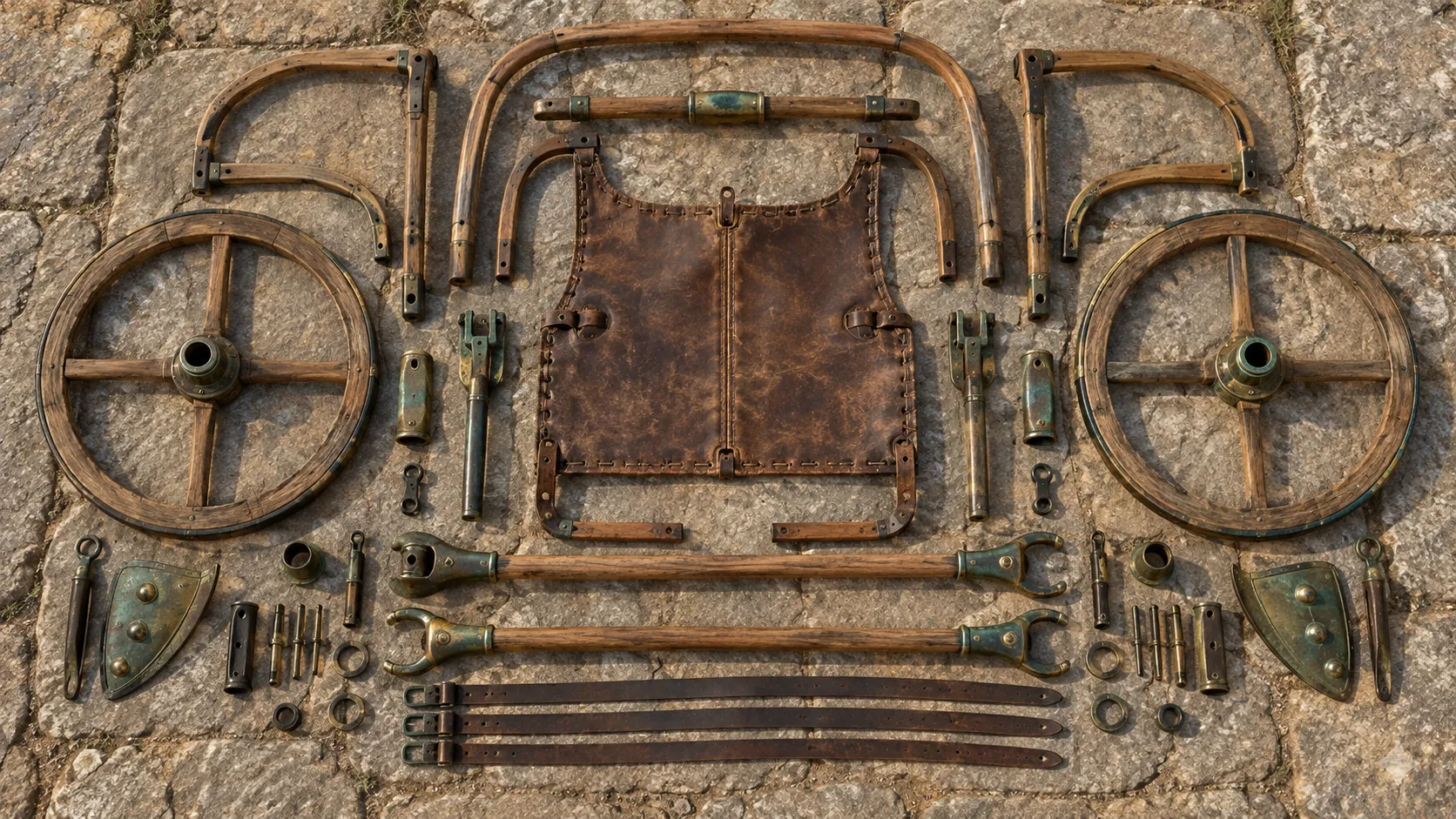
Physical reconstruction from these records and from comparative evidence — Egyptian chariot remains, Hittite examples, and iconographic sources including the Warrior Vase from Mycenae — consistently points to the same vehicle profile. The frame was constructed primarily from bent wood, likely ash or elm for flexibility and strength. The wheel was spoked, typically with four spokes in the Mycenaean style. The platform was small, designed to carry exactly two men: a driver and a warrior.
The completed vehicle weighed between 25 and 35 kilograms. A fit adult male can carry approximately 40–50 kg over short distances without difficulty. The chariot’s crew could physically lift and carry their own vehicle if the terrain required it.
This is not a weapon designed to smash through a line of infantry. This is a vehicle designed to move a heavily armored man quickly across terrain that would exhaust him if he crossed it on foot.
The Taxi Theory: What Scholars Now Believe
The dominant modern interpretation of Bronze Age chariot use — developed by scholars including A.F. Littauer, J.H. Crouwel, and later supported by Robert Drews’s detailed analysis in The End of the Bronze Age — positions the Mycenaean chariot primarily as battlefield transport rather than a fighting platform.
The model works as follows. Bronze Age Greek warriors fought in heavy bronze armor — the Dendra panoply, the most complete surviving example, weighs approximately 15 kilograms and covers the torso, arms, and legs. Moving any significant distance in this equipment at fighting pace was exhausting. A warrior who had marched to the battlefield in full armor before the engagement even began was already disadvantaged.
The chariot solved this. The warrior rode to his fighting position, dismounted, and engaged the enemy on foot. When he needed to reposition — to pursue a retreating opponent, withdraw from an unfavorable engagement, or move to a different section of the line — the chariot returned to collect him. The driver remained with the vehicle throughout, managing the horses, maintaining position near the fighting, and retrieving the warrior when needed.
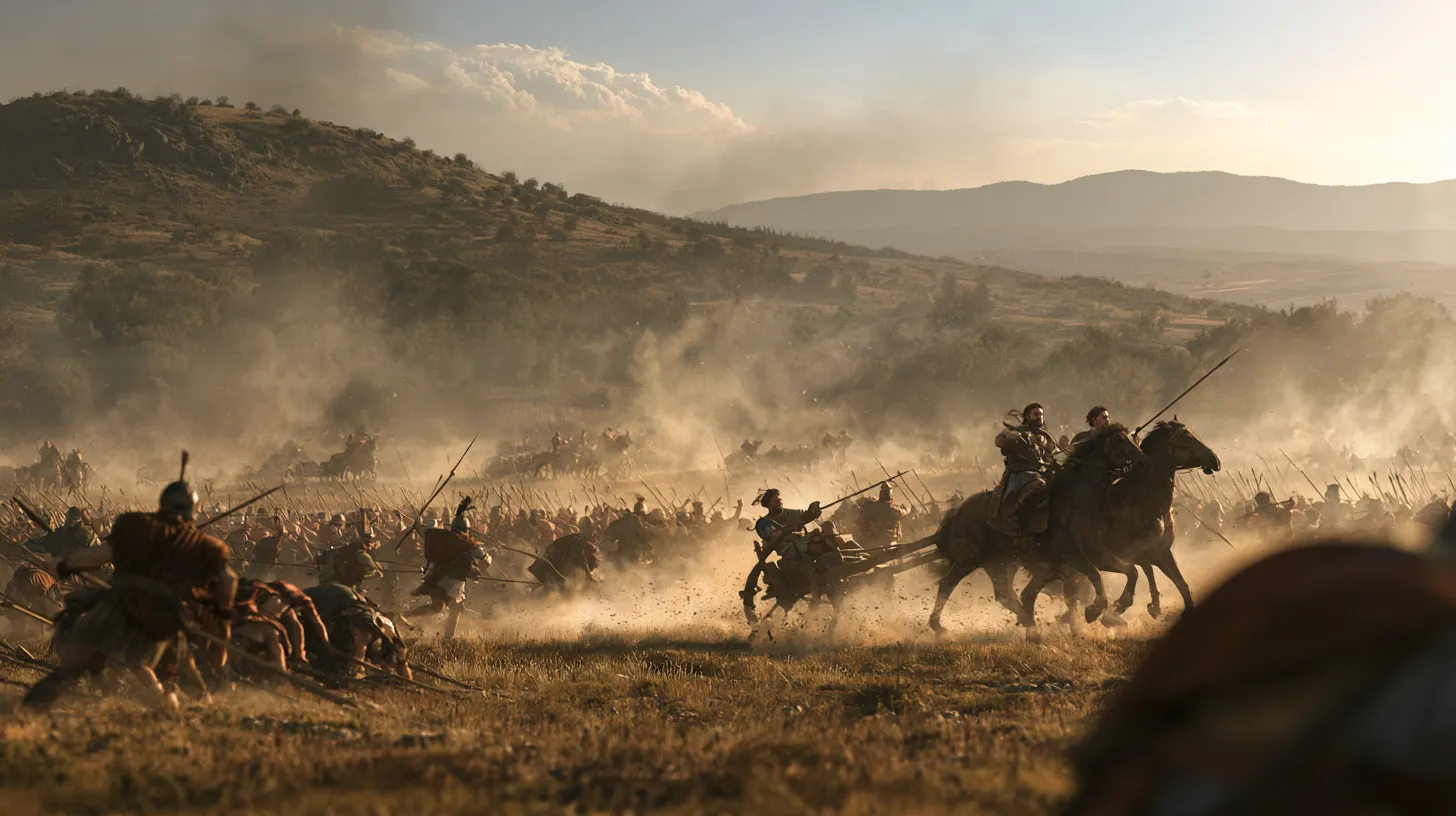
This explains what Homer actually describes with greater accuracy than the cavalry-charge reading does. In the Iliad, heroes repeatedly arrive at combat by chariot, dismount, and fight on foot. They taunt each other from chariots at a distance. They use chariots to escape when a fight turns against them. Actual chariot-to-chariot combat in the poem is rare and usually incidental. The vehicle is almost always a means of getting somewhere, not a weapon in itself.
Why the Chariot-Charge Image Survived So Long
The misreading has a straightforward explanation: later chariot warfare genuinely did involve charges. Egyptian New Kingdom battle reliefs — particularly those depicting Kadesh, where Ramesses II fought the Hittites around 1274 BCE — show mass chariot engagements that look more like cavalry battles. Assyrian reliefs from later centuries show similar tactics. The cavalry charge image was real; it simply belonged to a different military tradition and a later period than Homer’s Mycenae.
Bronze Age Greek terrain also discouraged mass chariot charges. The Greek mainland is predominantly rocky, hilly, and broken — not the flat alluvial plains of Mesopotamia or the Nile Delta where wheeled vehicles operate most effectively. A terrain-adapted military culture would naturally develop chariot doctrine suited to its landscape, which in Greece meant precision mobility rather than mass shock action.
The Linear B palace records reinforce this. Knossos alone inventoried over 200 chariot bodies and nearly 500 pairs of wheels in a single administrative period — numbers consistent with a managed transportation fleet, not a shock cavalry arm. Damaged vehicles were repaired and returned to inventory. Wheels were tracked separately from bodies, suggesting modular maintenance. This is logistics documentation, not cavalry preparation.
What This Changes About Homer
Reading the Iliad through the taxi model does not diminish the epic — it clarifies it. Scenes that read as poetic convention or heroic exaggeration resolve into recognizable military procedure when the correct operational context is applied.
Nestor’s famous advice in Book 4, where he instructs the Greek forces to use their chariots to deliver warriors to precise positions rather than simply charging en masse, reads less like tactical wisdom from an old man and more like a technical reminder of standard doctrine — the kind of thing a seasoned commander would say to troops who were perhaps getting overexcited.
The image of heroes driving toward each other across the plain, exchanging insults before dismounting to fight, looks less like Hollywood drama and more like two taxi services deploying their passengers to the same address from opposite directions.
The chariot that Homer describes with such precision was a precision instrument. Weighing 30 kilograms. Carrying two men. Moving fast across terrain that would have broken a marching soldier before the first spear was thrown.
Not a tank. A taxi. And in the hands of a Mycenaean warrior elite who understood exactly what it was for, considerably more effective than a tank would have been.

