Assyria Tracked Deported People Like Grain and Livestock
Biblical History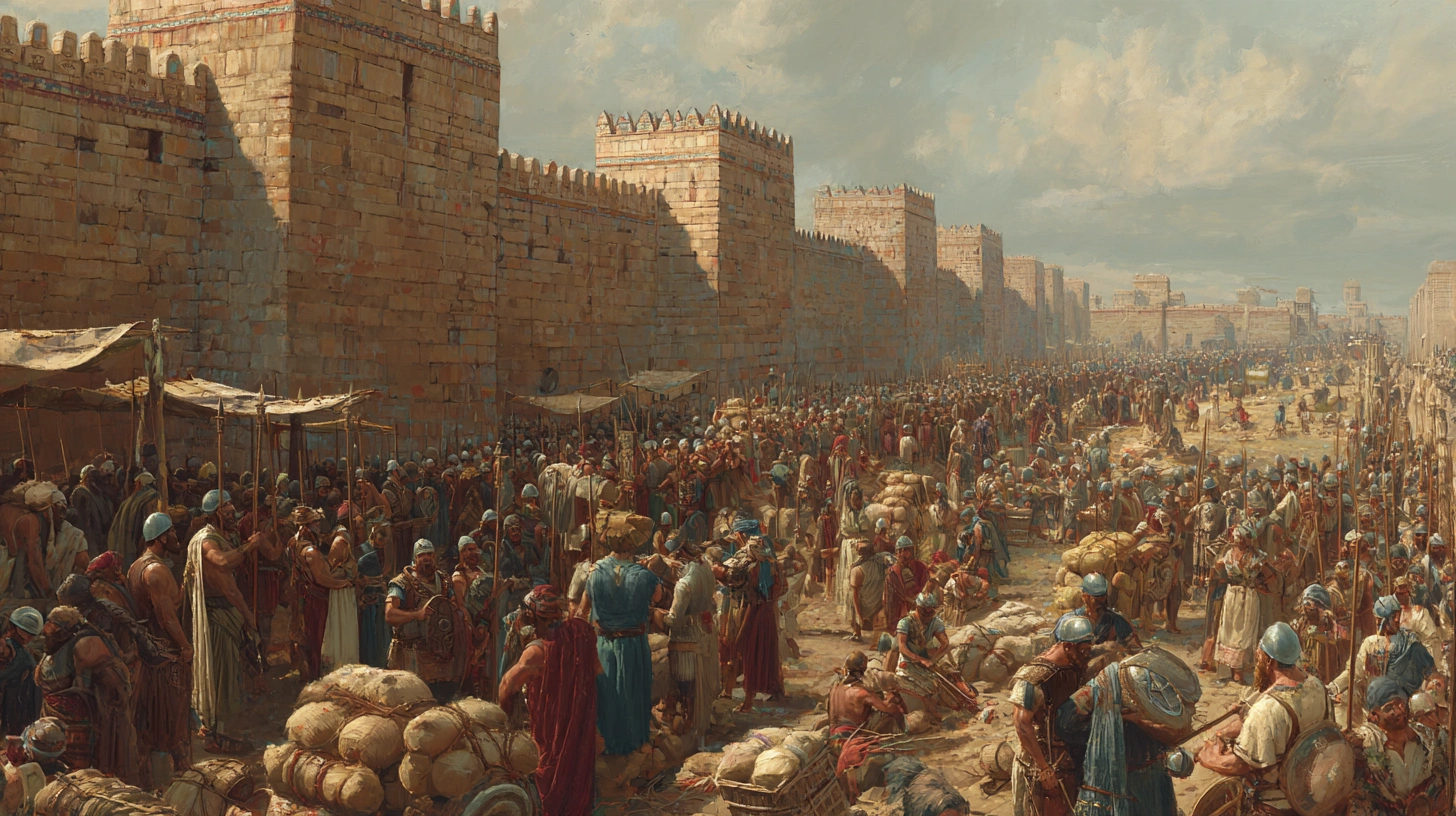
AI reconstruction, not a photograph.
Administrative tablets recovered from Nineveh and other Assyrian centers record the forced relocation of conquered populations with the same bureaucratic precision the Assyrian state applied to grain allocations or livestock counts. When Assyrian armies conquered a city or region, they did not simply loot and withdraw. The population was counted, and a portion was relocated, and the resulting transfers were entered into palace records, filed alongside the routine paperwork of an empire that kept careful track of nearly everything it owned, taxed, or controlled.
A Bureaucracy for Moving People
Mass deportation became a deliberate, sustained policy of the Neo-Assyrian state, especially from the reign of Tiglath-Pileser III onward in the mid-eighth century BCE, and continuing under his successors, including Sargon II and later kings who ruled from Nineveh itself. Scholars studying the practice, building on foundational work by historian Bustenay Oded, have catalogued deportations across dozens of separate campaigns spanning more than a century, drawing on the tens of thousands of cuneiform tablets recovered from Nineveh’s palace archives alone, a collection that today numbers in the tens of thousands of individual documents housed largely in the British Museum. The population was not simply displaced and forgotten once relocated. Conquered people were registered, and at least some of that registration survives today in the same administrative genre of text used to track the empire’s grain, livestock, and other movable resources, organized by the same scribal bureaucracy and stored in the same palace archives.
The Fall of Samaria, Counted Precisely
The clearest surviving example of this system in action concerns the fall of Samaria, capital of the northern kingdom of Israel, after a lengthy siege that ended around 722 or 721 BCE, following a rebellion against Assyrian rule that the biblical Book of Kings also describes from the losing side. Sargon II, who took the Assyrian throne around the time the city fell, claimed credit for its capture in his own royal inscriptions, recorded on the Khorsabad Annals discovered at his purpose-built capital northeast of Nineveh. According to that text, Sargon deported 27,290 people from Samaria, a figure precise enough to suggest an actual count rather than a rounded boast. The inscription does not stop at the headline number, either. It goes on to note that fifty chariots were formed from among the deportees themselves, meaning at least some of the displaced population was not simply set to manual labor but folded directly into Assyrian military units, a detail that complicates any simple picture of deportees as an undifferentiated mass of forced laborers with no further role in the empire that had conquered them.

How Historians Actually Find Them in the Records
Tracing what happened to specific deported populations afterward is harder than the dramatic headline numbers suggest. Assyrian administrative texts do not, as a rule, label individual commoners with an ethnic term like Israelite or Judahite, however useful that would be for modern historians trying to follow the trail. Instead, scholars working through the corpus of later Assyrian legal and administrative documents identify likely descendants of these deportees indirectly, chiefly by tracking distinctively Yahwistic personal names, names built around a theophoric element referring to the god of Israel and Judah, that continue to appear among individuals living and working inside the Assyrian heartland decades after the original conquest, showing up as witnesses on contracts, parties to land sales, and names on ration lists. One recent academic survey identified just over a hundred such individuals across the surviving documentation, a small but genuine trace of a much larger displaced population, recoverable only through careful, patient philological work rather than any single tablet that simply announces who these people were or where they had originally come from.
Labor Assigned Like Any Other Resource
The broader pattern visible across this administrative corpus is one of categorization and assignment. Deportees appear in economic texts sorted by origin, by skill, and by destination, put to work on state building projects, in agricultural resettlement meant to repopulate depopulated frontier regions, and in specialized production, including the textile workshops that supplied cloth to the Assyrian court and military, an industry scholars know relied heavily on organized, skilled labor gathered from across the empire’s conquered territories. The specific origins and destinations changed from campaign to campaign, and from king to king, but the underlying administrative logic stayed remarkably constant across more than a century of Assyrian rule: conquered populations were treated as a resource to be managed, tracked, and assigned, using the same record-keeping habits, and often the same scribes, the empire applied to every other form of state property passing through its hands.
A Strategy of Deliberate Fragmentation
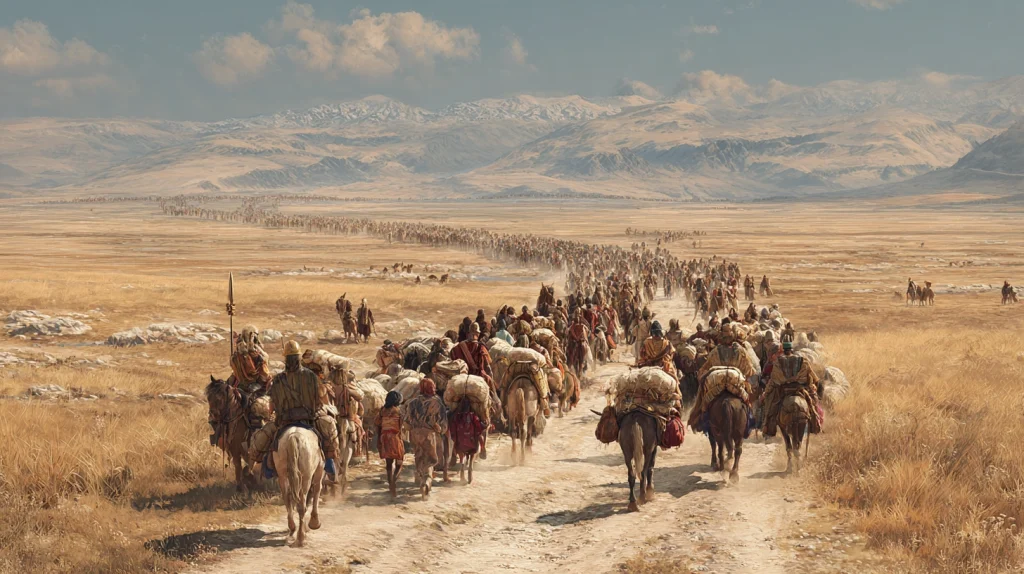
Historians studying this system generally agree it served a purpose beyond simple punishment or plunder. By scattering conquered populations and mixing them with other displaced groups in new labor contexts far from their original homeland, Assyrian administrators disrupted the shared geography and leadership structures that organized resistance would have required, a calculation that appears deliberate rather than incidental given how consistently the empire repeated the pattern across widely separated conquests. A community broken apart and resettled among strangers, with no unified territory and no intact leadership, had little practical means of organizing a return home, whatever grievances individual households continued to carry with them into their new circumstances. At the same time, scholars have noted that deportees were not necessarily condemned to a uniquely miserable existence once resettled. As a class, they appear to have been integrated into the existing pool of Assyrian labor rather than singled out for especially harsh treatment, absorbed into a heartland whose population the empire was actively, and deliberately, trying to grow.
Behind the administrative language of these records, entries counting tens of thousands of people from a single conquered city or noting the formation of a chariot unit from among the displaced, sat individual households uprooted permanently from everything they had known: a home, a local shrine, neighbors, a language of daily life that would soon have to compete with Akkadian in an unfamiliar city. Their names, where they survive at all, turn up not in dramatic narrative but scattered quietly through legal contracts and ration lists decades after the fact, filed away in the same registers the Assyrian state used to track grain and livestock, a bureaucratic afterlife for people whose original displacement was itself never recorded as anything more than a line of numbers on a royal inscription boasting of conquest.

