Methuselah and Adam Overlapped by 243 Years, by the Text
Biblical History
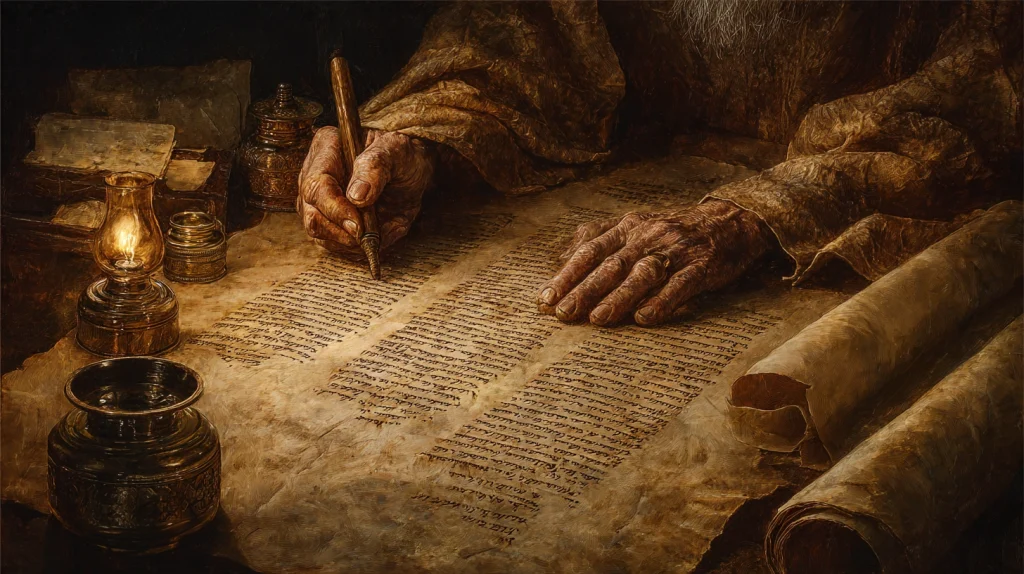
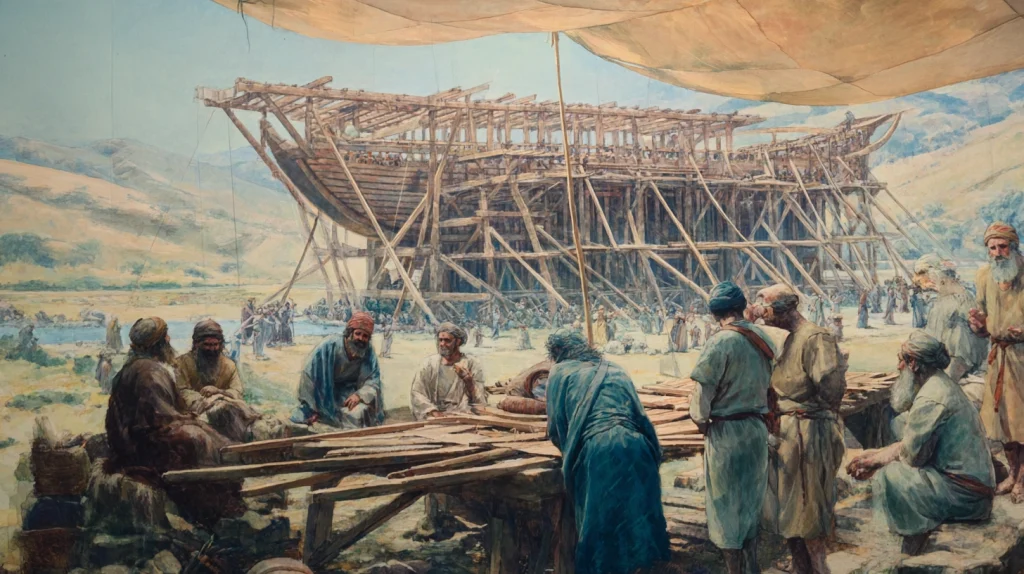
AI reconstruction, not a photograph.
By the Bible’s own arithmetic, Methuselah and Adam were alive together for 243 years. Add up the ages Genesis 5 gives for each patriarch, generation by generation, and that overlap is not a matter of interpretation or later tradition layered onto the text. It falls straight out of the numbers already printed on the page.
A Genealogy Built for Counting
Genesis 5 follows the same formula ten times over: a patriarch’s age when his named son was born, how many additional years he lived afterward, and his total lifespan at death. That structure makes the chapter unusual among ancient genealogies, both inside and outside the Bible. Most simply list who descended from whom, a bare chain of names with no way to convert it into elapsed time. Genesis 5 hands the reader everything needed to build an actual timeline, year by year, from the text alone, without any external calendar, astronomical reference, or later tradition required to fill in the gaps. Every patriarch from Adam to Noah gets the same three data points in turn, repeated with almost administrative consistency across ten full generations of the family line.
Doing the Math to Methuselah
Starting from Adam’s birth as year zero, the chain runs forward one birth at a time. Adam was 130 when Seth was born, placing Seth’s birth in year 130. Seth was 105 when Enosh arrived, year 235. The pattern continues through Enosh, Kenan, Mahalalel, and Jared, each birth landing further down the timeline as their own recorded ages accumulate, until Enoch, at 65, fathers Methuselah in year 687. Genesis 5:5 gives Adam’s full lifespan as 930 years, meaning Adam did not die until year 930. Since Methuselah was already alive from year 687 onward, that leaves 243 years, close to a quarter of a millennium, during which grandfather and great-great-great-great-grandson occupied the same world at the same time, however distant their relationship might otherwise seem across so many named generations.
A Life That Reaches to Noah
The same counting carries forward just as cleanly, and just as mechanically, into the next generation. Methuselah was 187 when Lamech was born, in year 874. Lamech was 182 when Noah arrived, in year 1056. Genesis 5:27 gives Methuselah’s own total lifespan as 969 years, the longest of any figure named in the chapter and, by tradition, the longest lifespan recorded anywhere in the Bible, putting his death in year 1656 by this cumulative count. Since Noah was already alive from year 1056, Methuselah and Noah shared the world for exactly 600 years. One man’s lifetime, on this reading, stretched from a period when Adam himself was still living all the way to the eve of the flood that Noah would eventually survive, a single continuous life bridging the two defining figures of the entire chapter.
A Second, Earlier Overlap
A third overlap sits earlier in the same chapter and involves the two names bookending the whole genealogy. Lamech, identified in Genesis 5 as Noah’s father, was born in year 874 by the running count. Adam, as already established, lived until year 930. That leaves 56 years during which the first man named in the Bible and the father of the man who built the ark were, on this same literal reading, alive at the same time, two figures usually treated as belonging to entirely separate eras of the biblical story, one at its very opening and one at the threshold of its first great catastrophe.
Fewer Years Than Generations Suggest
Genesis 5 lists eight generations between Adam and Noah, Seth, Enosh, Kenan, Mahalalel, Jared, Enoch, Methuselah, and Lamech, which might suggest a long, slow unfolding of separate eras, each one giving way quietly to the next as its own generation passed. The lifespans the chapter records complicate that impression considerably. With every patriarch living for centuries rather than decades, the actual overlap between generations turns out to be far larger than eight generations would normally imply in any ordinary genealogy, ancient or modern. Methuselah’s own life alone reaches backward into Adam’s lifetime and forward into Noah’s, meaning a single individual’s memory could, in principle, have connected the first human generation directly to the last one before the flood, without needing a second or third witness to bridge the gap. Jewish tradition has long taken note of one detail in particular: year 1656, the year this count places Methuselah’s death, is also the traditional year of the flood itself, a coincidence commentators across the centuries have treated as unlikely to be accidental, some suggesting his very name carried a warning tied to the disaster that would arrive the year he died.
Why the Numbers Don’t Agree Across Versions
None of these years appear in Genesis as calendar dates. They are entirely derived, added up generation by generation from the ages the text supplies, a method scholars and religious chronologers alike have used for roughly two thousand years, from the rabbinic Seder Olam Rabbah in the second century CE, which built a full chronology of biblical history on exactly this kind of cumulative reckoning, to Archbishop James Ussher’s famous seventeenth-century calculation that placed creation in 4004 BCE using the same genealogical method extended across the rest of the Hebrew Bible. The total depends heavily on which ancient version of the text is being counted, since the Greek Septuagint records different ages at fatherhood for several of these same patriarchs than the Hebrew Masoretic Text does, numbers that shift the resulting cumulative chronology by centuries once carried all the way down the line from Adam to Noah and beyond. The arithmetic above follows the Masoretic figures most familiar from modern Bibles, the same numbers underlying most English translations in wide use today, but it is worth remembering that this represents one internally consistent reading among more than one surviving ancient tradition, not a single settled calendar the Bible itself states outright in so many words.
What the exercise does show clearly, regardless of which ancient text one starts from, is how differently these genealogies read once the arithmetic is actually carried out rather than simply skimmed as a list of names. A chapter that looks, on first glance, like ten separate and orderly generations turns out, once the years are added up, to describe a handful of extraordinarily long lives overlapping one another so extensively that the distance between Adam and Noah collapses into something far more intimate than a simple count of names would ever suggest on its own.

