Egyptian Chariots Met Disaster on Unstable Seabed
Biblical History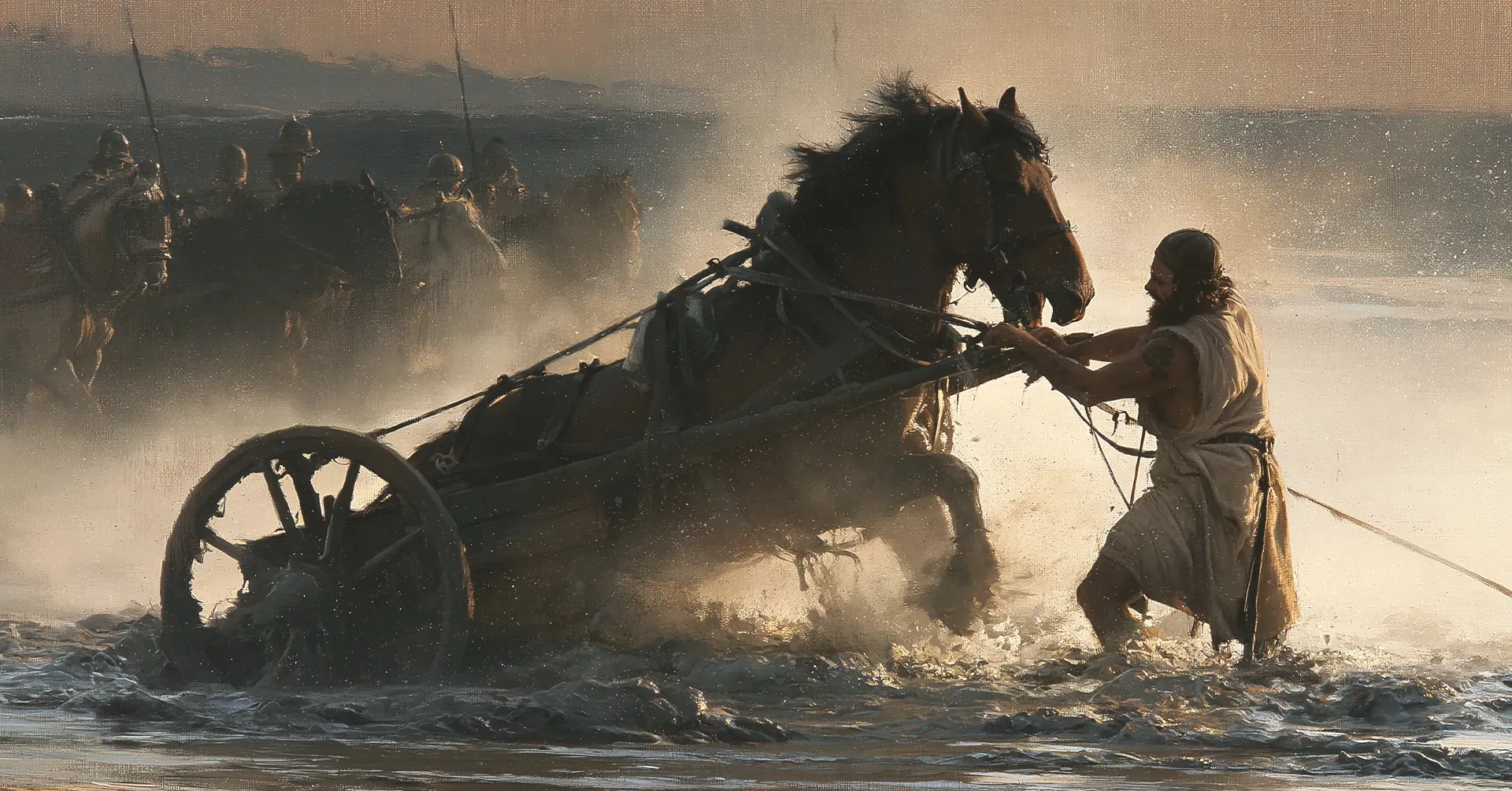
AI reconstruction, not a photograph.
Shallow water can still kill an army. The biblical script makes a direct, terrifying point about the physics of ancient warfare: while modern readers often picture the Israelites crossing a deep, oceanic abyss, the theory of a shallow lagoon or coastal lake does not require a mere puddle. Horses and heavy war chariots driven at speed onto highly unstable ground face immediate, catastrophic tactical disaster.
The setting is the eastern Nile Delta or a nearby coastal frontier in the biblical account of the Exodus, though the text provides no date. Exodus 14:25 states that the Lord clogged the wheels of the Egyptian chariots so that they drove with immense difficulty. The panicked Egyptians immediately cried out that the Lord was fighting for Israel against them. This highly specific textual detail suggests a heavy, slowing surface, and the historical theory of a saturated lagoon fits it perfectly.
The Trap of Soft Mud
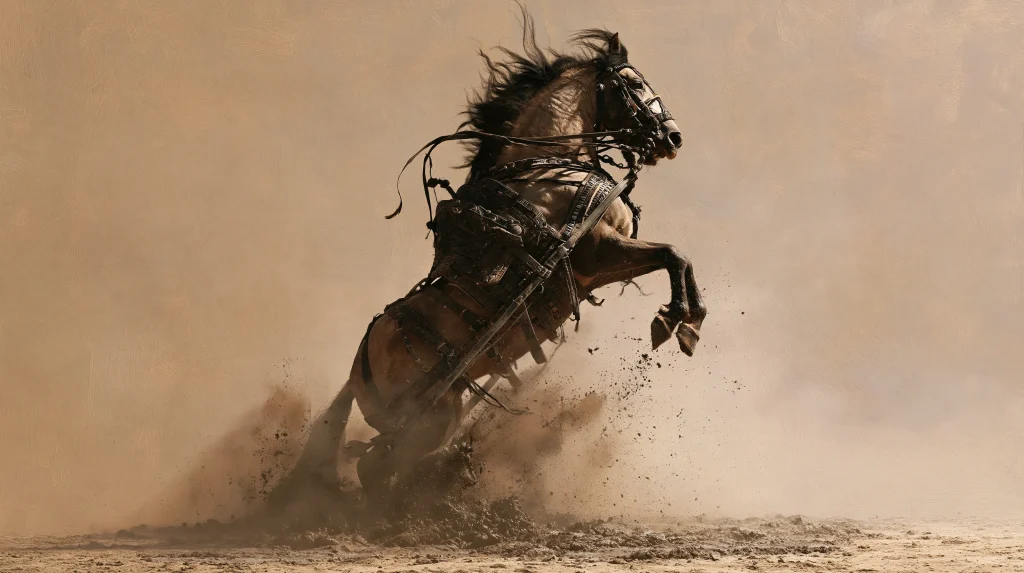
From general military knowledge of the ancient world, light two-wheeled war chariots were the absolute apex predators of the battlefield. They were devastatingly fast on firm, flat ground, acting as highly mobile archery platforms that could outflank traditional infantry. However, they were notoriously hard to maneuver on soft mud or wet sand, where narrow wooden wheels quickly sink to their axles and galloping horses stumble and snap their legs.
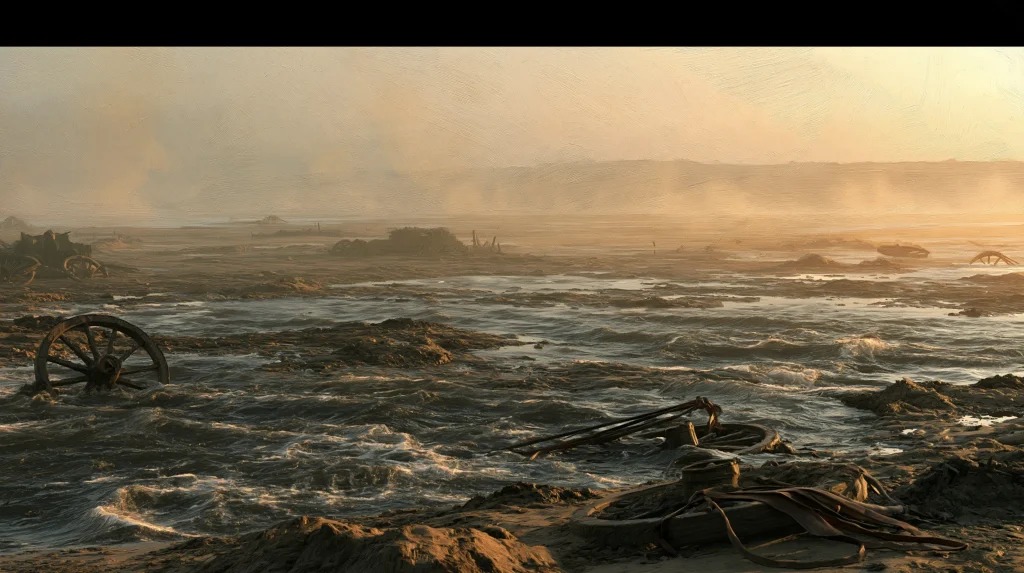
A sudden return of displaced water over such treacherous ground would effortlessly trap men and animals as they desperately tried to turn their rigs around. The biblical script describes the returning water killing soldiers who were already caught and completely immobilized inside a coastal basin.
Depth and Helplessness
The text of Exodus does not explicitly say the water was shallow, and the later Song of Moses clearly speaks of vast depths. However, both ideas can be true simultaneously in a physical landscape, since a coastal basin or tidal lake can be shallow at its edges and deep in the middle. The sheer volume of returning water from a displaced lagoon would easily drown men weighed down by armor and tangled in leather harnesses, regardless of oceanic depth.
The true horror of the passage is the utter helplessness of the situation. Fast, highly trained elite fighters in the most advanced military vehicles of their era are brought to a complete halt by the ground itself. Once they are immobilized in the muck, unable to retreat or advance, the water simply comes back.
A Deadly Coastline
Because the brief is thin on geographical specifics, historians and biblical scholars continuously debate the exact crossing site, but the physical mechanics of the disaster remain tactically sound. A mobile chariot force deployed into a swamp is a dead force.
What can be said plainly about the event is profoundly narrow: the text clearly states that the chariot wheels clogged in the seabed, rendering the elite force completely immobile. The sea needed no great oceanic depth to be utterly deadly for chariots trapped in the mud.

