The Parted Sea’s Walls of Water Defy Natural Physics
Biblical History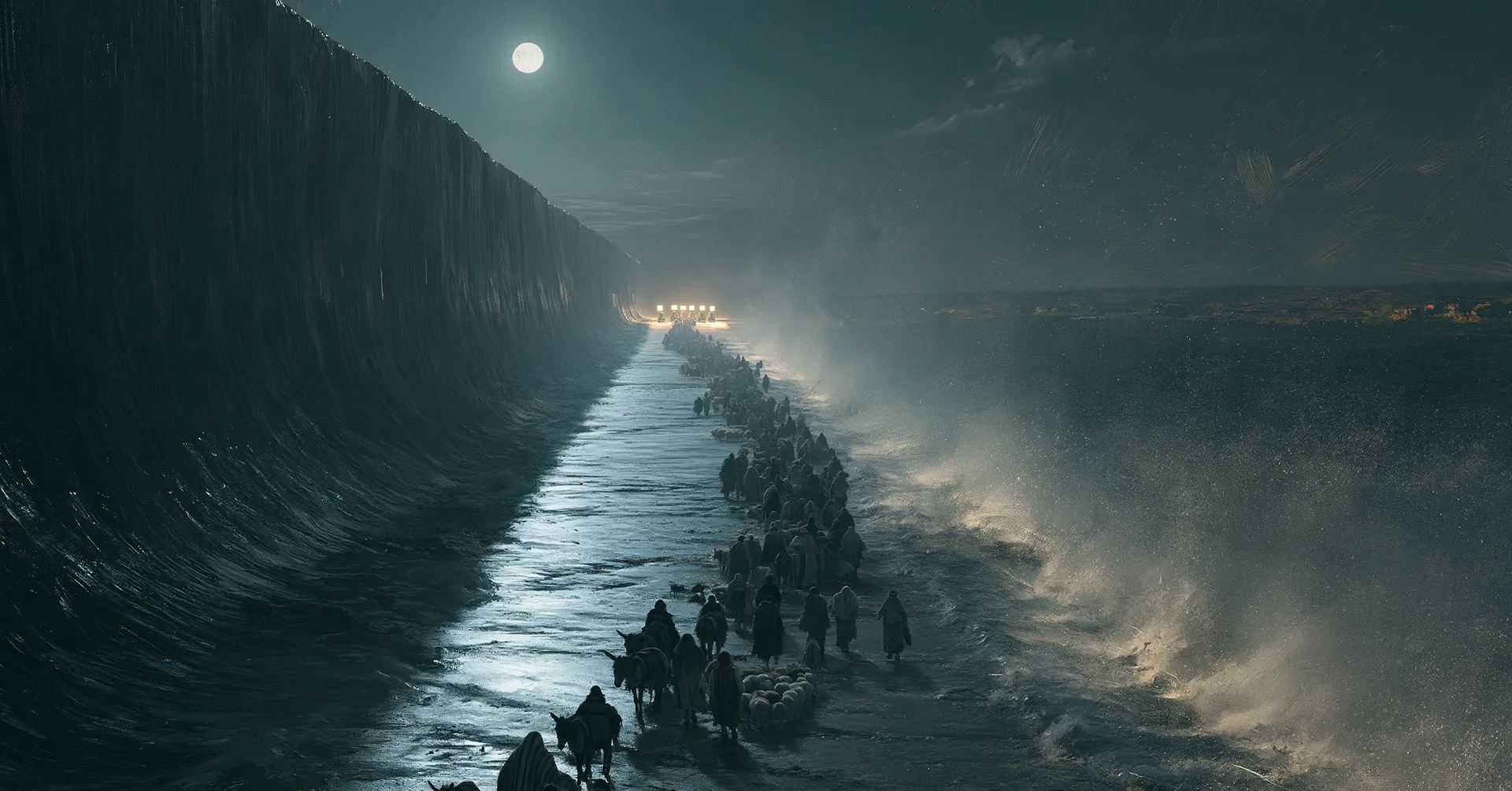
AI reconstruction, not a photograph.
Exodus 14:22 provides the most famous and enduring image of the ancient crossing, stating that the Israelites went into the sea on dry ground, with the waters forming a wall to them on their right hand and on their left. It is an incredibly striking visual—a narrow, traversable corridor framed by towering, unnatural cliffs of seawater. However, it is also the specific textual detail that natural scientific explanations strain the most to match.
The setting is Egypt’s eastern frontier during the biblical account of the Exodus, though the Bible gives no exact date for the event. The verse immediately preceding this scene says a strong east wind blew all night and turned the sea into dry land. Because the script provides this meteorological detail, modern readers and scientists have frequently attempted to model a natural explanation for the parting of the waters, trying to bridge the gap between ancient text and physics.
The Limits of Wind Setdown
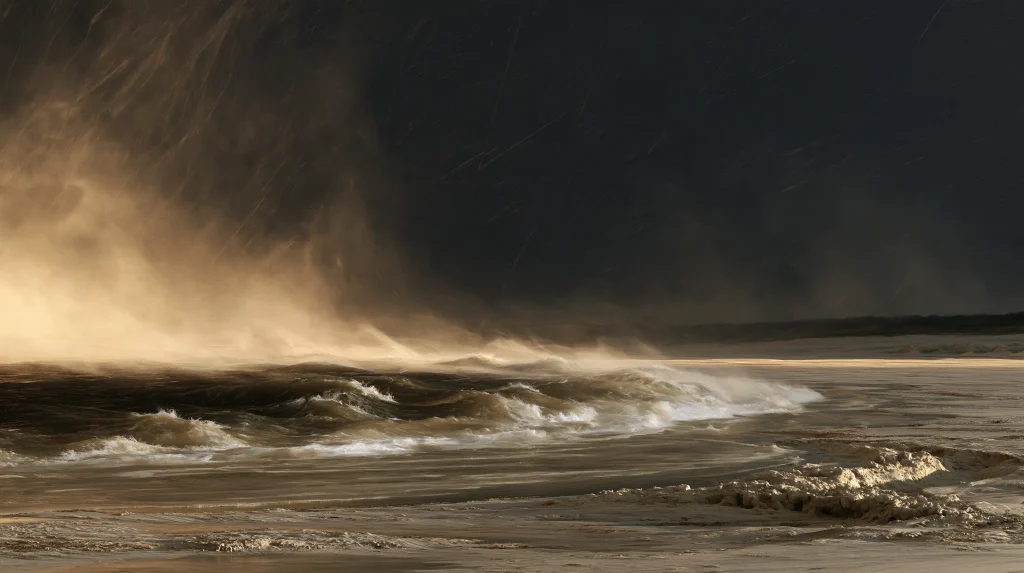
Scientists frequently model a specific hydrological process called wind setdown to explain the biblical event. In this rare phenomenon, a steady, powerful wind pushes water to one end of a shallow lake or coastal lagoon, temporarily exposing the ground beneath.
Computer simulations confirm that this process could theoretically account for a temporary dry path in certain lake settings on the eastern frontier. However, a wind-driven strip of exposed mud would not naturally produce standing walls of water on both sides. The physical mechanics of wind setdown displace water entirely to one side, leaving a gradual slope rather than the sheer, vertical liquid cliffs described in the text.
The scientific model results are highly careful about acknowledging their physical limits. A computer simulation can prove that the exposure of ground by wind is physically possible in these environments, but it cannot say exactly where or when it happened, nor can it determine whether the “walls” described in the text were literal phenomena.
Poetic Language and Defensive Barriers
Readers handle this physical discrepancy in different ways. Some take the towering walls entirely literally, viewing the event as a direct, physics-defying miracle that suspends the natural laws of gravity and fluid dynamics. Others interpret “wall” as poetic language signifying divine protection.
The specific Hebrew word used in the text can mean a defensive barrier or fortress wall, a sense it carries in other passages of the Hebrew Bible. To an ancient audience, the water acted as a flank guard against the pursuing army, rather than a literal architectural structure. Later in the narrative, the Song of Moses speaks of the water being piled up and standing like a heap. This, too, is highly figurative language, designed to be sung in victory rather than analyzed as a meteorological report.
A Corridor of Dread
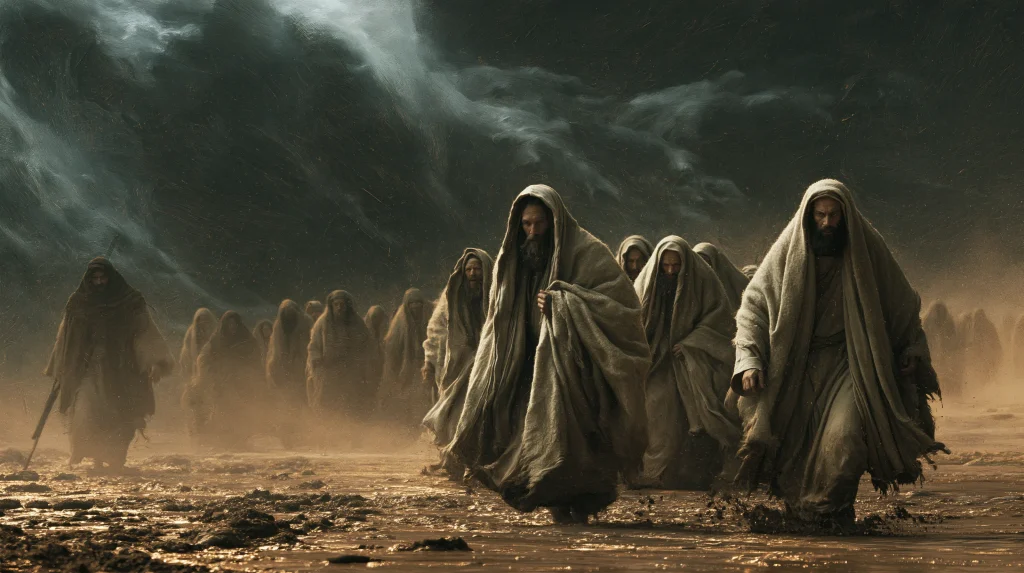
The true darkness of the narrative lies in what those walls of water meant for the pursuing Egyptians. The exact same water that acted as a defensive barrier for one people hung precariously over the other. The Egyptian elite charioteers willingly entered a saturated corridor with the weight of the sea held back menacingly above their heads, entirely dependent on the same phenomenon that allowed their prey to escape.
What can be said plainly about the ancient account is extremely narrow: the biblical text definitively pictures walls of water, modern science can effectively model a wind-swept path, and no current scientific model reproduces both walls simultaneously.

