Isaiah 14’s Throne on the Mount of Assembly in the North
Biblical History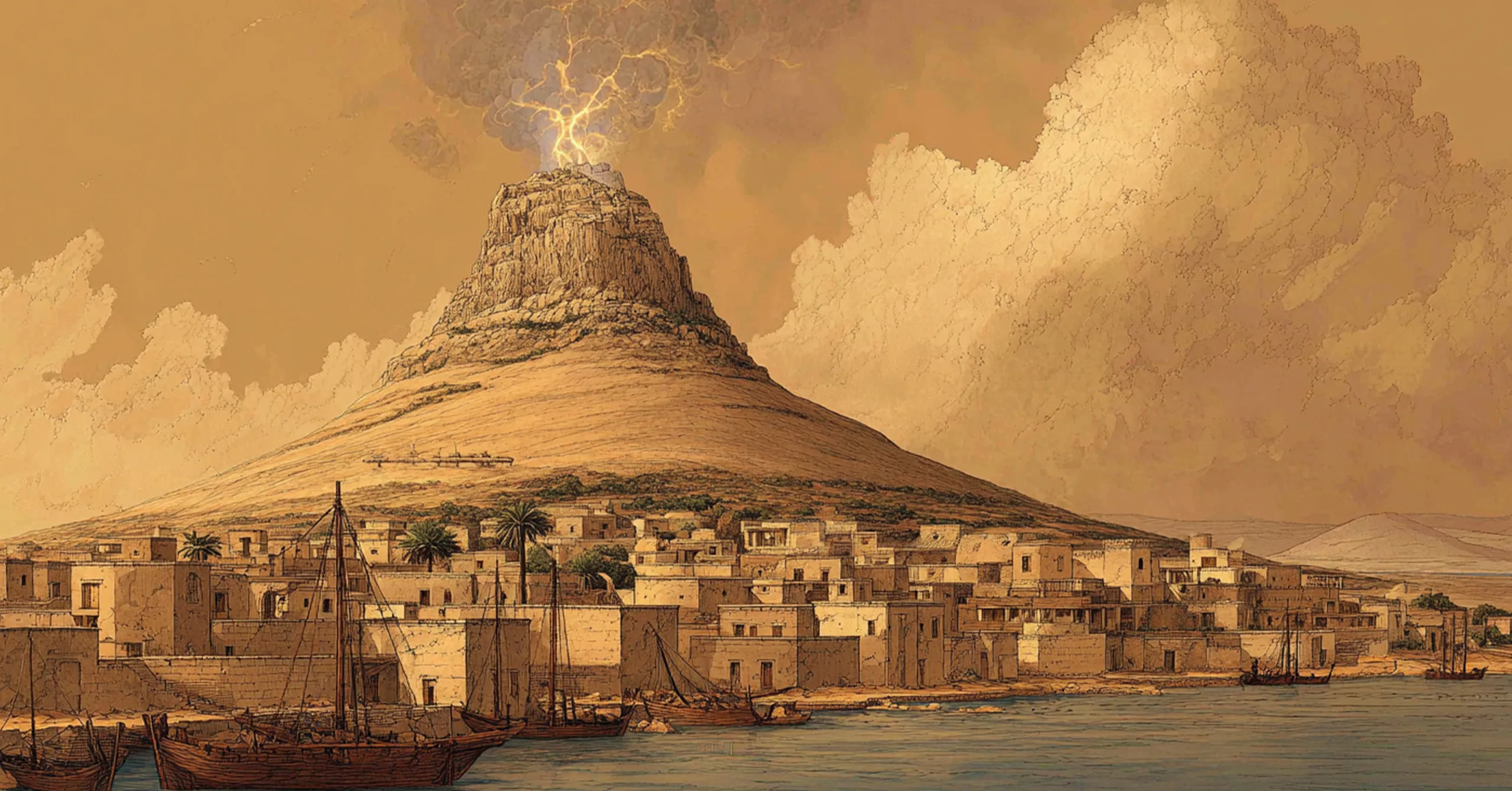
AI reconstruction, not a photograph.
Isaiah 14:13-14 gives a proud figure five “I will” boasts: to ascend into heaven, to raise a throne above the stars of God, to sit on a mountain, to climb above the clouds and to be like the Most High. The third is among the strangest, because it names a place: the mount of assembly, in the far north. Where that mountain stood, and what met there, the passage does not say. This article follows the words back to their setting, sets out the two main readings and notes what the passage leaves out.
A Taunt Against the King of Babylon
Isaiah 14 does not begin with the boast. Verse 4 tells the reader to “take up this proverb against the king of Babylon,” and what follows is a song of mockery that Wikipedia, in its article on the chapter, describes as running from verse 4 to verse 21. The oppressor has stopped, and the earth is quiet. The dead kings of the nations rise from their thrones to ask, “Art thou also become weak as we?” (14:10), and the worm is spread under him (14:11).
Verse 12 then calls him “Lucifer, son of the morning,” and verse 16 asks whether this is “the man that made the earth to tremble.” The passage speaks of a man and a king of Babylon, but not which one. Wikipedia lists proposed kings: Nebuchadnezzar II, Nabonidus, Sargon II and Sennacherib. It also notes that scholars such as Blenkinsopp (2000) and Wildberger (1991) treat the figure as standing in for any powerful tyrant. The poem belongs to the Book of Isaiah, among the writings of the Hebrew prophets, and the sources used give no date for it.
Five Boasts in Two Verses
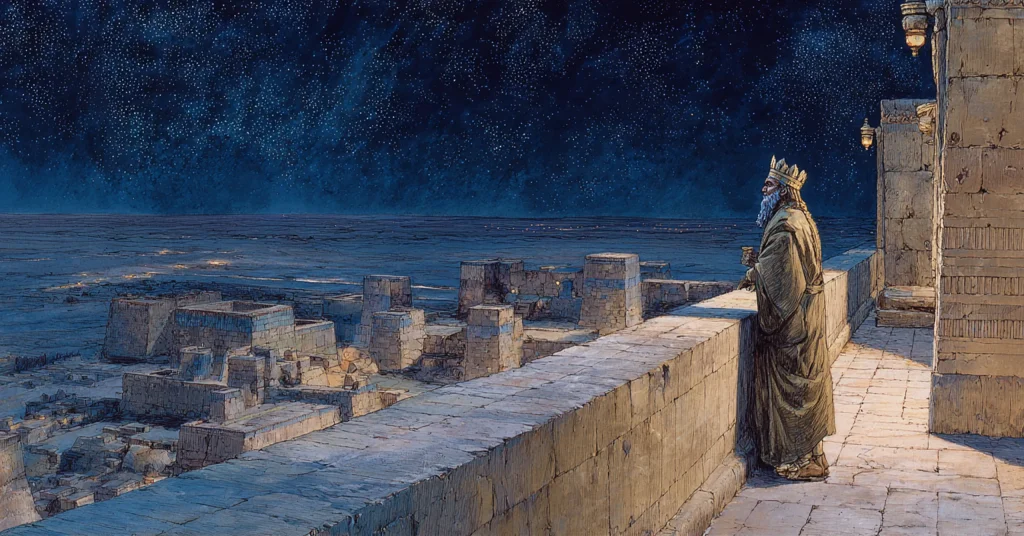
The boasts are spoken “in thine heart” (14:13), and the King James Version gives them in order. “I will ascend into heaven.” “I will exalt my throne above the stars of God.” “I will sit also upon the mount of the congregation,” located “in the sides of the north.” “I will ascend above the heights of the clouds.” “I will be like the most High” (14:13-14).
The list climbs, from heaven to the stars, to a mountain, to the clouds and finally to the Most High. A translation commentary on verse 13 notes that “God” in “the stars of God” renders the Hebrew El, a divine name, and not the more usual elohim. Verse 15 reverses the climb: “Yet thou shalt be brought down to hell, to the sides of the pit.”
The Mountain of the Gods at Ugarit
The Hebrew behind “mount of the congregation” is har-mo’ed, a mountain of meeting or assembly, and the “north” is tsaphon. A translation commentary says the Canaanites believed that on a sacred mountain in northern Syria the gods met in council, and that “The Ugaritic myths mention this many times.” Wikipedia’s article on Mount Zaphon describes the mountain the Ugaritic texts call Sapan: a limestone peak on the Syrian-Turkish border near the mouth of the Orontes, a landmark for sailors that gathers thunderstorms. The port of Ugarit lay about 30 kilometres to the south. Texts found there in the 1920s, among them the Baal Cycle, show that its people believed the storm god Baal and his sister Anat lived in a palace of lapis and silver on the peak.
Two cautions apply. Andy Woods, in a 2004 survey, reports that Walton, Matthews and Chavalas find the exact phrase “mount of the assembly” nowhere in the Ugaritic material, and that the gathering of gods was a common idea across the ancient Near East. Wikipedia, citing Fishbane (2003), says the Ugaritic god Athtar climbed toward the heights, sat on Baal’s throne, proved inadequate and went down to rule the underworld, a tale some scholars hear behind Isaiah’s verses. Woods argues the parallel is weaker than it looks: Athtar is appointed after Baal’s death and does not rebel, while Isaiah’s figure reaches for a place above the stars of God.
The Same Words for Zion
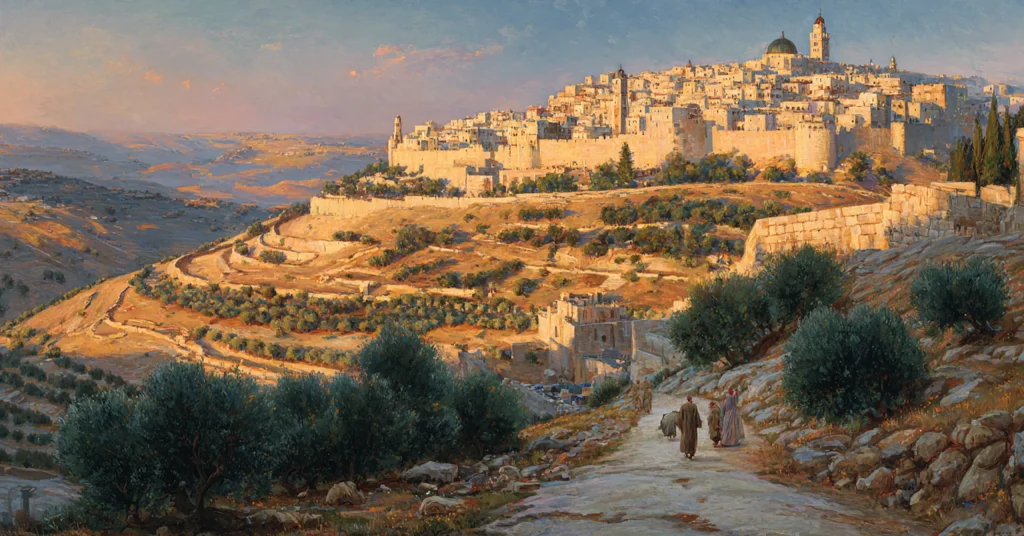
The Bible uses the phrase for another mountain. Psalm 48:2 praises “mount Zion, on the sides of the north, the city of the great King.” A translation commentary on that verse points out that Zion lies in the south of the country, not the north, and says most modern commentators think the psalm borrows the name of Mount Zaphon to call Zion the real mountain of God. The Hebrew noun yarketei, rendered “sides” in both verses, is the same word. An online interlinear glosses it in Isaiah 14:13 as “recesses.”
The word comes back two verses later. A list of the noun’s seven occurrences shows it in Isaiah 14:15 as well, in “the sides of the pit.” The far reaches the figure wants are answered by the far reaches of the pit.
Reading One: A Seat in the Council
Teachers hear a heavenly council in the phrase. Job 1:6 shows “the sons of God” coming “to present themselves before the LORD,” and Psalm 82:1 says that “God standeth in the congregation of the mighty.” The translation commentary compares the mountain council to both. Wikipedia’s article on the divine council adds that Ugaritic texts describe a council with El and Baal presiding, and that scholars dispute who the gods of Psalm 82 are.
The same teachers link Isaiah 14 to Ezekiel 28. There a figure the lament addresses as king of Tyre was “in Eden the garden of God,” stood on “the holy mountain of God” (28:13-14), and had a heart “lifted up” by beauty (28:17), while Isaiah’s figure speaks “in thine heart.” On this reading, the boast claims a seat among the divine, made by a being who already stood close to the throne. Early Christian writers took it up: Tertullian, who lived from about 160 to about 225, quoted Isaiah 14:14 as the devil’s words, and Origen is credited, though the point is disputed, with first identifying the passage’s “Lucifer” with the devil.
Reading Two: A Familiar Image Turned on a King
Ezekiel 28 addresses a ruler too. Wikipedia reports that its oracle is aimed at the prince of Tyre and its lament at his king, the same person, probably Ittobaal III. The prince says, “I am a God, I sit in the seat of God” (28:2). That echoes the Babylonian king’s boast, and on this reading both chapters turn divine imagery against rulers who thought themselves godlike.
Other scholars read Isaiah 14 as the same kind of mockery. Wikipedia says they now generally trace the imagery to Canaanite myth (Day 2010; Fishbane 2003), and Woods quotes Childs calling the myth a “striking illustration” of the king’s fall. Woods concludes that no single myth accounts for every detail. Wikipedia mentions one further proposal: that the poem could apply a second time to Sargon II, who died in 705 BCE and whose body was never recovered.
Where “Lucifer” Comes From
The name in verse 12 is Helel ben Shahar, usually read as “shining one, son of the morning,” and it occurs only here in the Hebrew Bible. The Septuagint gives the Greek Heosphoros, and Jerome’s Latin Vulgate of the late fourth century gives “Lucifer,” a name the King James Version kept. Calvin and Luther rejected reading the verse as the fall of the devil. Isaiah 14 itself never says Satan.
What Can Be Said
The passage states a destination: a mountain in the north and a throne planned for it. It speaks to a king of Babylon without saying which one, and the taunt in verses 4 to 21 mentions neither Eden nor a serpent. A serpent does appear later in the chapter, in an oracle about Philistia in verse 29, but that verse has no link to the boast. The links to Job 1, Ezekiel 28 and Genesis 3 are interpretations built on later reading. Whether the mountain was Zaphon, Zion or a place in the sky, and whom the throne was meant to impress, remains a real puzzle.

