Seraphim Means Burning Ones, and Serpents Share the Root
Biblical History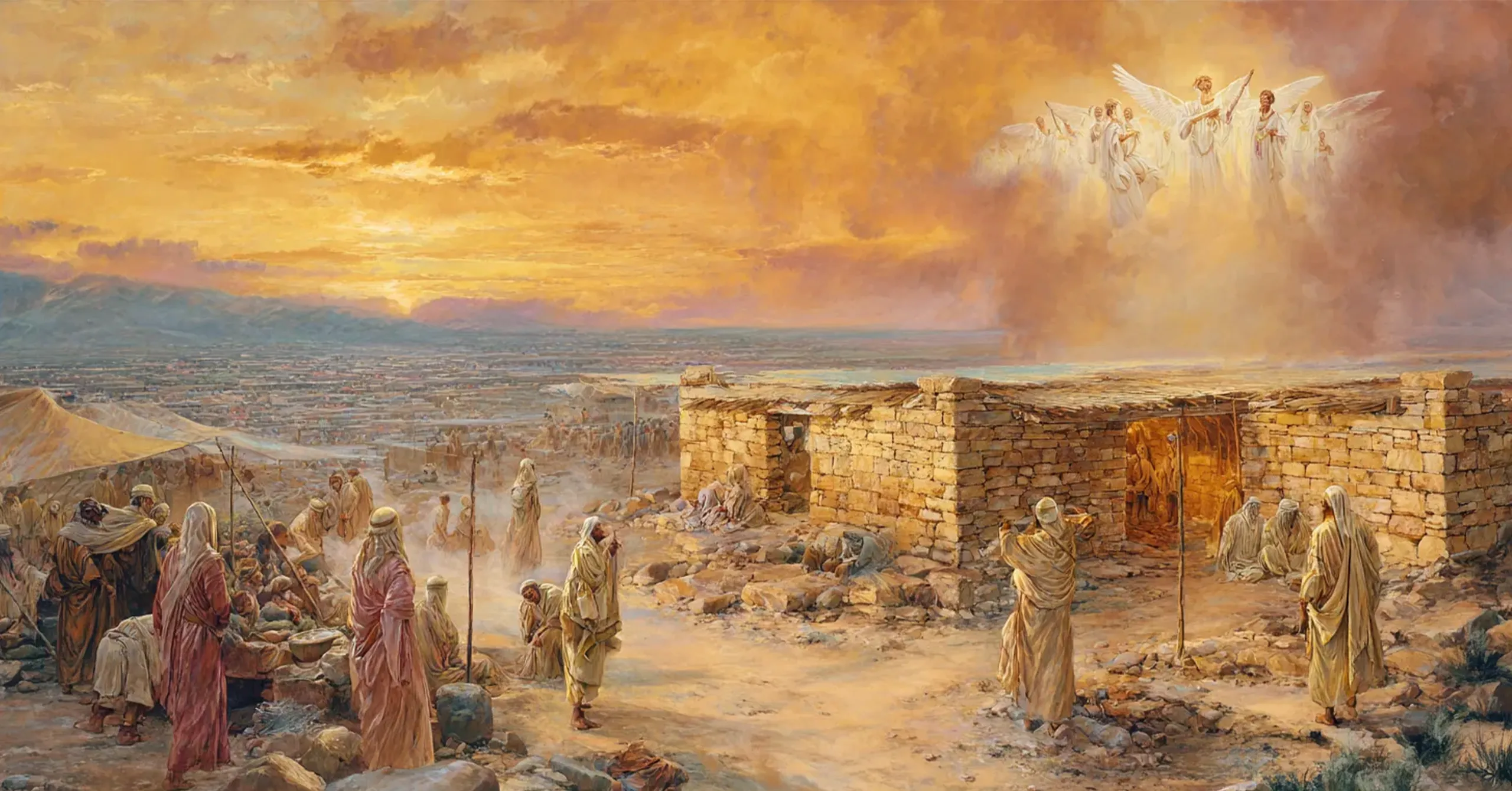
AI reconstruction, not a photograph.
The Hebrew word seraphim means “burning ones”, and the root behind it, saraph, also names the fiery serpents that bite the Israelites in Numbers 21. That overlap is why some readers connect the winged beings of Isaiah’s vision with the serpent of Eden. The connection is a chain of inferences, and the Eden creature carries a different word, nachash. This article sets out the vocabulary first, then each link in the chain and the point where the evidence stops.
One Root, Seven Appearances
The noun saraph appears seven times in the Hebrew Bible: twice in Numbers, once in Deuteronomy and four times in Isaiah, according to Wikipedia’s survey. Five of those uses name snakes (Numbers 21:6 and 21:8, Deuteronomy 8:15, Isaiah 14:29 and Isaiah 30:6). The other two are in Isaiah 6, where the word names heavenly beings. The plural is the same in both settings: Isaiah 6:2 has seraphim, and Numbers 21:6 has ha-seraphim, with the article.
The root is the verb saraph, “to burn”. Why a burning word names a snake is, in Wikipedia’s phrase, “not universally agreed upon.” Two suggestions are fiery colours and the burning sensation of a bite, and the Brown-Driver-Briggs lexicon, as shown on Bible Hub, offers “burning effect of poison.” The King James Version renders the snake uses as “fiery serpents” (Numbers 21:6; Deuteronomy 8:15) and “fiery flying serpent” (Isaiah 14:29; 30:6), and it leaves the Isaiah 6 word as a name, “seraphims.”
The Seraphim of Isaiah 6
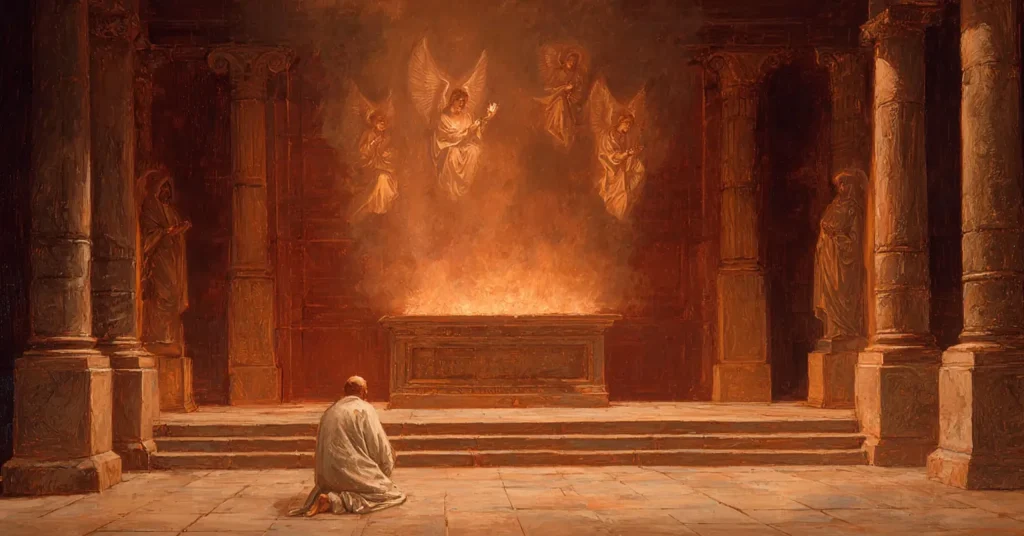
Isaiah dates his vision only by a death: “In the year that king Uzziah died” (6:1). Above the throne stand the seraphim, and “each one had six wings” (6:2). Two wings cover the face, two cover the feet and two are for flying. They cry “Holy, holy, holy, is the LORD of hosts” (6:3), the house fills with smoke (6:4), and one flies to Isaiah with “a live coal” from the altar and touches his lips (6:6-7).
Wikipedia calls this the only place in the Hebrew Bible where the word describes celestial beings. The text gives them faces, feet, voices and a hand, which is a human picture, and Wikipedia notes that a snake-shaped seraph sits awkwardly with it. The scene is full of fire and smoke, yet the text never says the seraphim themselves shine or burn. The name carries that idea, not the description.
The Fiery Serpents of Numbers 21
In Numbers 21:6 “the LORD sent fiery serpents among the people,” and many Israelites died. The Hebrew puts two words side by side. Bible Hub’s interlinear gives han-nechashim, the serpents, and ha-seraphim, the fiery ones. So the Bible does pair the two words, but it does so in Numbers, not in Genesis.
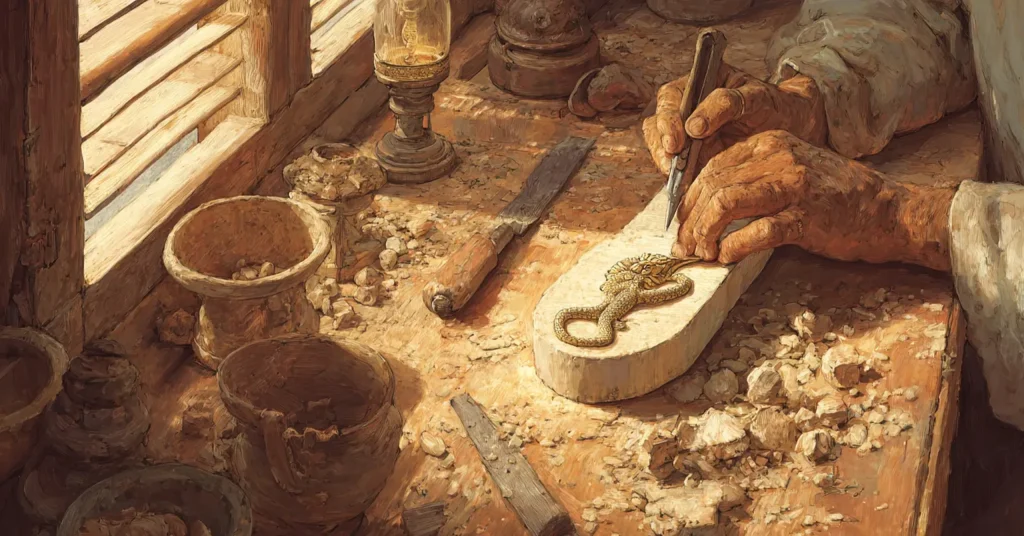
Moses is told, “Make thee a fiery serpent, and set it upon a pole” (21:8), and he makes “a serpent of brass” (21:9). The Hebrew plays on sound here: the word for serpent is nachash and the word for brass is nechosheth, a pun noted in Wikipedia’s article on serpents in the Bible. The bronze figure appears again in 2 Kings 18:4. King Hezekiah breaks it in pieces because the Israelites had been burning incense to it up to that time, and “he called it Nehushtan,” a name that Wikipedia says puns on the Hebrew words for snake or brass.
Winged Serpents in Judah
Isaiah’s own book uses saraph for snakes too. Isaiah 14:29 and 30:6 speak of a “fiery flying serpent,” so the prophet could use one word for a flying snake and for a heavenly being. Wikipedia reports an “emerging consensus” that the Egyptian uraeus, the rearing cobra of royal crowns, is the original source of the seraphim motif, a view it credits to Mettinger (1999) and says is still debated.
Israelite seals borrowed such Egyptian images. Wikipedia, citing Berlin and Brettler (2014), says the cobras on them often had four wings where Egyptian ones had two, and it describes a Judean seal from the eighth century BCE showing “flying asps” with human features. So winged serpent figures were a known image in Judah in the age of the prophets. That is background for Isaiah 6. It says nothing yet about Eden.
The Eden Creature’s Own Word
Genesis 3:1 begins, “Now the serpent was more subtil than any beast of the field.” The Hebrew word is nachash, not saraph. None of the seven appearances of saraph is in Genesis. The Brown-Driver-Briggs entry on Bible Hub lists nachash as a serpent, including the crafty tempter of Genesis 3, and as a mythological fleeing serpent and a sea monster. Strong’s links it to a verb meaning to practise divination.
A shining sense is a different proposal. Wikipedia notes that, because ancient Hebrew was written without vowels, the same consonants can be read as “deceiver or diviner” or as a noun meaning a luminous or shining one. It ties that idea to the gleam of brass, citing Numbers 21:9, Daniel 10:6 and Ezekiel 1:7. In Ezekiel the living creatures “sparkled like the colour of burnished brass,” and in Daniel a man’s arms and feet are “like in colour to polished brass.” Those verses show brass as the colour of heavenly figures. They neither use the word nachash nor mention a serpent. Wikipedia adds that the International Standard Version renders the word “the Shining One,” with “the diviner” and “the serpent” as alternatives.
The Chain, Link by Link
The reasoning runs in four steps. The seraphim are burning ones. Burning suggests brightness. Nachash may mean a shining one. So the creature in Eden may be pictured as a radiant, serpentine being. Each step has a limit.
The first holds, since the root does mean burning. The second is the name’s logic and not the text’s, because Isaiah 6 describes wings, voices, smoke and a coal and never brightness, and in Numbers “burning” may refer to venom or colour. The third rests on a minority reading of the consonants, set beside lexicon entries that list serpent senses. The fourth is the largest jump, since Genesis 3 never calls the creature a seraph and never says it shone.
Some retellings say that ancient Jewish commentators made the link. No commentator is named in the sources used here, and the claim could not be traced to a text, so it is best held as a report and not a citation. The nearest sourced material is Adolfo Roitman’s 1995 survey, as described in an abstract: some early Jewish works, the Life of Adam and Eve and the Apocalypse of Abraham among them, picture the Eden serpent with hands, feet, ears and wings. That is a winged serpent, not a seraph. Wikipedia adds that the creature “is often interpreted as a serpentine angel, Seraph,” citing Ben Stanhope’s study of winged serpents on Hebrew seals, which could not be opened here.
What Can Be Said
The pattern in the vocabulary is real. Fire, serpents and heavenly beings share related words, and Numbers 21:6 places nachash and saraph in one phrase. Whether that pattern reaches back to Eden is an inference. A reader can enjoy the connection as a clue and still ask which text actually says it.

