Judeans in Egypt Vowed to Keep Honouring the Queen of Heaven
Biblical History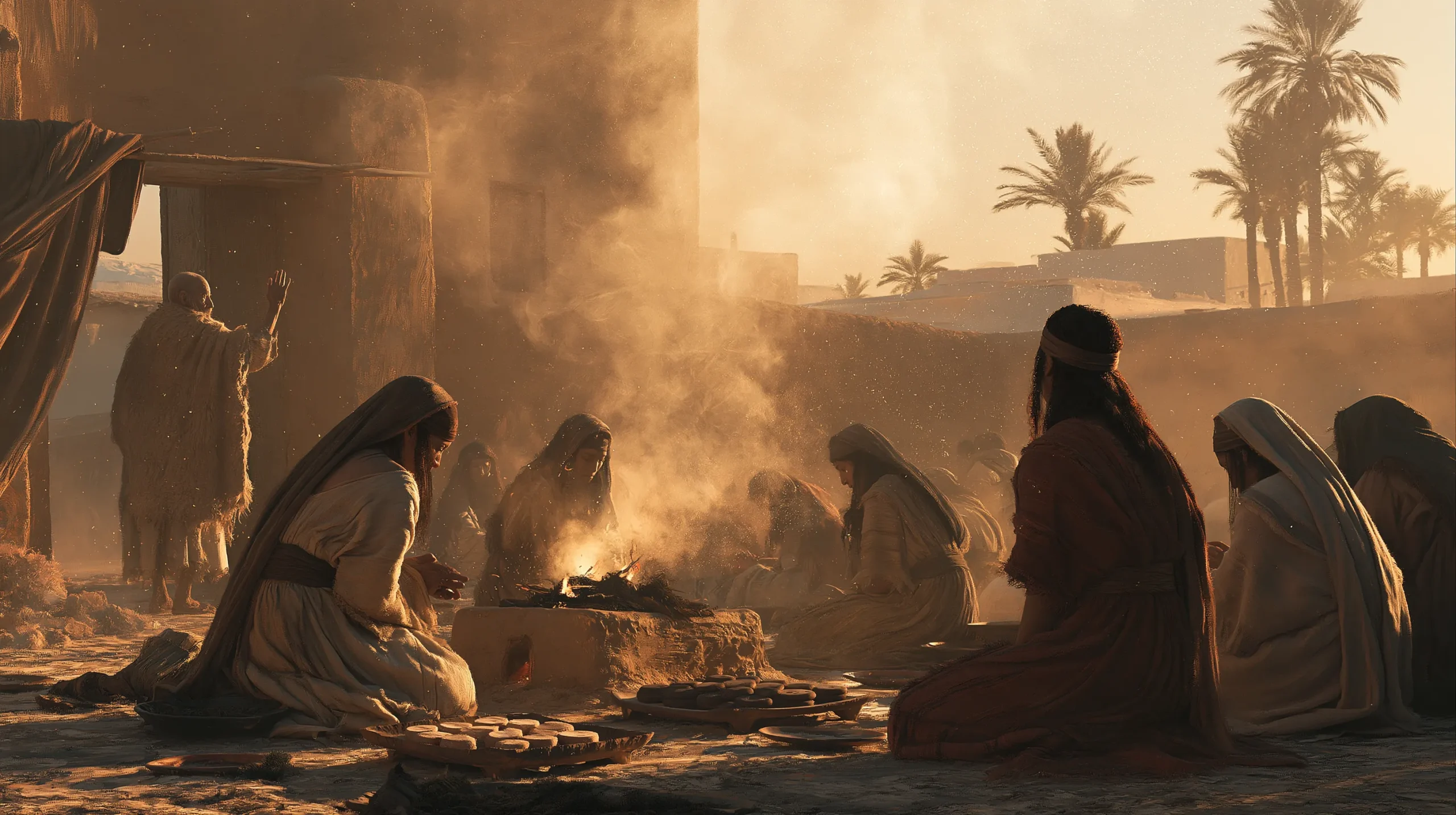
AI reconstruction, not a photograph.
In Jeremiah 44, a great crowd of Judeans in Egypt tells the prophet Jeremiah that they will not listen to him and will keep burning incense to the Queen of Heaven. The women speak for themselves before the chapter ends. It is one of the Bible’s more direct glimpses of popular worship that the prophets condemned, and it leaves a puzzle: the goddess is never named. This article sets out what the chapter says and why the identification stays open.
Judeans in Egypt
Jeremiah 44 comes after the fall of Jerusalem. The chapter gives no year, but the Tyndale Bible Dictionary places the flight to Egypt after 586 BC. According to 2 Kings 25, Ishmael killed the governor Gedaliah at Mizpah, and the people and the army captains “came to Egypt: for they were afraid of the Chaldees.” Jeremiah 43:7 adds that they came “even to Tahpanhes,” and that they “obeyed not the voice of the LORD.”
Jeremiah was among those taken. Chapter 44 opens with a message for “all the Jews which dwell in the land of Egypt,” at Migdol, Tahpanhes, Noph and Pathros. The setting is a scatter of settlements, not a single camp.
A Crowd Answers the Prophet
Jeremiah begins with a warning. Judah’s cities lie in “a desolation,” he says, because the people burned incense to other gods, and he asks why they are doing the same in Egypt (44:2-8). The reply comes from a great multitude: men who knew their wives had burned incense to other gods, and the women standing by (44:15).
Their first words are blunt: “we will not hearken unto thee.” They will do “whatsoever thing goeth forth out of our own mouth,” burning incense and pouring out drink offerings to the Queen of Heaven, as they, their fathers, their kings and their princes did “in the cities of Judah, and in the streets of Jerusalem.” Their case is practical. Back then, they say, there was “plenty of victuals” and they “saw no evil.” Since they stopped, “we have wanted all things,” and sword and famine have consumed them (44:16-18).
The women add a question of their own. They ask whether they made the cakes and poured the offerings “without our men” (44:19), which reads as a claim that their husbands knew and approved. Jeremiah answers with the opposite lesson from the same disaster. The Lord remembered the incense burned in Judah, he says, “therefore is your land a desolation” (44:21-22). He quotes their vows back to them, “We will surely perform our vows that we have vowed,” and predicts that the Judeans in Egypt will be consumed by sword and famine (44:25-27).
Cakes, Incense and Drink Offerings
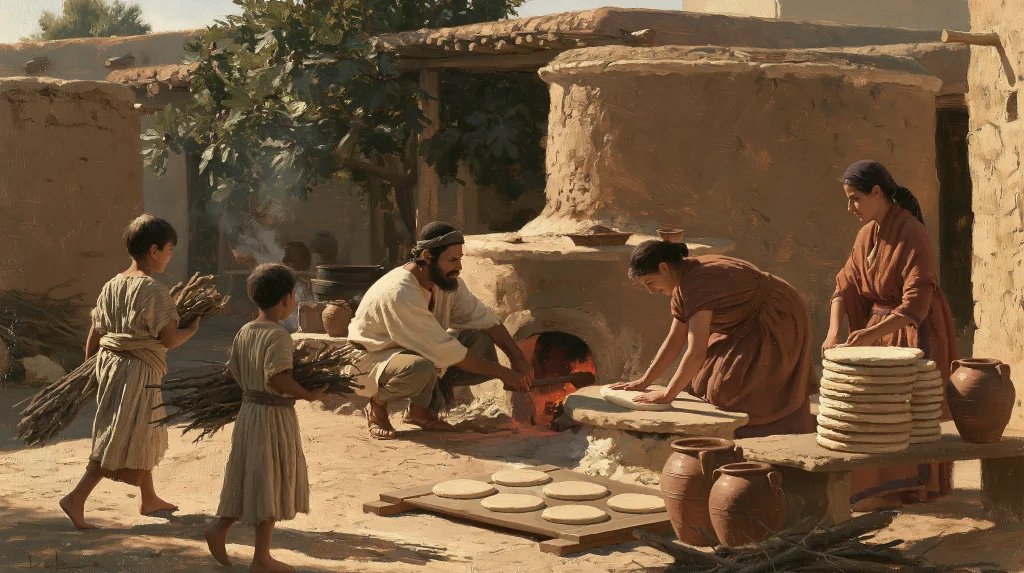
The same worship appears earlier in the book, and there it involves a whole household in Judah. In Jeremiah 7:18 the children “gather wood,” the fathers “kindle the fire” and the women “knead their dough, to make cakes to the queen of heaven.”
What the cakes looked like is uncertain. The King James Version has the women make cakes “to worship her,” but later translations read the Hebrew as a likeness: the NRSV has cakes “marked with her image,” the ESV “bearing her image” and the Jewish Publication Society’s 1917 version “in her image.” The Semantics of Ancient Hebrew Database, an Edinburgh project, says the cakes may have been star-shaped or may have borne the goddess’s image, and relates the Hebrew word to a Babylonian term for a sweet cake used in the cult of Ishtar and Tammuz. Bible Odyssey adds that Raphael Patai proposed that clay and stone molds showing a nude standing female, mostly used to cast figurines and plaques, also served for cakes.
Which Goddess?
The chapter never says who the Queen of Heaven was, and the title is itself a textual puzzle. The database says it is generally agreed that the original Hebrew read “queen of heaven,” and that the Masoretes, who supplied the vowels of the Hebrew text, deliberately vocalised the word to read as the handiwork of heaven, avoiding any hint that Judah worshipped a goddess. The 1915 International Standard Bible Encyclopedia is more cautious, noting that some consider the traditional form an error.
Most commentators, the database adds, identify her with a mother goddess in a local form. The Tyndale Bible Dictionary says she is generally identified with Ishtar, the Babylonian goddess linked to Venus. The 1915 encyclopedia calls Ashtoreth, a goddess of love and fertility whom it equates with Ishtar, the most likely identification, and notes that Assyrians called Ishtar “lady of heaven.” Susan Ackerman argues that the figure combines the East Semitic Ishtar and the West Semitic Astarte, a view she still holds, according to a review of her 2022 essays. Anat, Isis and the planet Venus have also been proposed, though Ackerman objects that Anat had no link to the heavenly bodies and was not offered cakes.
Asherah is sometimes added. At Ugarit, a Bronze Age Canaanite city, World History Encyclopedia says she was Athirat, the wife of the chief god El and a mother goddess. Wikipedia lists “possibly Asherah” among the goddesses called Queen of Heaven. Bible Odyssey calls the title “likely a mixture of different deities,” both a general name and a particular goddess, since local patron goddesses could take on the identity of a Queen of Heaven.
Egypt supplies one outside clue. The database notes an Aramaic text from Hermopolis that mentions a temple of the queen of heaven without naming her, and Bezalel Porten quotes an Aramaic letter from Egypt that sends greetings to “the Temple of Bethel and the Temple of the Queen of Heaven.” Wikipedia dates the Hermopolis Aramaic papyri, as a group, to the late sixth or early fifth century BCE. The title was therefore in use in Egypt outside Jeremiah’s book.
A Goddess Beside Yahweh?
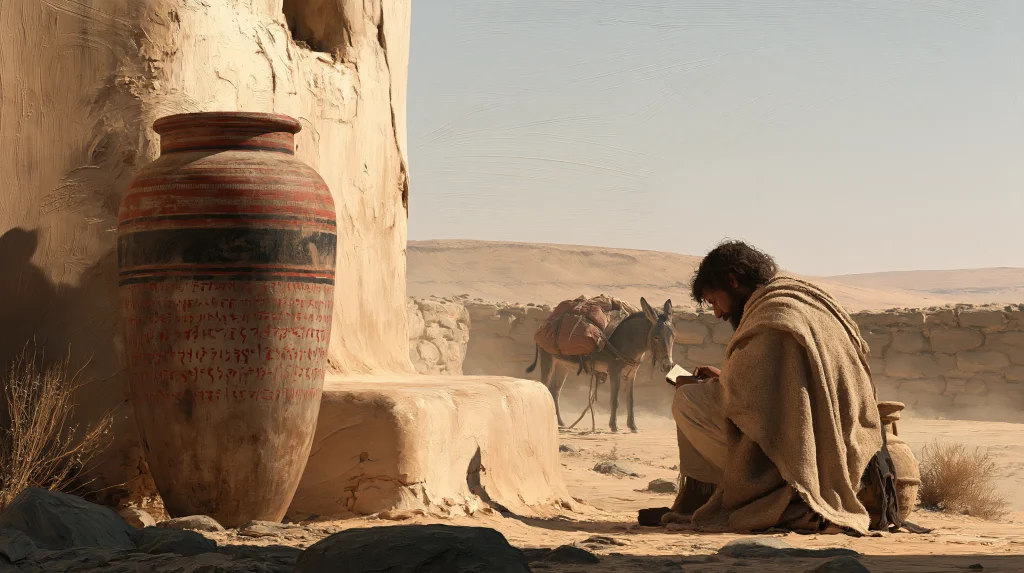
Inscriptions bear on whether a goddess was ever honoured in Israel. At Kuntillet Ajrud, in the northeast of the Sinai Peninsula, a jar bears inscriptions that Wikipedia quotes as “Yahweh of Samaria and his Asherah” and “Yahweh of Teman and his Asherah.” World History Encyclopedia reports a similar phrase at Khirbet el-Qom in the West Bank. It dates both inscriptions to the eighth century BCE, while Wikipedia says both sites were in use about the ninth.
Scholars disagree about “his Asherah.” Some read a goddess paired with Yahweh. World History Encyclopedia notes that the possessive suffix suggests an object, and Wikipedia cites scholars who say the cognate word means “sanctuary” in neighbouring languages, with others proposing a sacred tree. If Israelites sometimes honoured a goddess, Jeremiah 44 would show a practice that outlived the kingdom.
The origin of the worship is also unclear. The Tyndale entry says the worship was probably brought into Judah under Manasseh and largely ended by the prophets and Josiah’s reforms, though it may have survived in secret. The crowd in Egypt instead calls it an inherited custom of kings and princes. These sources do not settle the point.
Whose Voice Is This?
The chapter is told from the side of Jeremiah, who opposed the practice. The women’s claim that the worship brought plenty, and their question about their husbands, come in his report, and the chapter does not say how they would have put it themselves. Bible Odyssey notes that hostility to foreign gods is not unique to Jeremiah. In Phillip J. Long’s review of Ackerman’s essays, the cult is described as one that “gave women religious and political power.” That is an interpretation, not something the chapter states.
What Can Be Said
A crowd of Judeans in Egypt, men and women, refused Jeremiah’s call to stop burning incense to the Queen of Heaven. They called the worship an inherited custom and said it had brought plenty. The title may point to Ishtar, Astarte, a blend of goddesses or, in some lists, Asherah, and the evidence outside the Bible does not settle it. What can be said safely is narrow. The Bible records a worship of the Queen of Heaven among Judeans in Egypt, and the goddess behind the title remains unidentified.

