Leviticus Bans Molech Worship, Yet Judah’s Kings Did It
Biblical History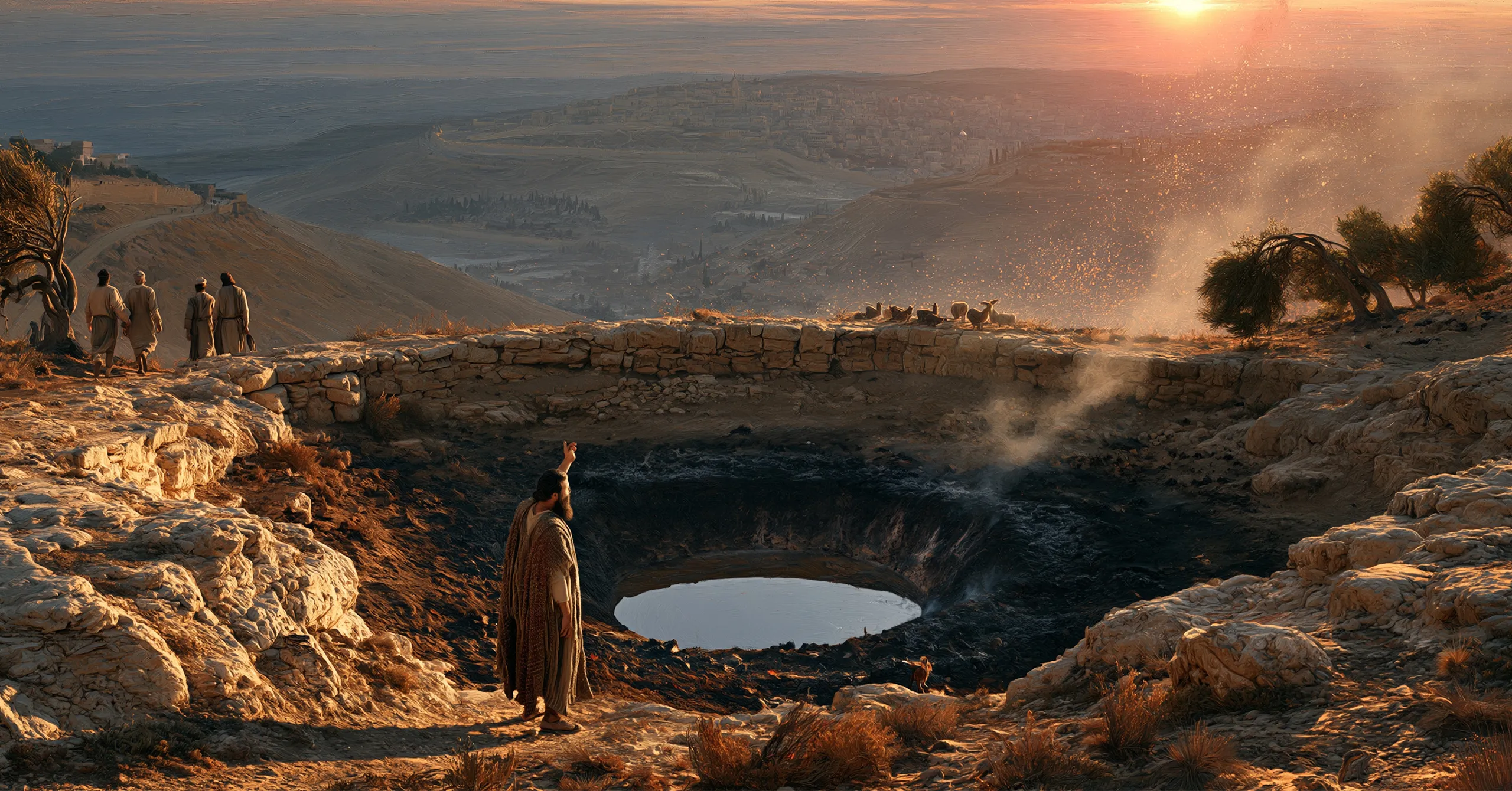
AI reconstruction, not a photograph.
The Bible bans giving children to Molech in a single line, then says the practice reached the throne of Judah. Leviticus 18:21 states the law. The books of Kings say two kings made a son pass through the fire and a third later defiled the valley outside Jerusalem where it happened. This article sets out what those verses say, where the popular picture of a glowing bronze statue really comes from and why scholars still argue over the evidence.
One Line in Leviticus
The King James text of Leviticus 18:21 reads: “thou shalt not let any of thy seed pass through the fire to Molech.” Leviticus 20 repeats the ban with a different verb. Whoever “giveth any of his seed unto Molech” must be put to death, and “the people of the land shall stone him with stones” (20:2). If the community looks away, God says he will set his face against the man and his family (20:4-5). The Encyclopaedia Judaica notes that the law speaks of both giving and passing children to Molech.
The setting is a warning against copying neighbours. Israel is told not to follow “the doings of the land of Canaan” (18:3), and the nations driven out are said to have defiled themselves with such acts (18:24). Genesis 10, the Table of Nations, never mentions Molech at all. The Bible’s own charge is more uncomfortable than a story about foreigners, because it names Israel’s kings.
Kings Who Passed Their Sons Through the Fire
Of Ahaz of Judah, 2 Kings 16:3 says he “made his son to pass through the fire, according to the abominations of the heathen.” Of Manasseh, 2 Kings 21:6 says he “made his son pass through the fire,” and 2 Chronicles 33:6 places it “in the valley of the son of Hinnom.” Chronicles says Ahaz there “burnt his children in the fire” (28:3). Even the northern kingdom is charged: in 2 Kings 17:17 the Israelites “caused their sons and their daughters to pass through the fire.”
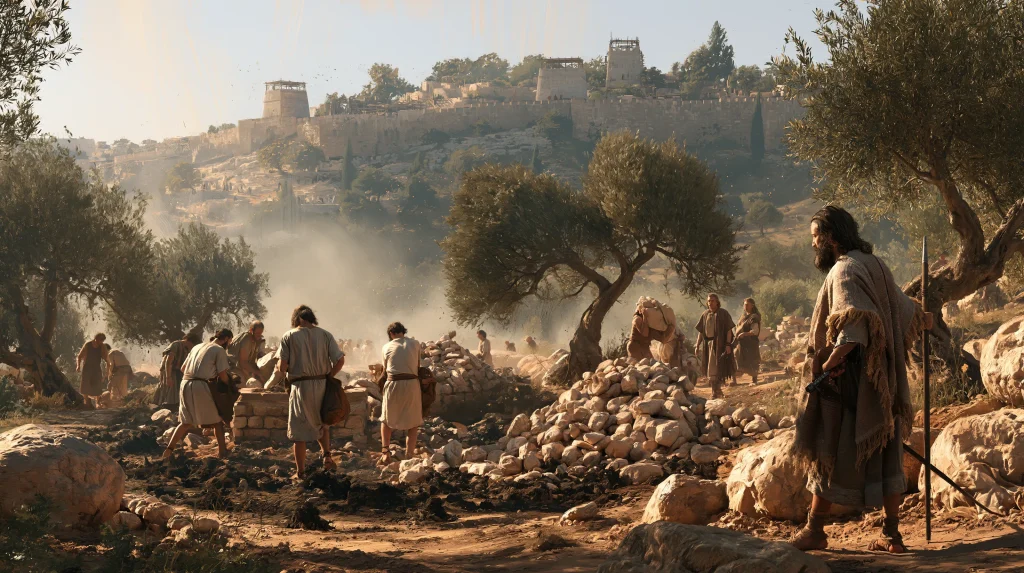
Then comes the reform. According to 2 Kings 23:10, Josiah “defiled Topheth, which is in the valley of the children of Hinnom,” so that no man “might make his son or his daughter to pass through the fire to Molech.” Wikipedia dates Josiah to about 640 to 609 BC and adds that how far his reform went is widely debated among scholars. The Encyclopaedia Judaica calls Ahaz the first king to take part in the worship and says it became firmly established under Manasseh, his son Amon and the start of Josiah’s reign.
The Valley Outside Jerusalem
Topheth lay in the valley of the son of Hinnom, outside the city. Jeremiah condemns the site more than once. In 7:31 the people “have built the high places of Tophet” to burn their sons and daughters, and the place will be renamed “the valley of slaughter.” In 32:35 the shrines are “high places of Baal” in the same valley, yet the children pass “through the fire unto Molech.” Jeremiah 19:5 names Baal alone as the recipient, so the sources do not keep the two names apart. Wikipedia counts eight appearances of the word in the Hebrew text and notes that the valley, Gehenna, later became a place of punishment in Jewish writings.
So far, archaeology adds nothing for Jerusalem. Wikipedia states that no archaeological evidence for the tophet at Jerusalem exists, and a 2014 Biblical Archaeology Review article by Patricia Smith says nothing found in the Hinnom Valley suggests child sacrifice took place there. That leaves the Bible’s wording as the evidence for Judah, which is not the same as disproof.
What “Pass Through the Fire” Meant
Scholars have argued over the phrase for generations. The Encyclopaedia Judaica reads it as literal burning. It points out that the same Hebrew phrase appears in Numbers 31:23 “in an unmistakable context of burning,” and that some neo-Assyrian contracts threaten to burn children. It also records the older rabbinic reading, a rite of passing children through fire and delivering them to pagan priests, and the modern view of a “divinatory or protective rite” in which no one was harmed, which it does not accept. Other passages use harsher words. Jeremiah 7:31 says “to burn their sons and their daughters in the fire,” Ezekiel 16:21 accuses Jerusalem of having “slain my children,” and Psalm 106:38 speaks of “innocent blood” and “the idols of Canaan.” Wikipedia says most scholars agree the biblical ritual was child sacrifice, while a minority argued it was harmless.
Who Was Molech?
The name is a puzzle. The Hebrew letters mlk usually stand for melek, “king,” and New World Encyclopedia says the vowels of Molech were borrowed from bosheth, “shameful thing.” Otto Eissfeldt argued, on the basis of Syriac, that molech meant “vow,” but the Encyclopaedia Judaica says this “can hardly be reconciled with the biblical text.”
The Bible also links Molech to Ammon. First Kings 11:7 says Solomon built a high place for “Molech, the abomination of the children of Ammon,” although verse 5 calls the Ammonite god Milcom, and both New World Encyclopedia and the Encyclopaedia Judaica resist treating the two as one. The Ammonites descend from Lot (Genesis 19:38), Abraham’s nephew, not from Ham.
Where the Bronze Statue Comes From
The Bible describes no statue, no furnace and no drums. The glowing bronze figure of popular retellings comes from Greek and medieval writers, mostly about Carthage. Cleitarchus, around 300 BCE, describes a bronze statue of Kronos with its hands over a brazier. Diodorus Siculus, in the first century BCE, says that during Agathocles’ siege of Carthage in 310 BCE the city sacrificed children to “a bronze image of Cronus, extending its hands, palms up,” so that they fell “into a sort of gaping pit filled with fire.” Plutarch, about 110 CE, adds the noise of “flutes and drums” before the statue.
The picture then entered Bible commentary. In John Gill’s commentary on Jeremiah 7:31, the medieval scholar Rashi, whom Gill calls Jarchi, describes Moloch as an image “made of brass,” heated, with priests beating a drum so that the father would not hear his son. Gill notes the likeness to Diodorus and rejects Rashi’s claim that Tophet was an idol, since Jeremiah treats it as a place.
Carthage and the Argument Over Its Urns
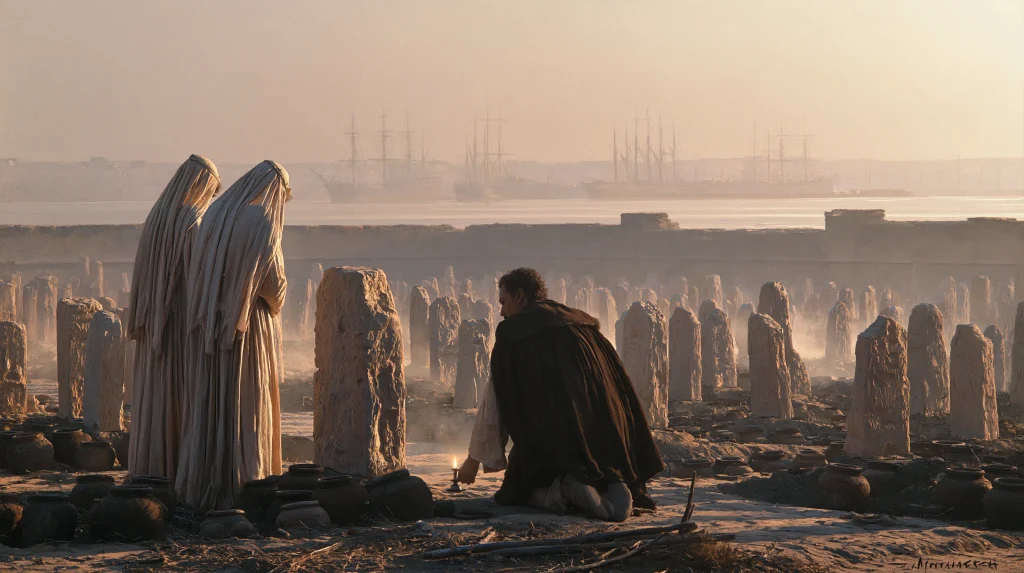
Carthage, a Phoenician colony in what is now Tunisia, has the best-known tophet outside the Bible. Archaeologists apply the biblical word to fields of urns holding the burned remains of infants and lambs, marked by carved stones. The Encyclopaedia Judaica cites some 20,000 burials at Carthage, says they appear to conflict with the classical reports and notes that no child sacrifice has been found in Phoenicia proper, where far less excavation has been done.
Whether the children were sacrificed is disputed. In a 2000 Archaeology Odyssey debate, Lawrence Stager and Joseph Greene argued that stelae, inscriptions and the accounts of classical authors and biblical prophets point to sacrifice, while M’hamed Hassine Fantar called the tophet a resting place for stillborn children and infants who died early. In 2010 Jeffrey Schwartz and colleagues reported on 348 urns holding at least 540 individuals and concluded that tophets were cemeteries for those who died around birth, “regardless of the cause.” Patricia Smith’s team, studying 342 urns, argued that the ages did not match normal mortality and pointed to sacrifice. Schwartz’s group replied in 2017 that “questions remain regarding the reality and extent of Carthaginian infant sacrifice.” Tunisia is far from Judah, so Carthage is an analogy at best.
What Can Be Said
The Bible forbids giving children to Molech, charges Ahaz and Manasseh with making a son pass through the fire, and says Josiah defiled Topheth. The meaning of the phrase, the identity of Molech and the evidence from Carthage are all argued, and the statue and drums belong to later writers. What can be said plainly is that the Bible condemns the practice, names kings who did it and places it in a valley outside Jerusalem.

