Life in Ubar: Inside the Ancient City That Vanished Into the Earth Overnight
History & Origins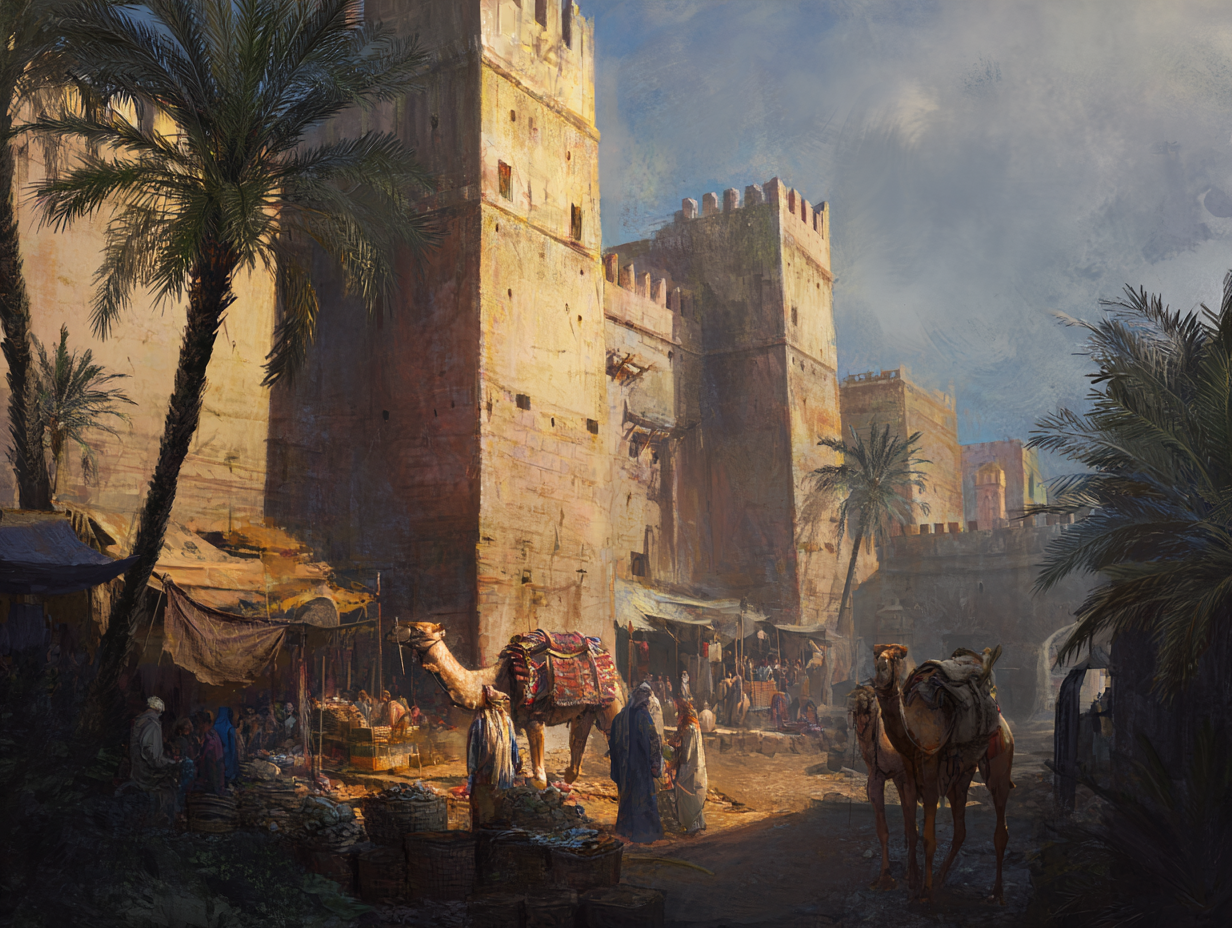
Before the ground swallowed it, Ubar was one of the most important cities in the ancient world.
Located at the crossroads of the Arabian Peninsula’s frankincense trade routes, Ubar sat where caravans converged from the forests of southern Arabia on their way north to the markets of Rome, Mesopotamia, and Egypt. Frankincense was not a luxury — it was essential. Burned in temples, used in medicine, traded at prices that made the cities along its route extraordinarily wealthy. Ubar was one of them.
What Daily Life Looked Like
Imagine a walled fortress city rising from the desert floor. Towers at each corner. Inside: merchants weighing blocks of raw frankincense resin, traders from across the known world negotiating in a dozen languages, camel caravans arriving loaded and departing empty, wells drawing water from the aquifer below. The city’s wealth was real and visible — in its architecture, its fortifications, its position at the center of an economy that connected continents.
Ancient Arab geographers wrote about it. The Quran mentioned it. Explorers crossing the Empty Quarter for centuries heard stories of a city so magnificent its people believed it untouchable.

The Slow Death Beneath Their Feet
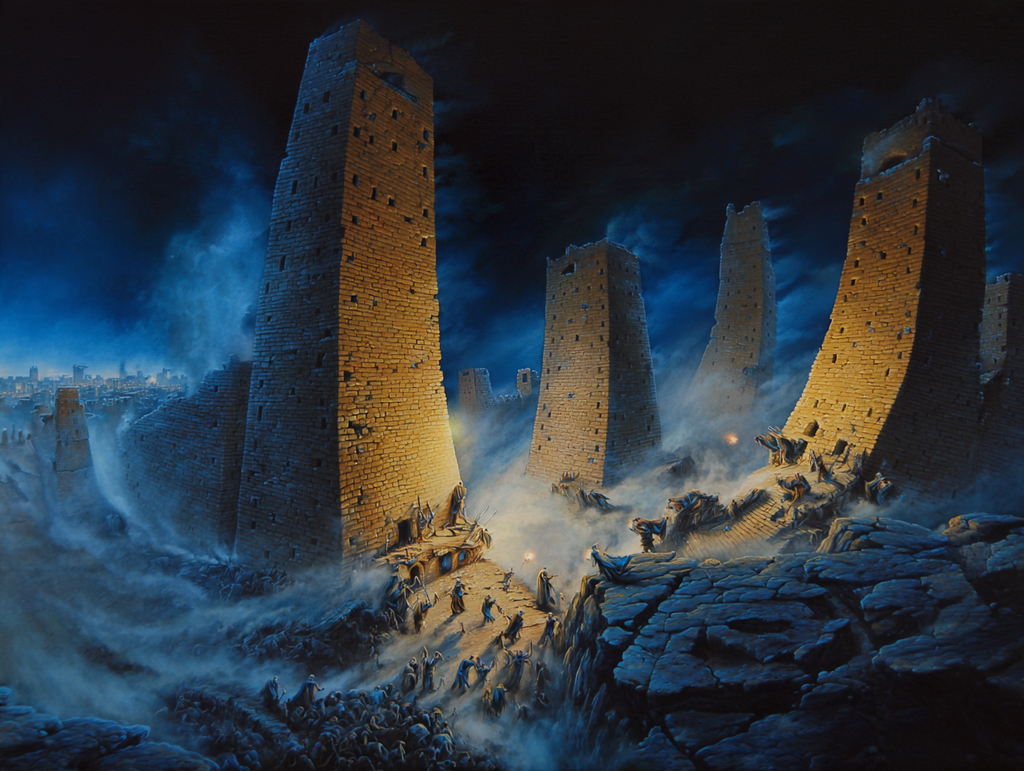
What the people of Ubar didn’t know was that their survival was undermining itself. Beneath the city sat a vast underground limestone cavern. Every well they dug, every generation that drew from the water table below, slowly weakened the cavern’s ceiling.
It held for centuries. Then, sometime around 300 to 500 CE, it didn’t.
The ground opened. Towers, walls, markets, homes — everything dropped into the void below. The sand poured in behind it. The city did not burn. It did not fall to invaders. It swallowed itself whole, in what was likely a matter of minutes.
Why the Legend Says What It Says
The legend that survived called it divine punishment — God destroying a wicked city, the earth opening to consume the proud. That story was passed down through Arab tradition for over a thousand years before anyone confirmed Ubar had ever existed.
When archaeologists finally excavated the site in 1992, they found exactly what the geology predicted: a city that had sunk vertically into a collapsed cavern, then been sealed by sand. The legend wasn’t embellishment. It was memory — the only way a pre-scientific culture could record what it had witnessed.
A city there one day, gone the next. The ground opening beneath people’s feet. A civilization vanishing as if it had never been.
What Ubar Tells Us
Ubar is one of archaeology’s clearest examples of how ancient legend preserves real geological memory. The story didn’t need exaggeration — the event itself was already mythological in scale.
Somewhere beneath the excavated site, the lower levels of the city remain sealed under sand and collapsed limestone. The full story of what Ubar was — how its people lived, what they built, what they knew — is still mostly underground.
The ground took it. The ground is still keeping it.
