Silk Road’s Forgotten Cities: Ancient Metropolises the Desert Buried Alive
History & Origins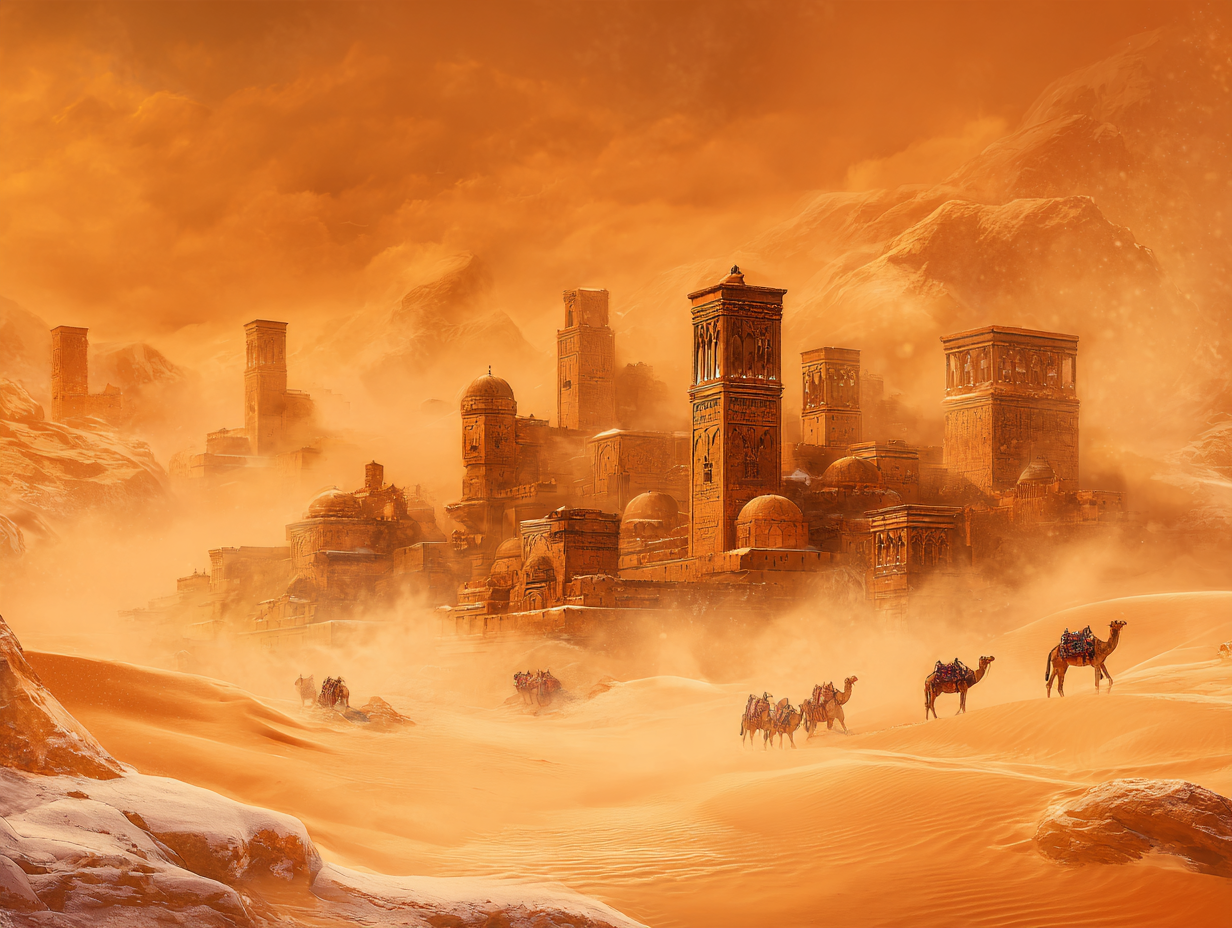
The Taklamakan Desert’s name roughly translates as: “You go in, you don’t come out.” Temperatures swing from blistering to brutal. Sandstorms last for days. There is almost no water.
And yet, beneath the sand, there are cities. Not one or two — a string of them, running along the ancient Silk Road, preserved by the same aridity that killed them.
Loulan: A Kingdom Swallowed by Dunes
Loulan was founded on the shores of a lake called Lop Nor in what is now western China. Chinese imperial records describe a kingdom of tens of thousands, where merchants from China, Persia, India, and Rome traded goods across its markets.
Around the 3rd century CE, the rivers feeding the lake shifted course — as rivers in arid regions do when the landscape changes around them. Without water, Loulan died. The people left. The sand moved in.
It disappeared so completely that medieval travelers retracing the old Silk Road found no trace of it. It was rediscovered in 1900 by Swedish explorer Sven Hedin — almost by accident — during a desert crossing. What he found stopped him cold: wooden buildings still standing, documents perfectly preserved, silk and grain lying exactly where they’d been left over a thousand years earlier.

Khara-Khoto: The City That Refused to Surrender
In the Gobi Desert sits Khara-Khoto — the Black City — capital of the Tangut empire of Xi Xia. When Genghis Khan’s armies arrived in 1226, the Tangut people refused to yield. Legend says when the Mongols finally diverted the river supplying the city, the commander buried the treasury, cursed the dead, and led his last defenders out to die fighting.
Russian explorer Pyotr Kozlov excavated the site in the early 20th century and found thousands of manuscripts, Buddhist paintings, and entire libraries in a script that took decades to decipher. The walls still stand today. Parts of the city remain buried under sand that has accumulated since the Mongol assault — untouched for seven centuries.
Climate Didn’t Destroy These Cities. It Buried Them.
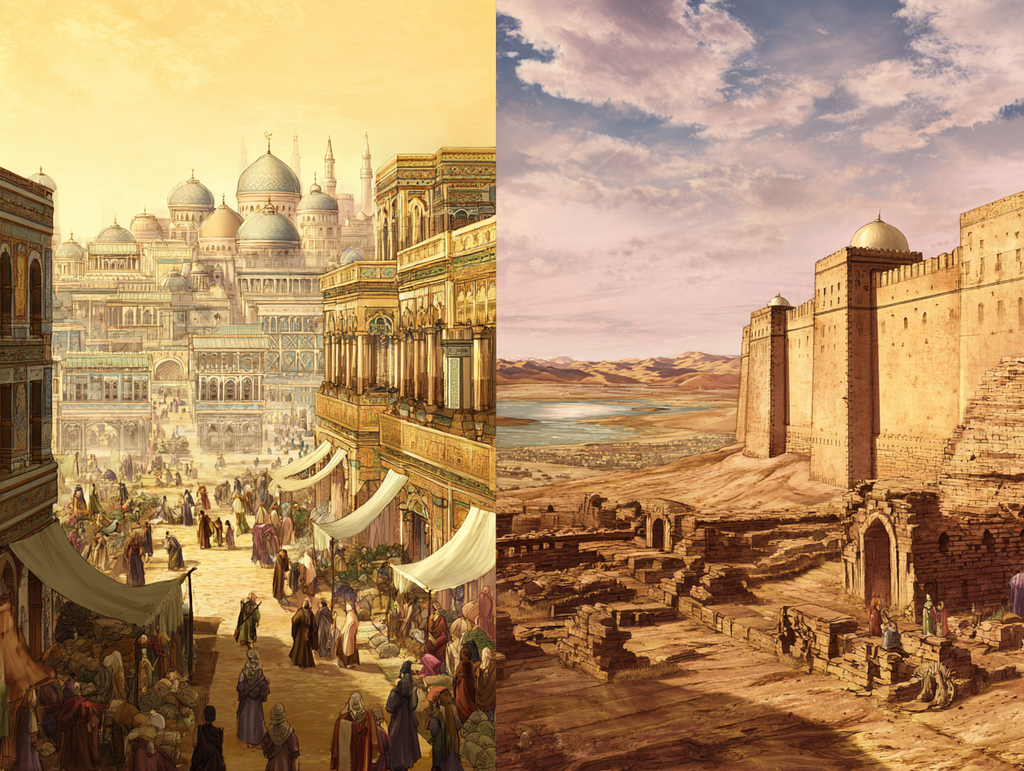
Every Silk Road city that vanished followed the same pattern: built when the region was wetter, prosperous when trade routes were active, abandoned when the water disappeared. The Gobi has been expanding for centuries. Every generation, it gains more ground and buries more of what came before.
Still Waiting
Archaeologists working the Taklamakan consistently note the same thing: they are finding the tops of ruins. The lower levels — the older foundations, the deeper history — remain buried and untouched.
Loulan. Niya. Miran. Endere. Khara-Khoto. Each of these places was once an international crossroads of trade, culture, and civilization. Each is now sand.
And each is still mostly underground, waiting for someone to look.
