The Cutter: Ancient Egypt’s Most Cursed Job in the Mummification Process
Ancient Near East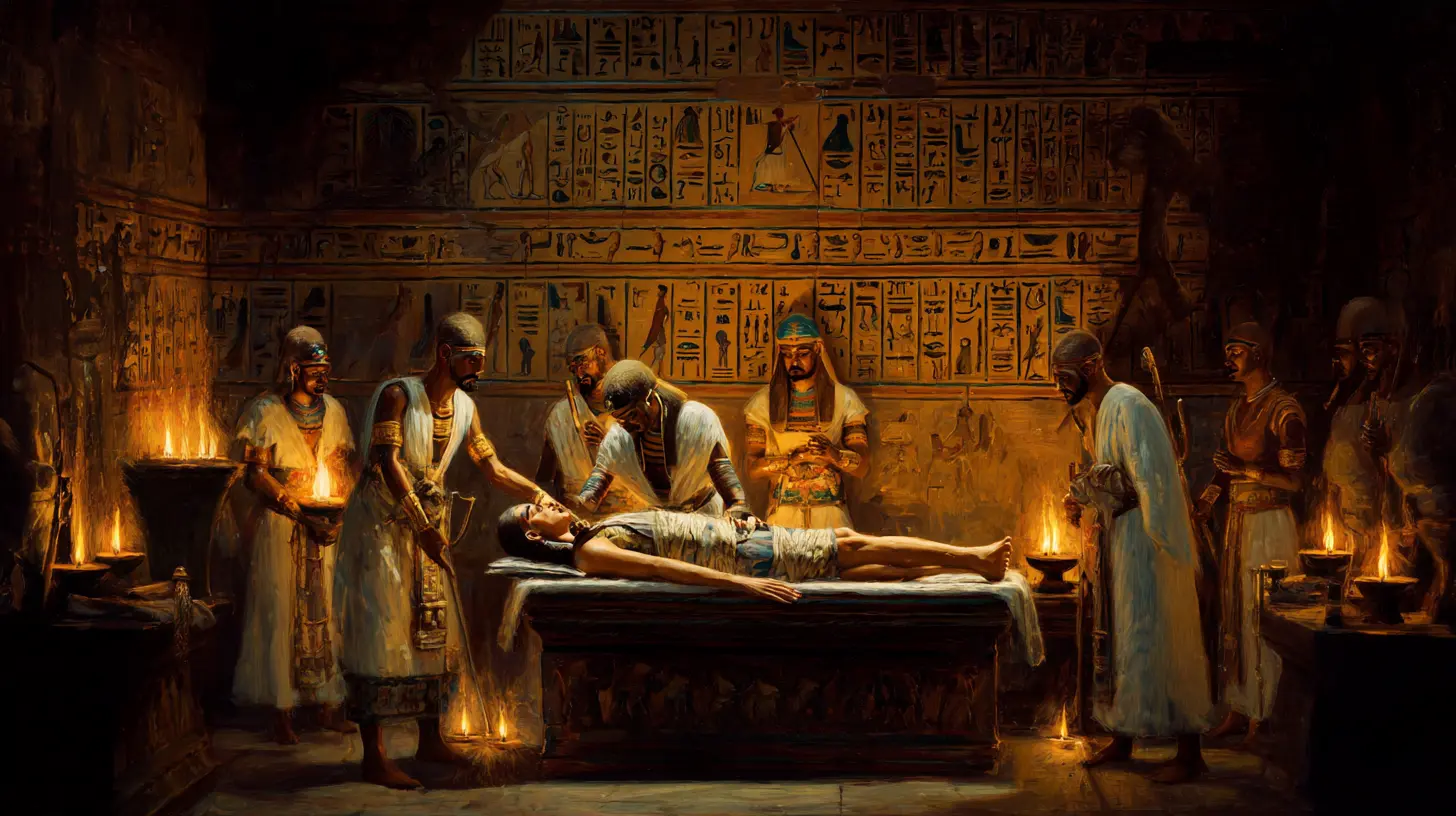
Ancient Egypt had a word for almost every specialist involved in mummification. The wt priests who wrapped the bandages. The hery seshta who oversaw the sacred rites. The kher heb who read the funerary texts aloud throughout the process.
And then there was the cutter.
His job was simple, necessary, and apparently unforgivable: make the incision through which the internal organs would be removed from the body. Without that cut, mummification could not begin. Without mummification, the deceased could not achieve eternal life. The entire theological and physical preservation process depended entirely on this one act.
So the moment he performed it, everyone chased him away throwing stones and curses.
What the Greek Sources Record
The Greek historian Diodorus Siculus, writing in the 1st century BCE after traveling through Egypt, documented the mummification process in detail — including this ritual that stopped him in his tracks.
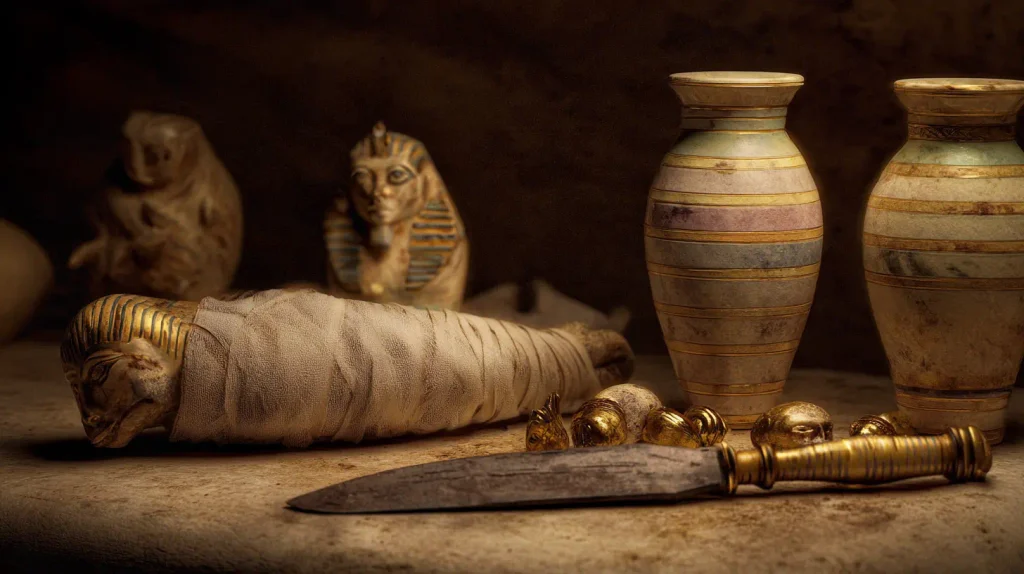
He describes a specialist he calls the paraschistes — the “slitter” — whose role was to make the required lateral incision in the left side of the abdomen using an Ethiopian stone, most likely obsidian or a similarly sharp-edged volcanic stone chosen for its ability to cut cleanly. The choice of material was itself significant: iron was associated with Set, god of chaos and destruction, making it ritually inappropriate for contact with a sacred body. Stone, by contrast, carried no such contamination.
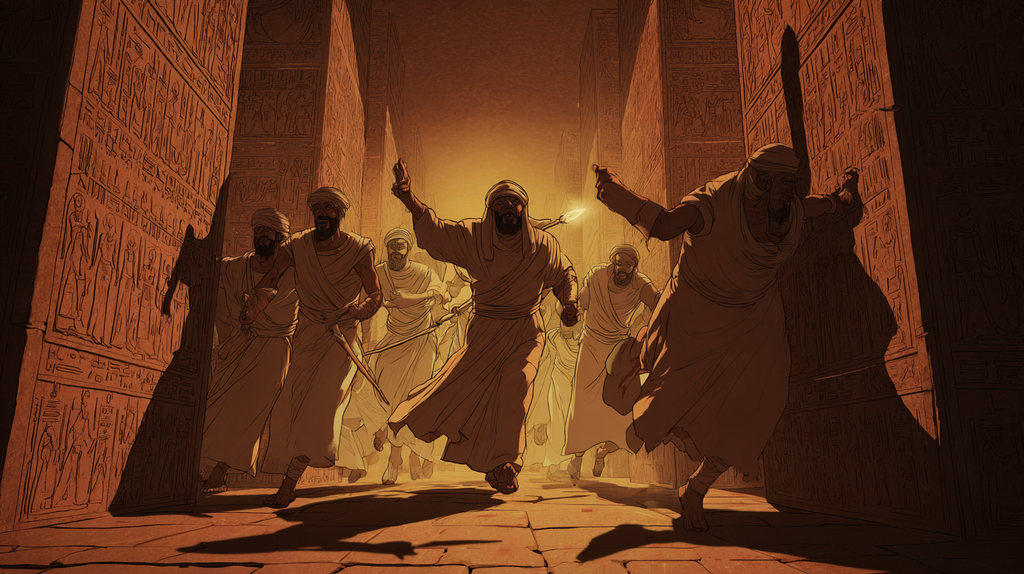
The moment the cut was made, Diodorus records, the slitter ran. And the rest of the embalming team pursued him — throwing stones, shouting curses, driving him away from the body he had just made it possible to preserve.
The Religious Logic Behind the Ritual
This was not mob justice. It was theology — and it followed a precise internal logic that reveals how seriously ancient Egyptians took the sanctity of the human body.
In Egyptian religious belief, the body was not merely a vessel. It was the permanent home of the ka — the life force — and the ba — the personality or soul. Preservation of the physical body was not optional for the afterlife. It was the entire foundation of it. Without a recognizable body, the soul had nowhere to return to after its journey through the Duat, the underworld.
This made the body sacred in a very literal sense. Deliberately cutting it — even for necessary preservation — was a form of violation. It crossed a ritual boundary that Egyptian religion took with complete seriousness.
But the organs had to come out. The liver, lungs, stomach, and intestines were removed and preserved separately in canopic jars under the protection of the four sons of Horus. Left inside the body, they would decompose and destroy the very preservation the entire process was designed to achieve.
So Egypt developed what may be history’s earliest example of institutional blame-shifting: designate one specialist to commit the necessary transgression, then publicly condemn him for it. The cut was made. The body could now be preserved. And the ritual purity of the embalming team remained technically intact because they had visibly rejected the act — even though they had specifically requested it minutes earlier.
The cutter absorbed the ritual pollution so everyone else could continue without it.
Who Actually Was the Cutter?
Egyptology has debated whether the “cutter” was a lowly, stigmatized figure or a respected specialist who understood the theatrical nature of what followed his work.
Evidence suggests the latter. The incision itself required anatomical knowledge and a steady hand. It had to be made in a precise location — typically the left flank — at a specific length, without damaging surrounding tissue unnecessarily. Obsidian blades, while naturally sharp, required skill to use effectively. This was not a job given to someone without training.
Some scholars have proposed that the ritual chase was understood by all involved as performance — a formal acknowledgment of the theological problem rather than genuine condemnation of the individual. The cutter likely returned to the embalming workshop once the ceremony was complete, collected his payment, and prepared for the next commission.
He was not an outcast. He was a specialist playing a scripted role in a system that needed someone to play it.
The Incision That Survived 3,000 Years
Archaeologists examining unwrapped mummies have confirmed the physical evidence of this practice across thousands of years of Egyptian history. The incision is consistently found on the left side of the abdomen, typically between 6 and 12 centimeters in length. In well-preserved mummies, the cut edges show signs of having been made with a single, confident stroke rather than multiple passes — supporting the idea that the cutter was skilled, not hesitant.
In some mummies, a symbolic stone or wax plate was placed over the healed incision during wrapping — a ritual covering of the wound that completed the restoration of the body’s integrity before its journey into the afterlife.
The cutter’s work had to be undone, symbolically, before the mummy was complete. Even the evidence of his necessary transgression had to be erased.
Ancient Egypt built one of history’s most sophisticated theological and medical preservation systems. At its center was a man whose entire professional value lay in doing something everyone immediately pretended he shouldn’t have done.
Make the cut. Then run.
It was, in the most literal sense, the job that made everything else possible — and the one nobody wanted to be seen asking for.

