Lost Cities Buried Under the Desert Sand: Ancient Civilizations We Haven’t Found Yet
History & Origins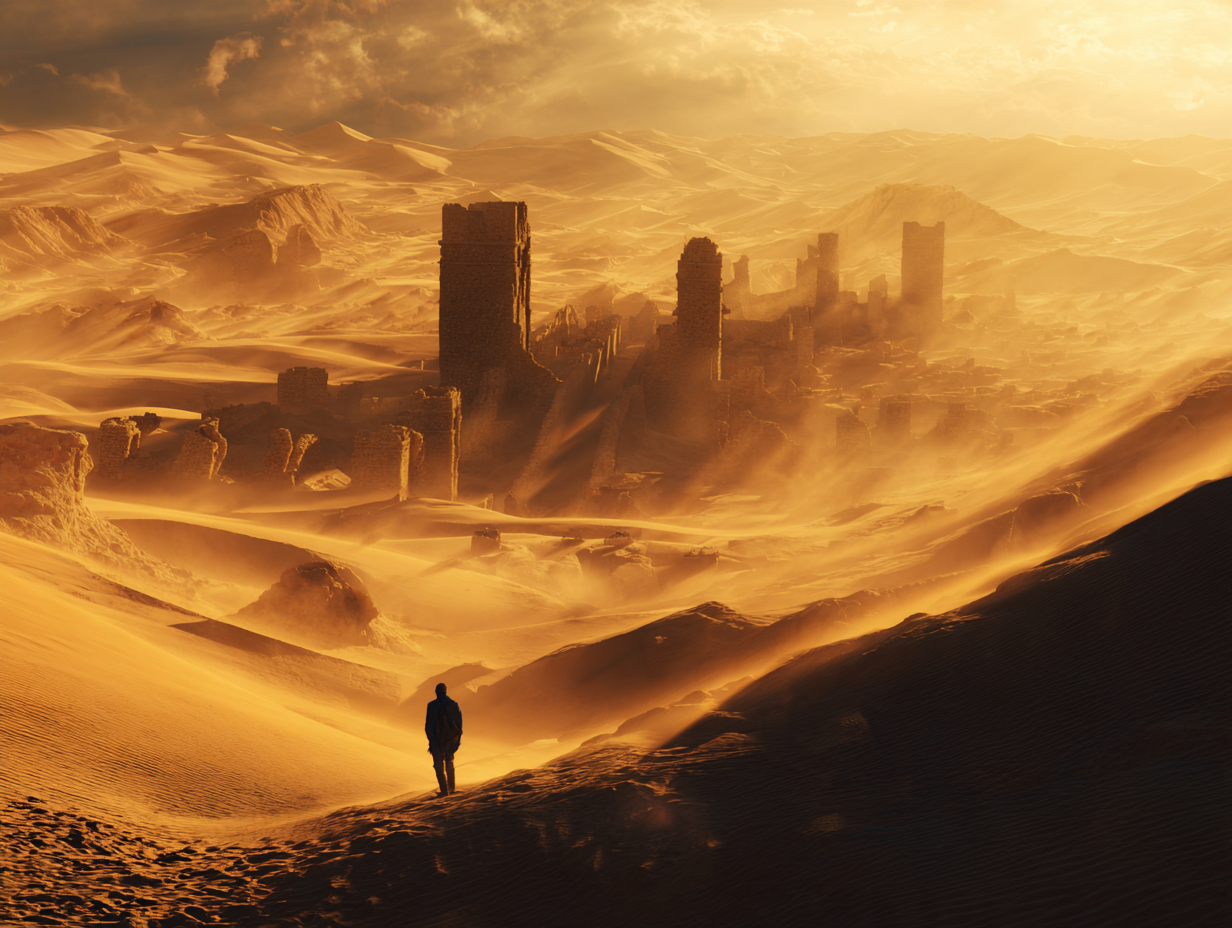
Six thousand years ago, the Sahara had cities. Not camps. Not villages. Cities — with roads, agriculture, and populations large enough to leave their mark on history. Today they sit buried beneath the sand, waiting.
This is not unique to the Sahara. The Arabian Peninsula, Central Asia, the Gobi — each was once wetter, greener, and full of people. Each buried what those people built.
The Green Sahara and Its Refugees
Geologists call it the African Humid Period: a window from roughly 11,000 to 5,000 years ago when the Sahara received reliable rainfall and functioned as a full savannah ecosystem. Cave paintings in Chad depict giraffes and cattle surrounded by grassland. Fossilized hippo bones and fish lie beneath the current sand. Rivers once flowed where nothing flows today.
When a shift in Earth’s orbital cycle weakened the monsoon system, the rains retreated south. The lakes dried. The rivers became fossils. And the people moved — most likely toward the Nile, where population suddenly surged around 5,000–6,000 years ago. Egyptian civilization may have been built partly by climate refugees from a dying world.
The Garamantes: An Empire Nobody Knows
Those who stayed in the Sahara didn’t simply survive — they built an empire. The Garamantes of Libya constructed cities, roads, and an underground aqueduct network called foggaras: hand-dug horizontal tunnels running up to 1,400 kilometers beneath the desert floor, channeling fossil groundwater to irrigate their fields without pumps or machinery.
They controlled trans-Saharan trade routes for over a thousand years. Roman historians wrote about them. Roman soldiers fought them. And almost no one today has heard of them.

Ubar: The City That Swallowed Itself
In southern Oman, legend spoke of a magnificent city destroyed by God — Iram of the Pillars, or Ubar. Most assumed it was myth. In 1992, satellite imagery revealed ancient caravan tracks converging on a single desert point. Excavation found a walled fortress city at a major incense trade crossroads.
Then archaeologists found why it vanished: beneath the city sat a vast limestone cavern. Centuries of well-digging weakened the ceiling until it collapsed, swallowing the entire city into the earth. It didn’t burn. It didn’t fall to invaders. It simply disappeared into the ground in a single day — which is exactly what the legend remembered.
What Satellites Are Showing Us Now
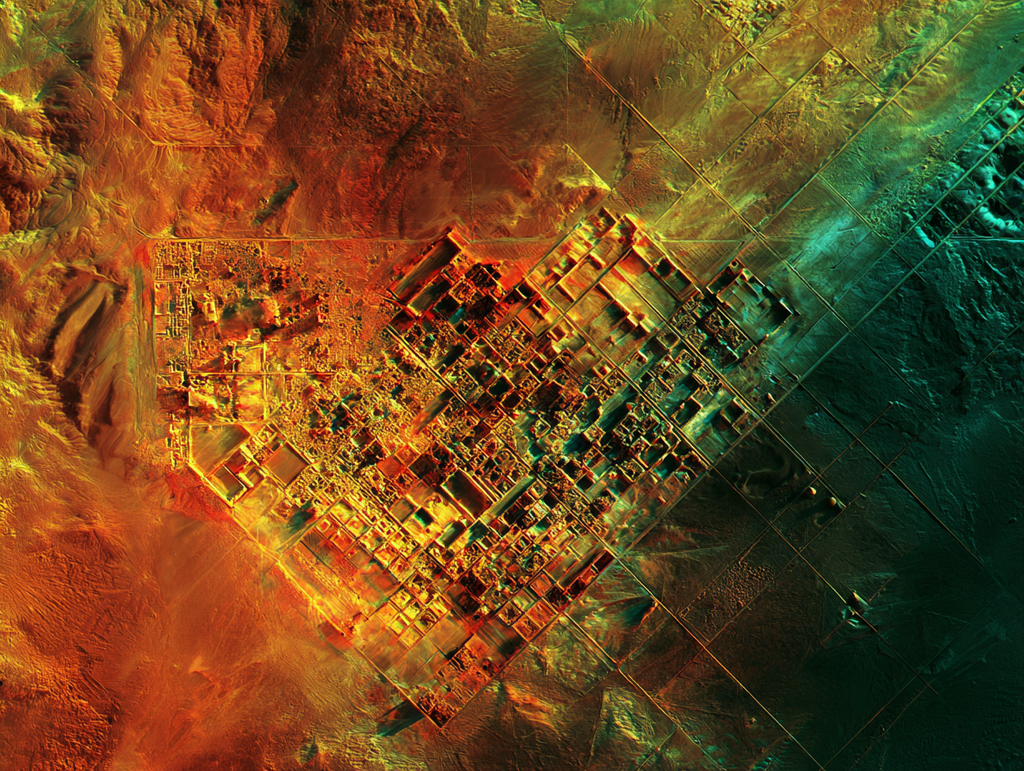
Radar satellites can now penetrate dry sand several meters deep, returning different signals from buried stone walls, brick structures, and compacted roads. The results have been extraordinary.
In the Arabian Peninsula alone, researchers have identified thousands of previously unknown stone structures — rectangular platforms, geometric arrangements, ancient caravan routes crossing terrain assumed to be impassable. Most have never been excavated. We know they exist because a satellite told us.
The Archive Beneath the Sand
The world’s deserts cover roughly a third of Earth’s land surface. Most of it has never been excavated. Most has barely been surveyed. What satellite analysis has already revealed is producing discoveries faster than archaeologists can investigate them.
The deserts are not empty. They are the world’s largest archive — written in buried stone and compacted sand, sealed by aridity for thousands of years, and only now beginning to be read.
The most important discoveries are almost certainly still ahead.
