Raamses in Exodus 1:11: Which Egyptian City Does It Match?
Biblical History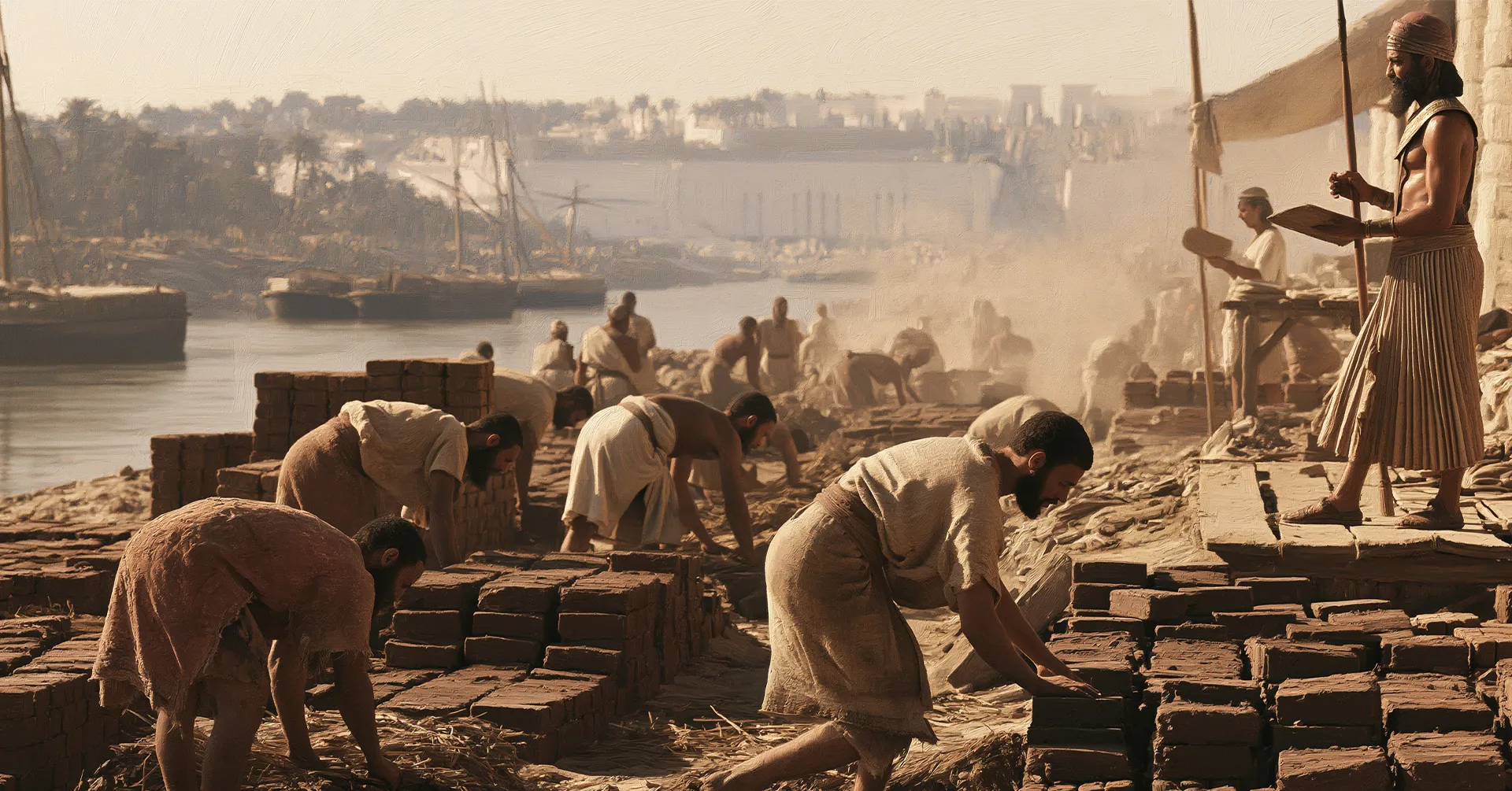
AI reconstruction, not a photograph.
Exodus 1:11 names two cities that Israelite forced labour is said to have built, Pithom and Raamses, yet it never says where either stood. For decades the answer for Raamses seemed to lie at Tanis in the Nile Delta of Egypt, until archaeologists saw that Tanis had been built partly from the stones of another city. This article sets out what the verse says, how the confusion arose, what the name does and does not show and where scholars differ.
What Exodus 1:11 Says
In the King James Version, taskmasters are set over the Israelites “to afflict them with their burdens”, and “they built for Pharaoh treasure cities, Pithom and Raamses”. Modern versions differ on the first noun. According to the Bible Study Tools parallel text, the NIV and ESV have “store cities”, the NLT “supply centers” and the CSB “supply cities”. Whatever the word, the verse names two places and says nothing about where either one stood.
The verse also gives no ruler. Exodus 1:8 speaks only of “a new king over Egypt, which knew not Joseph”, and no pharaoh of the building work is named. The place name returns, spelled Rameses in the King James Version, in Genesis 47:11 (“the land of Rameses”), in Exodus 12:37, where the Israelites “journeyed from Rameses to Succoth”, and in Numbers 33:3. None of these passages says where it lay. WiBiLex, a German Bible lexicon, says the Egyptian city Pi-Ramesses is generally taken to be the place meant in all four.
Pithom’s site is also debated. In a 2022 paper on the verse, James Hoffmeier and Gary Rendsburg place it at Tell el-Retaba and weigh that against the claim of Tell el-Maskhuta.
Zoan and the Mix-Up at Tanis
The Bible does name one Delta city that is now identified with Tanis: Zoan. Numbers 13:22 says that “Hebron was built seven years before Zoan in Egypt”, and Psalm 78:12 places marvellous things “in the field of Zoan”. WiBiLex says the Old Testament calls Tanis Zoan, and it describes the psalm as alluding to the Exodus. Isaiah 19:13 and Ezekiel 30:14 name the city as well.
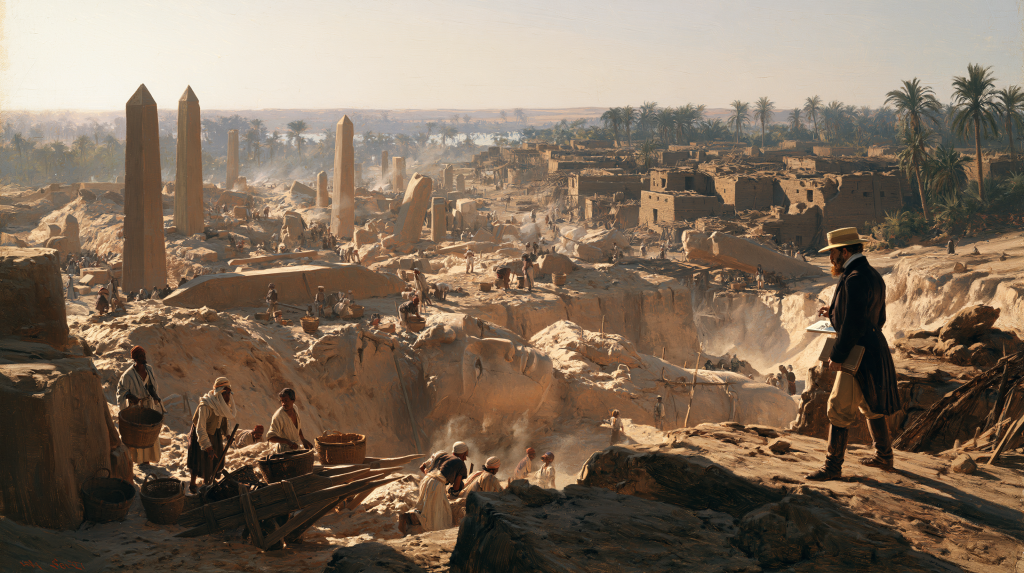
Tanis was dug from the nineteenth century, and what came out of the ground seemed to settle the matter. Wikipedia says archaeologists long believed “Tanis and Pi-Ramesses were in fact the same”, and it points to “the overwhelming amount of monuments bearing the cartouches of Ramesses II or Merenptah” found there. WiBiLex adds that earlier scholars took Tanis for the “Ramsesstadt”, the Ramesses city.
According to Hoffmeier and Rendsburg, Alan Gardiner concluded in 1918 that “the Biblical Raamses-Rameses is identical with the Residence-city of Pi-Raamesse”, and he and Pierre Montet backed Tanis as the site. Gardiner later published a retraction of the Tanis identification, in 1933.
How Qantir Took Its Place
The correction came in the twentieth century. WiBiLex’s entry on Pi-Ramesse, by Edgar Pusch and Henning Franzmeier, says Mahmoud Hamza doubted the Tanis identification in the late 1920s because nothing had been found in its original position, and that Labib Habachi’s article of 1954 showed Ramesside activity around Qantir. Since Manfred Bietak’s work of 1975, the entry says, the identification of Pi-Ramesse with the Qantir area has been generally accepted.
The Tanis evidence pointed the same way. WiBiLex’s entry on Tanis says excavations found no layers older than the 21st Dynasty there, and Wikipedia says the monuments found there were not made there: “none of these monuments and inscriptions originated at the site”. Hoffmeier and Rendsburg say that monuments “including statues, stelae, obelisks, and miscellaneous blocks” were carried about 20 km north from Pi-Ramesses to Tanis.
The match between name and city is close but not exact. The Egyptian name was Pi-Ramesses, “House of Ramesses” according to the Piramesse exhibition website, and Wikipedia notes that the Bible drops the “Pi-”. Hoffmeier and Rendsburg say the Egyptologist Donald Redford raised objections in 1963, among them that missing element and a difficulty with a Semitic sibilant.
What the Name Does and Does Not Show
A city called Raamses fits a setting in or after the Ramesside age. The exhibition website says the city was renamed at the start of the reign of Ramesses II, about 1279 BCE, and Hoffmeier and Rendsburg give its occupation as roughly 1270 to 1135 BCE. For that reason many scholars use the name as a clue to when the story is set, and a Biblical Archaeology Society article on the city says that some archaeologists think it “might well hold clues for dating the Exodus”.
The name dates nothing by itself. Exodus never names its pharaoh, and none of the sources consulted points to an Egyptian text that names Moses or describes Israelites at work in Egypt. The stele of Merneptah, carved in 1208 BCE according to Wikipedia, does name Israel: “Israel is laid waste”. But it speaks of a people in Canaan, not of labourers in the Delta, and Wikipedia calls it “the earliest textual reference to Israel and the only reference from ancient Egypt”, while noting that a possible earlier reference has been identified in a text from the reign of Ramesses II.
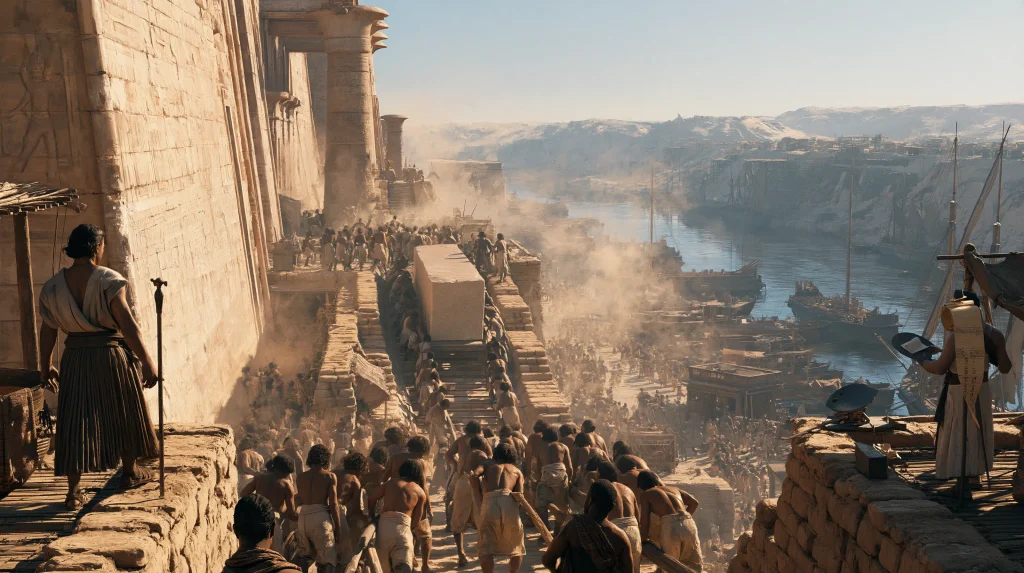
Egyptian records do name a group of labourers on a Ramesside building project, though the link to Exodus is loose. According to a Biblical Archaeology Society endnote, Papyrus Leiden 348 and 349 record grain rations for soldiers and for Apiru who transported stone for “the great pylon” of a building of Ramesses II at Memphis. The endnote does not connect the Apiru to the Israelites, and it says the term first appears in texts of the Middle Kingdom and stays in use into the 20th Dynasty. The building was at Memphis, not at Pi-Ramesses.
Two Ways to Read the Verse
Scholars read the verse differently. Hoffmeier and Rendsburg argue that the place names are “an authentic and datable memory” from the 13th and 12th centuries BCE or shortly after, and that Psalm 78 names Zoan rather than Rameses because “the city Pi-Ramesses did not exist at the time” the psalm was composed. They write against Bernd Schipper’s 2015 case for a seventh-century BCE date, in which Pithom and Rameses are later inventions.
WiBiLex’s entry on Pi-Ramesse sets out the divide. It says the identification of the name is probably correct, but that the biblical description of the place raises problems, and it presents two views: Redford sees conditions of the Saite and Persian eras reflected, and Bietak sees a genuine Ramesside reflection. Wikipedia reports that some scholars see the names as editorial choices or as anachronisms from the seventh century BCE. One side reads a memory of real forced labour on the Delta’s building sites, and the other thinks later writers borrowed a famous name to give the story a setting.
What Can Be Said
Much of the answer is buried. The exhibition website says about 0.5% of the city centre of Pi-Ramesses has been excavated, and WiBiLex’s entry gives no date for the Exodus and ties no find to the story. The Delta’s soil still covers most of the capital, because most of it has not been dug.
What can be said plainly is narrow: the Bible names a city that matches the king’s capital, and the evidence for the story around it is a separate question.

