The Bible Gave Cain a City; Josephus Gave It Walls
Biblical History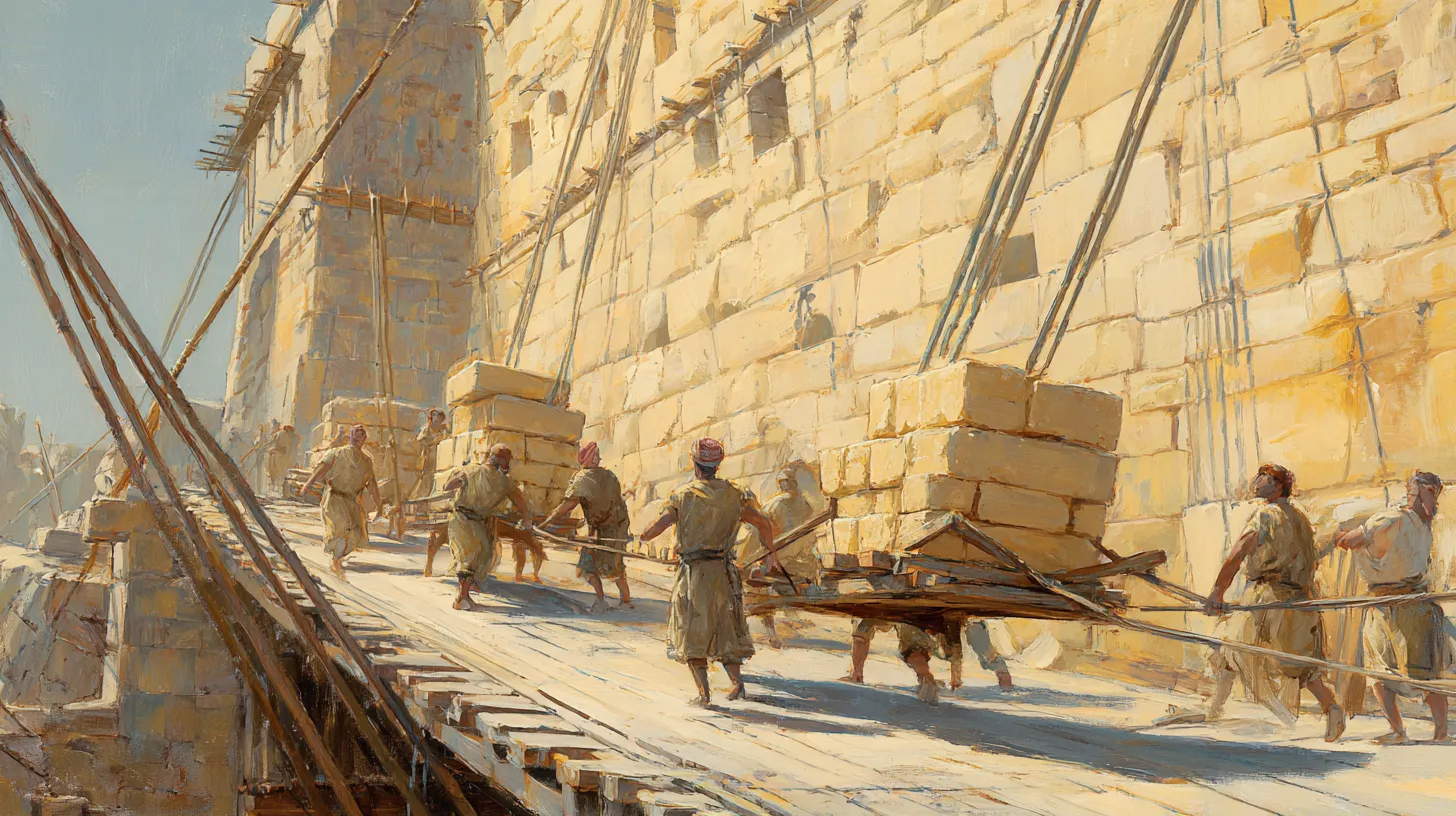
AI reconstruction, not a photograph.
The Bible gives Cain a wife, a son and a city in the land of Nod, and almost nothing else. Much of what is said about his life there comes from a historian writing in the first century CE: the walls, the boundary lines, the robbery. None of it is in Genesis.
The Whole Record in Genesis
The setting is the earliest age of the biblical account, a generation or two after Adam and Eve, east of Eden. After killing his brother Abel, Cain is sentenced to wander. He goes out from the presence of the LORD and settles in the land of Nod (Genesis 4:16). Then comes everything the text says about his life there. His wife conceives and bears a son, Enoch, and Cain builds a city and names it after the boy (4:17).
That is the whole record: a family and a founding. It is also the first city the Bible mentions, and the text gives it a single verse. The NIV renders the key clause “was then building a city,” which suggests a project still under way. Genesis does not say how large the city was, what it was made of, whether it had walls, or who lived in it. The next verse simply opens a family line: Irad, Mehujael, Methushael and Lamech (4:18).
A City Under a Sentence of Wandering
The record sits awkwardly beside Cain’s sentence. God had told him he would be a fugitive and a wanderer (4:12), and the name Nod echoes the Hebrew word for wandering, yet in Nod he starts a family and a city. Skeptical readers call that a contradiction. Defenders point to the NIV’s wording: Cain was “then building” a city, and the verse does not say he finished it or stayed.
The Hebrew word for the city, ir, does not settle it. Strong’s concordance stretches it from a city in the widest sense down to a mere encampment or post, and the Brown-Driver-Briggs lexicon lists fortified places as only one category among several. The Bible’s city could have been anything from an encampment to a walled town. That is the opening a later writer could use.
A Historian Fills the Gap
Flavius Josephus was a Jewish priest from Jerusalem who served as military governor of Galilee at the start of the revolt against Rome, surrendered to Vespasian in 67 CE, and spent the rest of his life writing in Rome under imperial patronage. Around 94 CE he finished the Antiquities of the Jews, twenty books that retell Jewish history from creation to the eve of the revolt.
Josephus announces his method at the start: he will describe what is in his people’s records, “without adding any thing to what is therein contained.” Measured against that promise, his account of Cain adds a great deal. The quotations below follow William Whiston’s English translation of 1737; modern translations word things differently.
The Exile Rewritten
Josephus rewrites the scene before Nod too. In Genesis, Cain fears that whoever finds him will kill him, and God sets a sign for him against that (4:14–15). In Josephus, God convicts Cain of the murder but spares his life, because Cain offered a sacrifice and begged him not to be extreme in his wrath. God still curses him and, in Whiston’s words, “threatened his posterity in the seventh generation.” Cain’s fear is of wild beasts, not other people, and God sets a mark on him “that he might be known.” Josephus, like Genesis, never says what the mark looked like.
Josephus’s Cain
In his telling, exile does not humble Cain. He travels through many countries with his wife before settling, which eases the clash between the sentence to wander and the city that follows. Once settled, he “did not accept of his punishment in order to amendment.” Cain chases his own bodily pleasures at his neighbors’ expense, piles up wealth “by rapine and violence,” and urges his acquaintances to seek spoils by robbery.
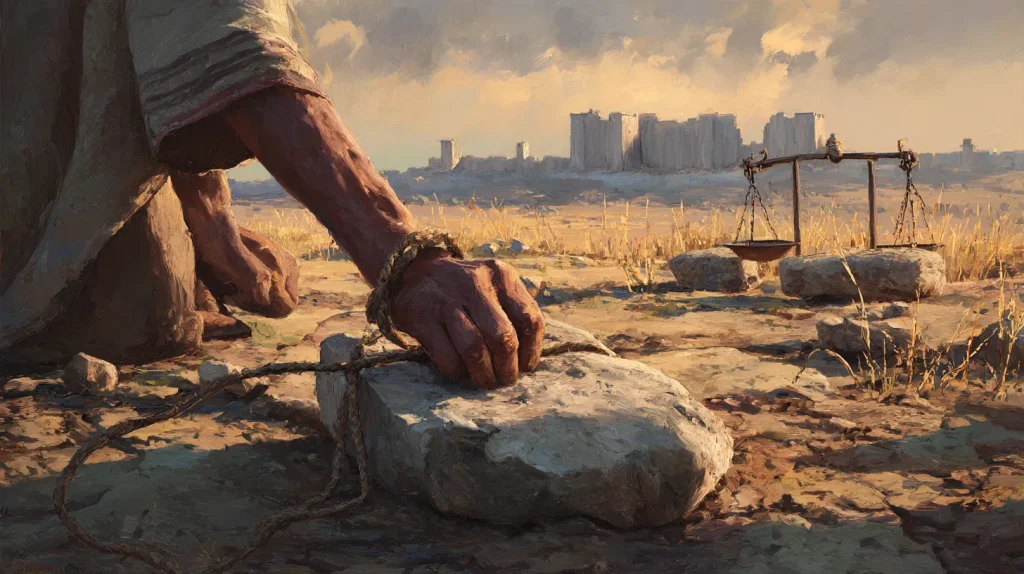
Josephus also makes him a cultural revolutionary. People had lived innocently and generously, and Cain “changed the world into cunning craftiness.” He is the author of measures and weights, and the first to set boundaries about lands. Property lines and standard measures, the tools of ownership and trade, enter the world through Cain, and so does the cunning that goes with them.
The Walls
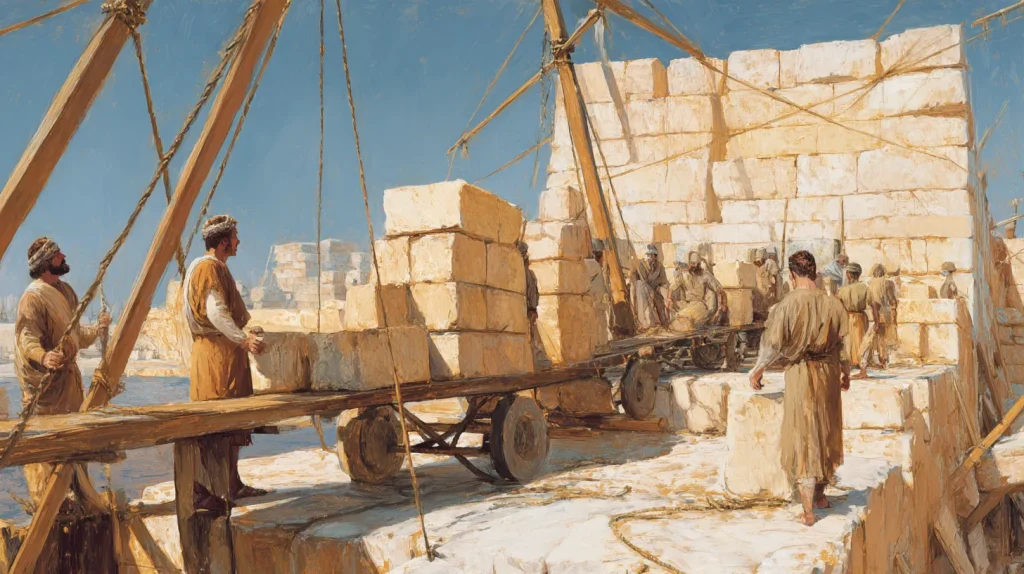
Then comes the city. Josephus has Cain build it, fortify it with walls, and compel his family to gather inside. He names it Enoch after his “eldest son,” a phrase that quietly gives Cain other children Genesis never mentions. The passage does not say what the walls were meant to keep out. Whiston’s English even has Cain first build “a city, named Nod,” and later this walled city called Enoch, without saying whether they are one place or two.
Even Lamech is rewritten. Genesis has him tell his wives that he has killed a man and that if Cain is avenged sevenfold, he will be avenged seventy-sevenfold (4:23–24). Josephus has him make known to them that he will be punished for Cain’s murder of his brother.
What Genesis Credits Instead
Genesis does give Cain’s descendants a reputation, but a different one. Jabal fathers those who live in tents and keep livestock, Jubal those who play the lyre and pipe, and Tubal-cain forges tools of bronze and iron (4:20–22). The text adds no verdict on any of them. Maarten Paul, surveying Jewish and Christian readings of the passage in Tyndale Bulletin in 1996, noted that it contains no explicit condemnation of Cain or Lamech and no value judgment on tents, music or metalwork.
Josephus supplies one. He reports Jabal’s herding and Jubal’s music neutrally but ties Tubal’s metalwork to war. Cain’s posterity, “even while Adam was alive,” became “exceeding wicked,” each generation worse than the one before, while the line of Seth is praised as virtuous. The Bible lists skills. Josephus assigns character.
The Questions the Retelling Raises
Who was Cain robbing? Josephus speaks of neighbors and acquaintances but names no victims, no village and no king. His exile scene, where Cain’s fear is of wild beasts, mentions no neighbors at all. The question echoes one Genesis already raises when Cain fears that anyone who finds him will kill him (4:14): where did these other people come from? Josephus simply assumes they were there.
Other ancient writers filled other blanks. The Book of Jubilees, another Jewish retelling of Genesis, names Cain’s wife as Awan, his sister. The midrash Aggadat Bereshit gives Cain a motive for the city: he feared his line would be wiped out and wanted his son’s name to last. Philo of Alexandria, who wrote decades before Josephus, read the story as allegory, with the city standing for a philosophy rather than a place. Augustine made it the earthly city, a city that wants to make a name for itself in this world, and Luther heard fear and a hunger to rule. Each reading says as much about its author as about Cain.
Where the Bible Ends and the Retelling Begins
For anyone sorting fact from retelling, the line is simple. A wife, a son and a city are the Bible’s. The walls, the boundary lines and the corrupted culture belong to Josephus. Where the two meet is a single city named Enoch, which one source records in a line and the other builds into a fortress.
None of that makes Josephus worthless. His pages show how one writer, long after the events, pictured Cain, and they are best kept apart from scripture.

