The Bible Records No Judgment Against Cain’s City in Nod
Biblical History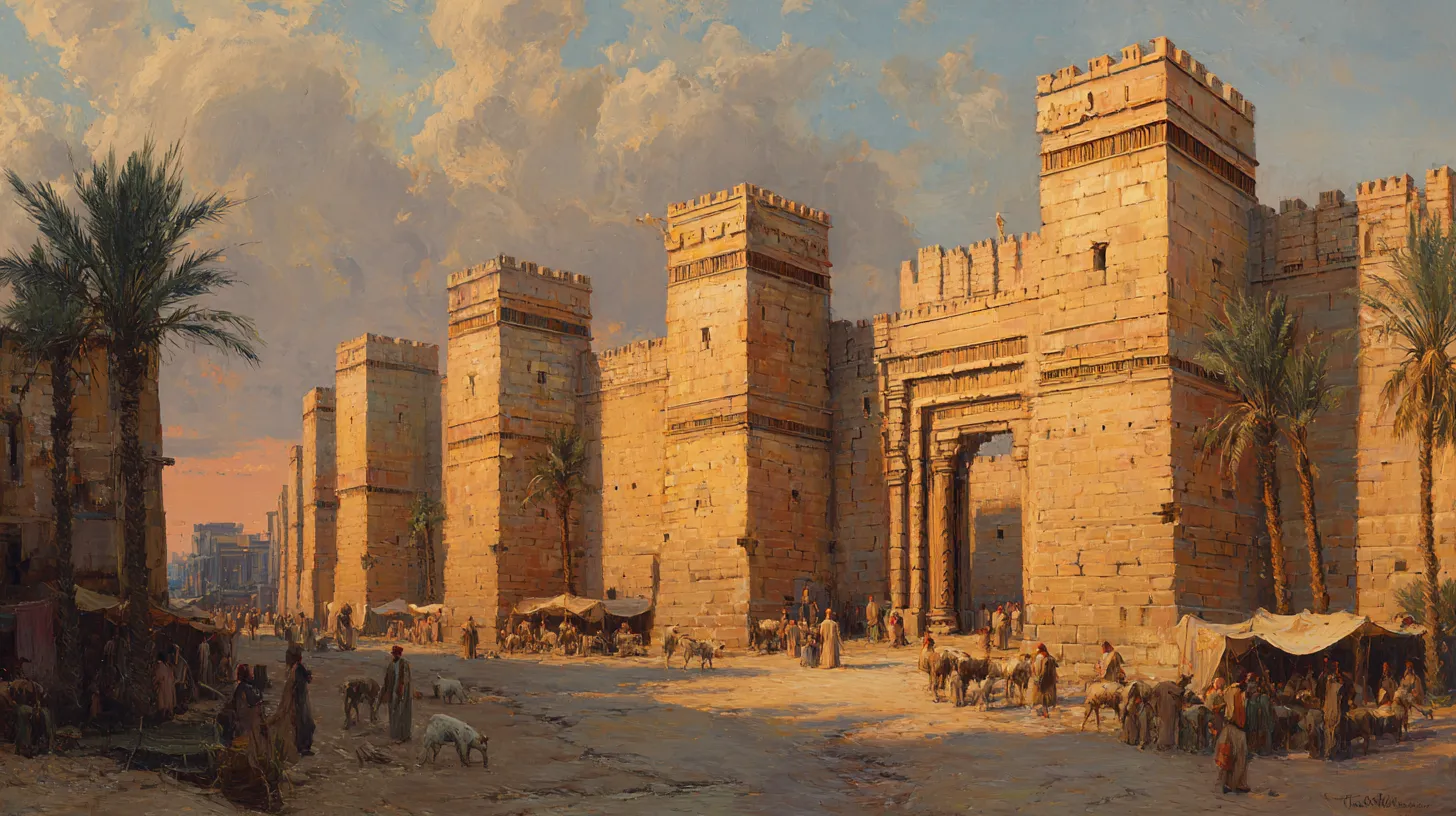
AI reconstruction, not a photograph.
The Bible records no judgment against the city Cain built in the land of Nod. Next to other Old Testament stories, that silence stands out.
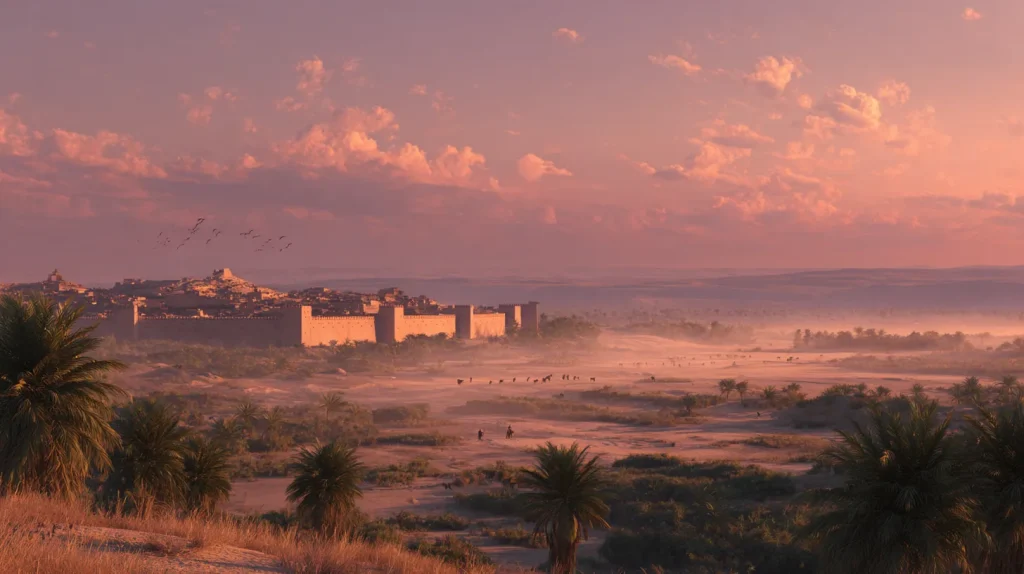
The setting is the earliest age of the biblical account, east of Eden, a generation or two after Adam and Eve. After Cain killed his brother Abel, he went out from the LORD’s presence to Nod, where his wife bore him a son and he built a city named Enoch after the boy (Genesis 4:16–17). No plague, no destruction and no verdict follows.
What Genesis Records
Cain himself was judged at once. God confronted him over Abel’s blood (4:9–10), cursed him from the ground and sentenced him to wander (4:11–12), then set a sign for him so that no one would kill him (4:15). Cain understood the sentence as exile from God: “from thy face shall I be hid,” he says (4:14, King James Version). The city comes after all of that, in a single verse. Nod is named nowhere else in the Bible, and the city is never mentioned again.
What the chapter shows next is a family that flourishes. Cain’s line runs through Enoch to Lamech, who has two wives and children who take up herding, music and metalwork (4:18–22). Lamech boasts that he has killed a man and will be avenged seventy-sevenfold (4:23–24). None of it draws a recorded response, and the chapter ends with the birth of Seth’s son Enosh (4:26).
Stories That End Differently
Elsewhere in the Old Testament, calamity can follow quickly. When Sarai is taken into Pharaoh’s house in Egypt, the LORD afflicts Pharaoh and his household with “great plagues” (Genesis 12:15–17). The text names no illness and does not say Pharaoh touched her, and Pharaoh sends the couple away (12:19–20). After David orders a census of Israel and Judah, he is offered a choice of punishments, and the pestilence he accepts kills seventy thousand men from Dan to Beersheba (2 Samuel 24:13–15). The LORD rains fire and brimstone on Sodom and Gomorrah and overthrows the cities and everyone in them (Genesis 19:24–25). At Babel, people build a city and a tower, the LORD comes down to see it, confuses their language and scatters them, and “they left off to build the city” (11:4–8). In both of the last two cases the LORD goes to look first: he “came down to see the city” at Babel (11:5) and says he will “go down now, and see” whether Sodom’s outcry is as bad as it sounds (18:21). No visit to Nod is recorded.
Silence alone is not unusual. Genesis names Erech, Accad and Nineveh in passing, as cities of Nimrod’s kingdom and of Asshur, with no verdict on any of them (10:10–12). What stands out here is the founder and the setting: an exiled murderer, in a land the text places outside the LORD’s presence. Some readers find that uncharacteristic. Compare Jonah, who flees “from the presence of the LORD” and meets a great wind in the very next verse (Jonah 1:3–4). The cases differ, since Cain is driven out and Jonah runs, but the contrast is worth noting.
Each of the other stories also names a cause. Pharaoh’s plagues come “because of Sarai Abram’s wife,” David counted the people and confessed he had sinned, Sodom’s sin was called very grievous, and Babel’s builders wanted to make a name for themselves. Enoch’s builders are given no stated offense. Whether that is why they are left alone, or whether the text simply does not say, is the open question.
The Flood Is Not a Verdict on the City
Genesis does describe a later judgment that reaches everyone outside the ark. The text says human wickedness was great and the earth “filled with violence” (6:5, 11), and the Flood follows (7:21–23). But that verdict falls on the whole earth. After chapter 4, Cain’s line is never traced again; the genealogy that carries the story to Noah runs through Seth (5:3–32). The text never names Enoch’s city in the Flood story, never says whether the city still stood, and never connects the Flood to anything Cain’s family did. The silence about the city survives even the Flood.
Two Explanations
Readers have offered two explanations for the silence, and they pull in different directions.
The first is timing. Perhaps God was not yet as severe with humanity in those earliest days, and the boundaries that would later provoke judgment had not yet been drawn. Genesis does put its recorded turning point later: it is in chapter 6, not chapter 4, that the LORD sees how great human wickedness has become and regrets having made man (6:5–6). Elsewhere it treats judgment as something that waits for a threshold, telling Abram that “the iniquity of the Amorites is not yet full” (15:16). The argument often runs by analogy. People tolerate a great deal of wrongdoing before they speak or act, and God may have done the same. The weak point is that Genesis shows God confronting Cain at once, so any patience had limits even then.
The second is choice. On this reading, God let people pick their sides, either calling on him or building a life outside his influence, and he did not force anyone in Nod to repent. Genesis does set two families side by side. Cain’s line produces a city, herds, music, metalwork and Lamech’s boast. At the end of the chapter, beside the birth of Seth’s son Enosh, comes the line, in the King James wording, “then began men to call upon the name of the LORD” (4:26). Seth’s genealogy later includes a second Enoch, Jared’s son, who “walked with God” until God took him (5:22–24). The early chapters of Genesis have two Enochs. One gives his name to a city, and the other walks with God.
Both Are Inference
Both are inference. The Bible does not say that God approved of Nod, and it does not say he tolerated it. It gives no reason for the silence at all, so every explanation is a reader’s attempt to fill it. Genesis 4 is following family lines, and the city drops out of view as the narrator follows them.
Interpreters have filled the gap in different ways. Calvin thought it looked contrary to God’s judgment on Cain that he should build a city at all, and put it down to fear and pride, though he counted the arts that came from Cain’s line as gifts of God. The twentieth-century scholar Claus Westermann argued that the text treats cities and cultural development as legitimate. Maarten Paul, surveying these readings in Tyndale Bulletin in 1996, noted that the passage contains no explicit condemnation of Cain or Lamech and no value judgment on the crafts of his descendants, though scholars disagree about whether the chapter’s structure implies one. His own view was that the contrast with Seth’s line points to a link between rejecting God and technological development, though he cautioned that cities are valued positively elsewhere in Scripture, Jerusalem among them, and that civilization as such is not rejected.
What the text gives is a place named once, a city named for a son, and the absence of any recorded judgment. Readers keep returning to that absence, because other stories in the Old Testament end so differently.

