The Fall of Samaria, 722 BCE: What the Bible and Assyria Say
Biblical History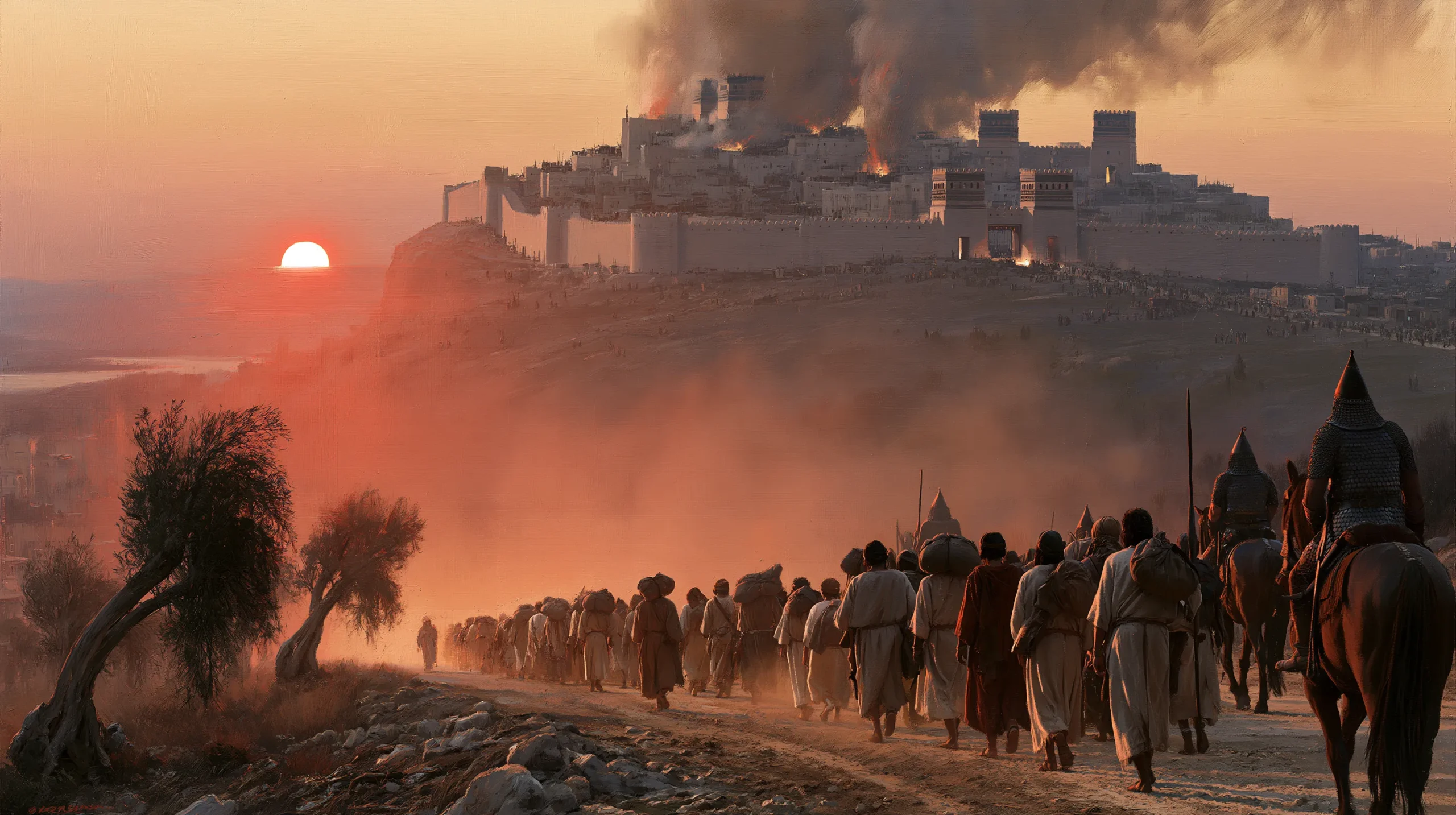
Assyria destroyed the northern kingdom of Israel, and two sets of writers recorded it. The Bible tells the story in 2 Kings 17: a siege of Samaria, then the removal of the Israelites to other lands. Assyria’s own kings boast of the same conquest in royal inscriptions. Most scholars date the fall to around 722 BCE. Popular retellings add a claim that Genesis does not make, that Assyria belonged to a cursed line from Ham and inherited Nimrod’s kingdom. This article sets out both records and then checks Genesis 10.
What 2 Kings 17 Says
Hoshea, the last king of Israel, became the servant of Shalmaneser king of Assyria, then sent messengers to Egypt and stopped paying tribute (17:3-4). The Assyrian king imprisoned him, “besieged it three years” and “took Samaria, and carried Israel away into Assyria” (17:5-6). The exiles were settled “by the river of Gozan, and in the cities of the Medes.” Later the king brought men from Babylon, Cuthah, Ava, Hamath and Sepharvaim and “placed them in the cities of Samaria” (17:24). Second Kings 18:9-10 repeats the account and dates the fall to the ninth year of Hoshea, which was the sixth year of Hezekiah of Judah. Wikipedia dates the conquest to 722 BCE, with the siege tentatively begun in 725 or 724.
The chapter presents the fall as a judgement. The people “had sinned against the LORD their God” (17:7), and the charges include making their sons and daughters “pass through the fire” (17:17). Verse 18 says “there was none left but the tribe of Judah only.” The prophet Isaiah gives Assyria the same role in a single line: “O Assyrian, the rod of mine anger” (Isaiah 10:5). A few verses later the king of Assyria is himself marked for punishment (10:12).
What the Assyrian Kings Claimed
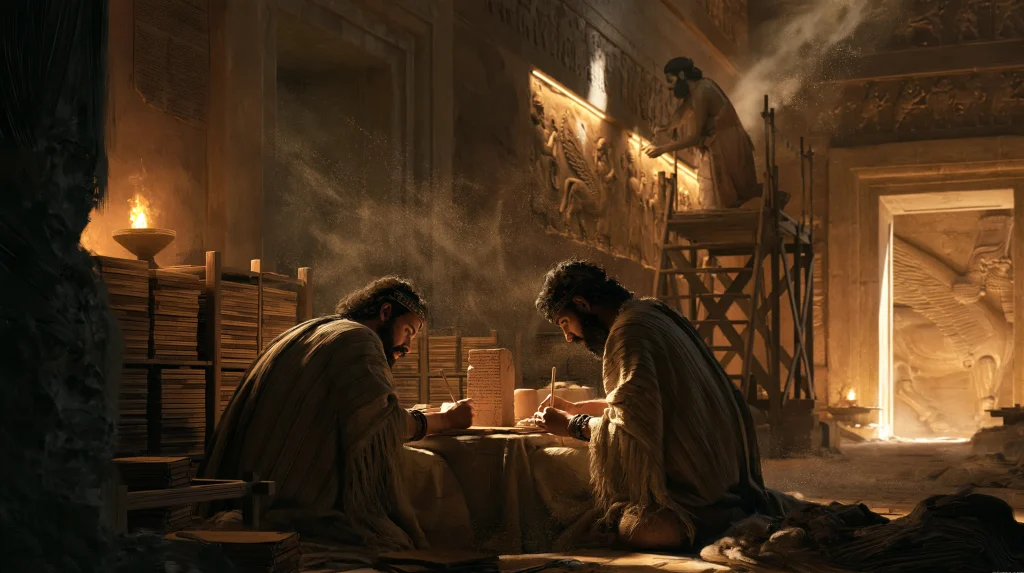
Assyria’s side survives in royal inscriptions. In the Khorsabad Annals, Sargon II says, “I besieged and conquered Samaria” and “led away as booty” more than 27,000 of its inhabitants, then formed “a contingent of 50 chariots” from among them. The translation on the Center for Online Judaic Studies website reads 27,290, while Wikipedia gives 27,280 from Assyrian records, so the exact figure varies.
The Bible and the inscriptions differ on which king finished the work. The Bible names Shalmaneser as the king who besieged Samaria (2 Kings 17:3; 18:9), but Sargon, who followed him on the throne, claims the conquest for himself. Wikipedia says scholars debate which of the two was responsible, and that the Babylonian Chronicles record the conquest as the one event they tie to Shalmaneser’s reign.
Royal inscriptions were written to glorify the king, so their claims need care. In a 2019 article in the Journal of the American Oriental Society, Shawn Zelig Aster examines two unusual claims Sargon makes about ruling Samaria. He tests them against archaeological data from western Samaria and concludes that the inscriptions credit the king with work his provincial governor actually carried out.
Deportation as Policy
Moving whole populations was a deliberate Assyrian policy, not an accident of war. Wikipedia’s page on the resettlement policy says the empire forcibly relocated people for about three centuries. Moving and mixing groups weakened local loyalties and helped put down rebellion, deportees supplied labour for building projects and men for the army, and farmers were settled on land that needed working. The page cites Bustenay Oded’s 1979 estimate, extrapolated from written documents, that about 4.4 million people were moved over roughly 250 years.
Samaria was not the first deportation. Second Kings 15:29 says Tiglathpileser took Ijon, Hazor, Kedesh, Gilead and Galilee and “carried them captive to Assyria,” a campaign Wikipedia dates to 734 BCE. At Samaria, Wikipedia says Assyrian records name Guzana and Median cities as destinations, which fits the river of Gozan and the cities of the Medes in 2 Kings 17:6. It adds that settlers from Babylon, Cuthah, Hamath and Sepharvaim were brought into the province, as 17:24 says, and that the same deportations underlie the later legend of the Ten Lost Tribes.
Nahum and the End of Nineveh
The prophet Nahum speaks against Assyria’s capital. His book opens with “the burden of Nineveh” (1:1), calls the city “the bloody city” (3:1) and asks, “Nineveh is laid waste: who will bemoan her?” (3:7). The Encyclopaedia Judaica, quoted on encyclopedia.com, places the book after Ashurbanipal’s capture of Thebes in 663 BCE, an event Nahum 3:8 alludes to, and probably shortly before Nineveh’s final downfall.
Nineveh fell in 612 BCE. According to Wikipedia, a Babylonian army under Nabopolassar and Median forces under Cyaxares besieged the city for about three months, and the Assyrian king Sin-shar-ishkun was killed. A Babylonian tablet known as the Fall of Nineveh Chronicle describes the war. The Bible’s picture of the city is not uniform: Jonah 3:5 says “the people of Nineveh believed God,” while Nahum sees only judgement ahead.
Nimrod, Asshur and Genesis 10
Popular retellings call Assyria the heir of Nimrod’s kingdom and part of a cursed line from Ham. Genesis says neither. Nimrod is a son of Cush, so a grandson of Ham (10:6, 8), but his kingdom began with “Babel, and Erech, and Accad, and Calneh, in the land of Shinar” (10:10). Verse 11 then turns north, and translations differ on who turns with it. The King James text reads, “Out of that land went forth Asshur, and builded Nineveh.” The English Standard Version has “he went into Assyria” and the New International Version “he went to Assyria,” where the “he” is Nimrod, the subject of the verses before. A parallel-translation page on Bible Hub lists both patterns, and its lexicon entry for the Hebrew name Ashshur covers both a person and a country, which may help explain the split.
Verse 22 settles the family question by listing Asshur among the sons of Shem, whose God Noah blesses in Genesis 9:26. On either reading of verse 11, Genesis 10 never calls the Assyrians descendants of Ham, and it never mentions a curse; the only curse in that setting falls on Canaan (9:25). The New American Bible’s notes add that Nimrod may be Tukulti-Ninurta I, a thirteenth-century BCE king described as “the first Assyrian conqueror of Babylonia.” Assyria’s harshness was real, and Wikipedia notes that Assyrian art shows some deportees shackled. The Bible does not trace it to a family curse.
Israel, Judah and Babylon
The kingdom that fell was Israel. According to the Bible, the northern tribes broke away from the house of David after Solomon (1 Kings 12:16-20), a split New World Encyclopedia places soon after his reign ended in 931 or 922 BCE. Judah did not escape Assyria unharmed, since Sennacherib took “all the fenced cities of Judah” (2 Kings 18:13), and New World Encyclopedia notes that Sennacherib’s own account, the Taylor Prism, differs from the biblical story of what followed. The southern kingdom lasted until Babylon took Jerusalem in 586 BCE.
What Can Be Said
The Bible explains the fall of Samaria as judgement on Israel, and Assyria’s kings boast of it as their own victory. They differ on details, including which king finished the siege. Genesis 10 lists Asshur among the sons of Shem, and no verse there ties Assyria to a curse on Ham’s line. What can be said plainly is that a great empire erased a neighbouring kingdom, and both sides left a record of it.

