Vikings Sacked the Wrong City, Thinking It Was Rome
Vikings & Norse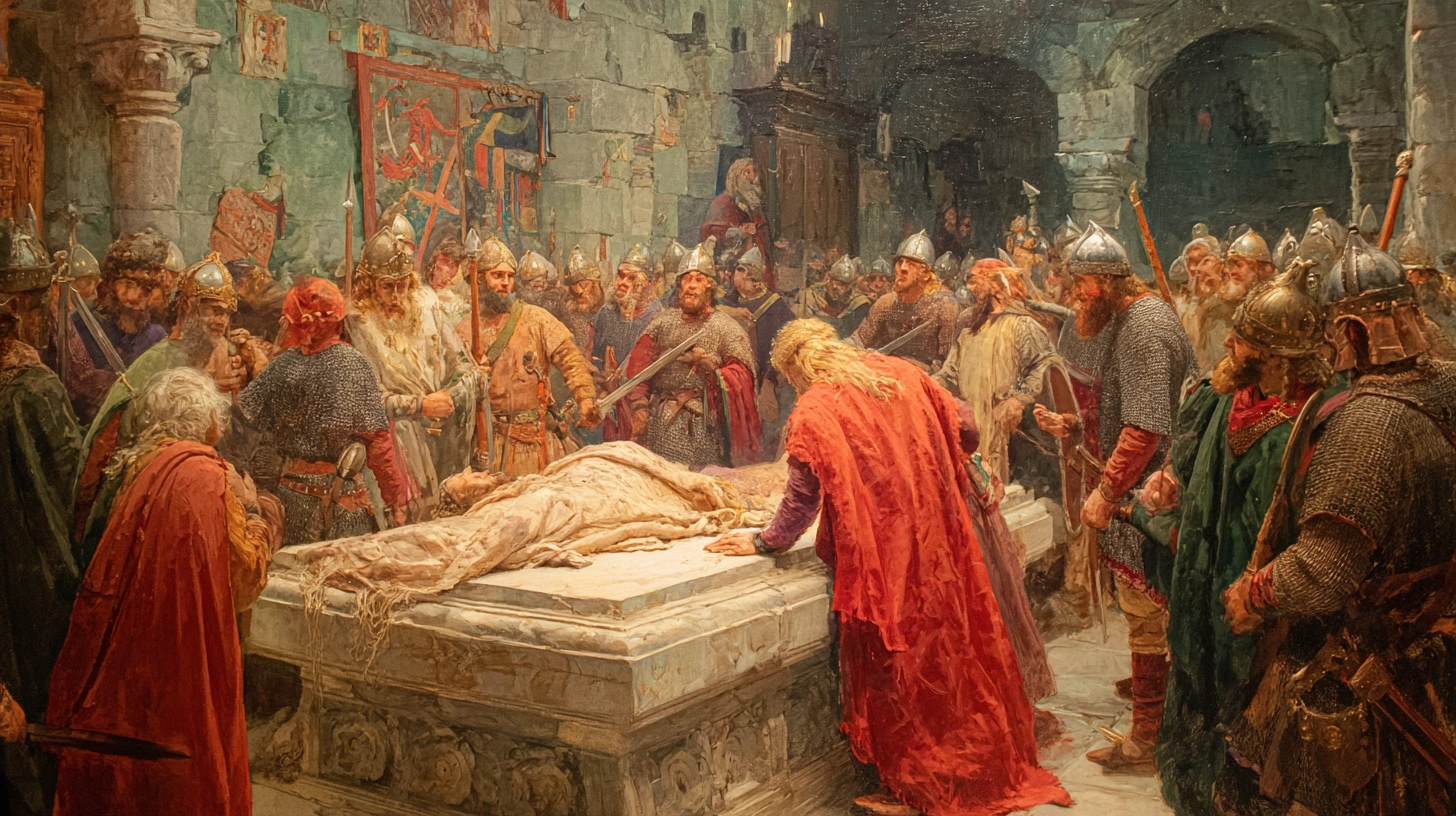
AI reconstruction, not a photograph.
In 860 CE, a Viking fleet sacked a Roman city, slaughtered its bishop, and celebrated a legendary conquest, all while believing they had just captured Rome. They had not. Rome sat untouched, nearly two hundred miles to the south, its walls never even sighted by the raiders who thought they had just taken it.
A Fleet Built for Distant Raiding
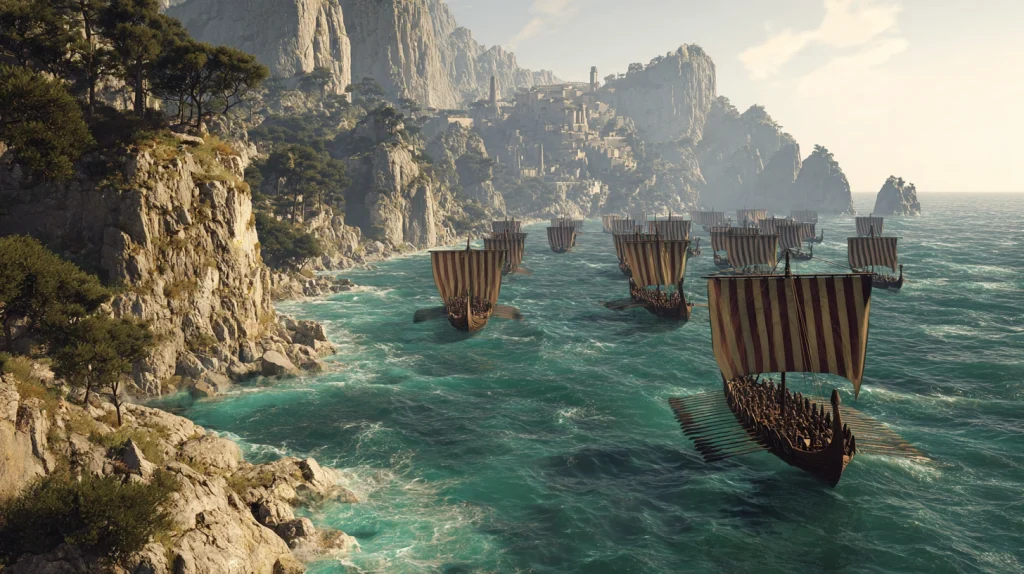
The expedition began in 859, when the Viking leaders Björn Ironside and Hastein set out from a base on the Loire River in France with a fleet reportedly numbering some sixty-two ships, a substantial force even by the standards of the largest Viking raids of the period. Björn, later remembered in Norse tradition as a son of the legendary Ragnar Lothbrok, had already built a fearsome reputation, including a role in the sack of Paris a few years earlier. Hastein would go on to remain a persistent threat along the English coast for decades afterward, eventually becoming one of the chief antagonists of Alfred the Great during the later Viking campaigns against Wessex. Together, the two sailed south along the Iberian coast, raiding first in Christian Galicia and Asturias, then along the Muslim-controlled coastline further south, meeting resistance strong enough in places to force them onward without the plunder they had hoped for, before pushing through the Strait of Gibraltar into the Mediterranean, a body of water few Norse raiders had ventured into before them.
A Long Road to Italy
Once inside the Mediterranean, the fleet raided along the coast of North Africa before turning north, striking the southern coast of the Frankish kingdom at Nîmes and Arles, two cities already well accustomed to seaborne raiders by the middle of the ninth century. The Vikings overwintered somewhere along this stretch of coast before continuing east into Italy, where they are said to have taken the port of Pisa before setting their sights further still. By this point, the fleet had already covered a genuinely enormous distance for the period, sailing the length of the Iberian Peninsula, through one of the ancient world’s most heavily trafficked straits, and along hundreds of additional miles of Mediterranean coastline, all in pursuit of a single, specific target further ahead: Rome itself, a city whose reputation had clearly reached the Norse world even if its exact geography had not.
A City Mistaken for an Empire
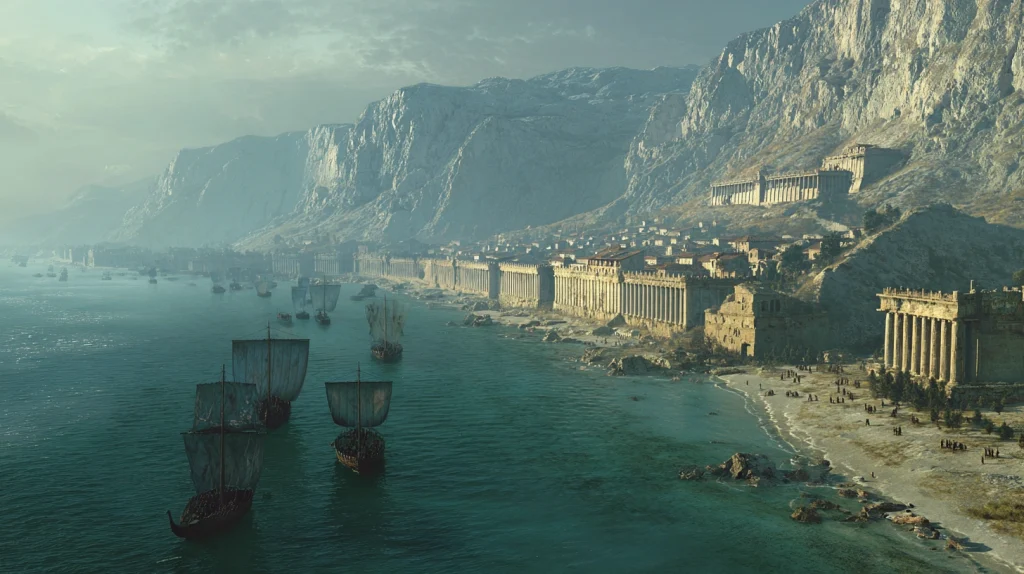
What the fleet actually found, arriving on the Ligurian coast, was the city of Luna, founded by Roman colonists in 177 BCE and once genuinely prosperous as the export port for the pure white marble quarried nearby at Carrara, the same stone later prized by Renaissance sculptors including Michelangelo. By 860, though, that prosperity had faded considerably, leaving a settlement reduced to something closer to a large fortified village dotted with the ruins of its more impressive Roman past, its amphitheater and other public buildings standing as leftover monuments to a wealth the city no longer possessed. Luna sits roughly 195 miles north of Rome as the crow flies, near where the modern regions of Liguria and Tuscany meet, a considerable distance from the city the fleet believed it had finally reached. To Norse raiders with no firsthand knowledge of the Mediterranean world and only secondhand reports of Rome’s fame to go on, a walled settlement built from Roman stone, however diminished from its original scale, may have been convincing enough to mistake for the genuine article.
A Ruse to Get Through the Walls
Luna’s defenses proved too strong to take by direct assault, so according to the account that survives, Hastein turned to deception instead. Viking emissaries approached the town claiming to be a group of exiles in need of shelter and provisions, buying time and access while the rest of the fleet waited offshore. In the version of the story most often repeated, Hastein then had word sent to the city’s bishop that he was gravely ill and wished, before dying, to convert to Christianity and be buried within the church, a request the bishop had no obvious reason to refuse. Granted entry for a solemn funeral procession, Hastein’s men carried him toward the altar in a coffin or on a bier, weapons concealed beneath their robes, mourners in appearance only. At the decisive moment, Hastein rose from his own funeral, and what had been staged as a burial became a massacre instead. Luna’s bishop, a man remembered afterward as Ceccardo, was killed in the violence that followed, and the city was thoroughly sacked, its remaining wealth carried off by a fleet still convinced it had just conquered the capital of Christendom itself.
A Legend Recorded a Century Later
The most complete version of this story comes from Dudo of Saint-Quentin, a Norman monk writing more than a century after the events he describes, working from a mix of oral tradition and earlier written sources rather than firsthand testimony, and historians generally treat the dramatic specifics, the feigned deathbed conversion, the concealed weapons, the funeral turned ambush, with real caution as a result. The broader outline, a Viking fleet under Björn and Hastein reaching Italy and sacking Luna around 860, appears across multiple later medieval sources and is not seriously disputed as an event. It is the vivid theatrical details, the kind that made the story worth copying and retelling for centuries afterward in monasteries far from where any of it actually happened, that rest on considerably shakier evidentiary ground than the raid itself.
What the Fleet Actually Failed to Reach
This detail matters for understanding what the Viking fleet actually failed to reach, after all that distance and all that effort. While Hastein and Björn were sacking the marble-walled city of Luna, roughly 195 miles north of Rome itself, believing it to be the capital they sought, the real Rome sat entirely undisturbed, its ancient structures like the Colosseum still standing, repurposed but intact, its Forum and the accumulated architectural legacy of a thousand years of emperors untouched by the fleet’s presence anywhere nearby.
The gap between the city the Vikings actually sacked and the city they believed they had conquered was not only geographic. It was the difference between a wealthy provincial bishopric and a place whose surviving structures, however diminished from their imperial function, still carried the physical weight of an empire that had organized the known world, repurposed for a new age but never entirely erased from the skyline.

