Why Neanderthal DNA Is Missing From Fertility Genes
Origins & Prehistory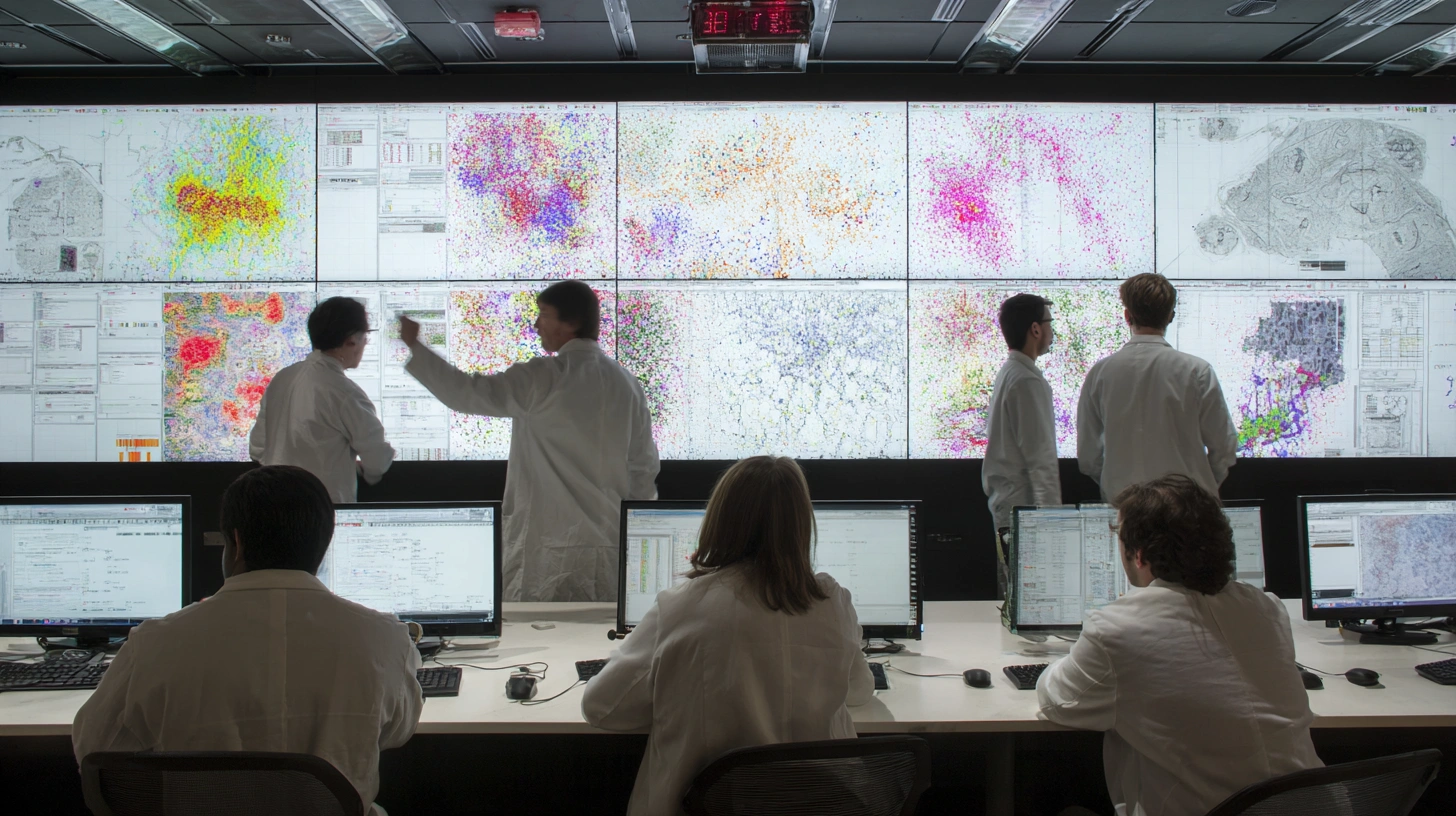
AI reconstruction, not a photograph.
When geneticists mapped exactly where Neanderthal DNA survives across the modern human genome, they found something they had not expected: entire stretches of the genome almost completely emptied of it, and those empty stretches were not scattered at random. They clustered, with striking consistency, around genes tied directly to reproduction.
Mapping Where Neanderthal DNA Survives
In January 2014, two research teams independently published maps of surviving Neanderthal ancestry across large samples of modern human genomes. One study, led by Sriram Sankararaman as part of David Reich’s lab at Harvard Medical School, appeared in Nature. A second, led by Benjamin Vernot and Joshua Akey, appeared in Science the same month, using a different statistical approach but drawing on overlapping genetic data from modern populations. Working with different methods and overlapping but distinct datasets, both teams reached a similar conclusion: Neanderthal DNA is not spread evenly across the modern genome. It clusters heavily in some regions and is almost entirely absent from others, a pattern too consistent across thousands of individual genomes to plausibly be the product of chance alone.
The Deserts Researchers Didn’t Expect
Those empty stretches became known as Neanderthal ancestry deserts, and their existence turned out to be the most striking part of both studies, more surprising in some ways than confirming that interbreeding had happened at all. Sankararaman later described the barren regions as the most exciting result to come out of the work, since a truly random distribution of surviving ancestry would not produce large, consistent gaps like these across so many independent modern genomes drawn from populations around the world. The clustering pattern strongly suggested that something other than chance had shaped where Neanderthal DNA was allowed to persist and where it had been quietly weeded out over many thousands of years of ordinary reproduction and inheritance, generation folding into generation with no single dramatic event marking the process.
A Pattern Centered on Male Fertility
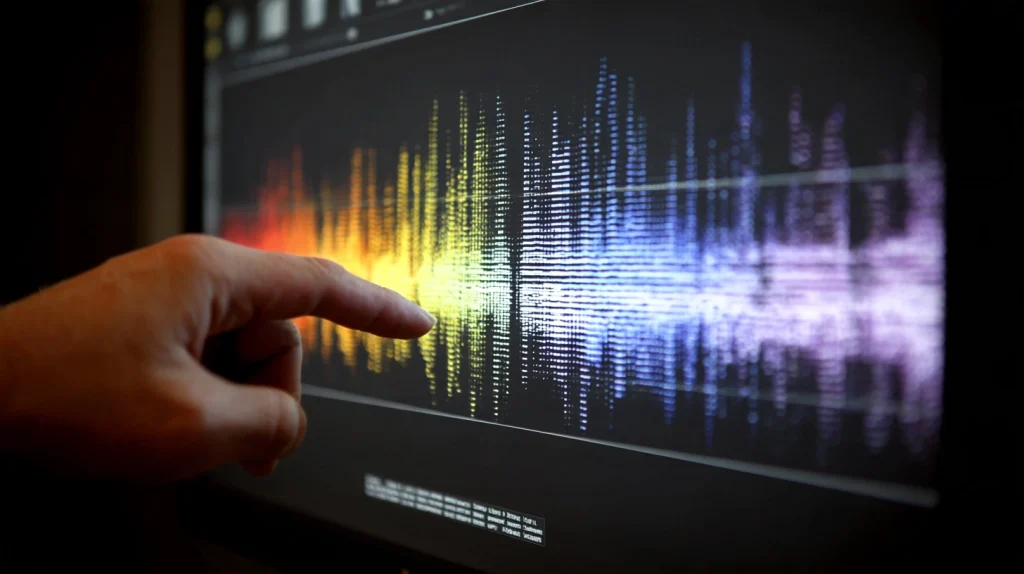
The deserts were not evenly distributed across every kind of gene. They concentrated specifically around genes most highly expressed in the testes, and separately, across the X chromosome as a whole, which showed roughly a fivefold reduction in Neanderthal ancestry compared to the rest of the genome. That second detail matters more than it might first appear. Across many different species, from fruit flies to mice to various primates, the X chromosome is known to carry an unusually high concentration of genes linked to male hybrid sterility, a pattern biologists call Haldane’s rule, in which the sex carrying two different sex chromosomes, males in mammals, tends to suffer the worst fertility problems whenever two related but distinct species or populations interbreed. The concentration of missing Neanderthal ancestry in exactly these regions points toward a specific, testable explanation rather than a vague general one: certain Neanderthal gene variants reduced male fertility when combined with an otherwise modern human genetic background, and over many generations, men carrying those particular combinations left fewer descendants than men who did not, gradually thinning those variants out of the population entirely.
The Largest Desert Contains a Famous Gene
Not every desert was tied to fertility alone. The single largest Neanderthal ancestry desert identified in the Vernot and Akey study spans roughly fifteen million base pairs on chromosome 7 and contains FOXP2, a gene with an outsized reputation because of its role in human speech and language development, where disruptive mutations are known to cause severe difficulties with articulation and grammar in the people who carry them. Its presence inside the largest of these barren stretches suggests that whatever combination of Neanderthal and modern human genetic material once existed in this region carried a cost significant enough for selection to remove it almost entirely, in a part of the genome tied to one of the more distinctly human cognitive traits, and a reminder that these deserts were not limited to reproductive genes alone, even if fertility-linked genes made up the clearest and most consistent category among them.
Not Every Neanderthal Gene Was Harmful
The picture that emerges is not simply one of damage and loss. The same studies that identified these deserts also found regions where Neanderthal ancestry survives at unusually high frequency, well above what random chance would predict, particularly around genes affecting keratin filaments, the structural proteins that shape hair and skin. Researchers have proposed that these particular Neanderthal variants may have actively helped early modern humans adapt to colder, non-African climates that Neanderthals had already been living in, and adapting to, for a very long time before modern humans ever arrived in those regions. Surviving Neanderthal DNA has also been linked to genetic variation involved in conditions including type 2 diabetes, Crohn’s disease, lupus, and smoking behavior, along with immune-related traits in some populations, evidence that the genetic legacy of interbreeding was not uniformly good or bad but genuinely mixed, gene by gene, rather than following any single, simple rule.
A Slow, Uneven Filtering Process
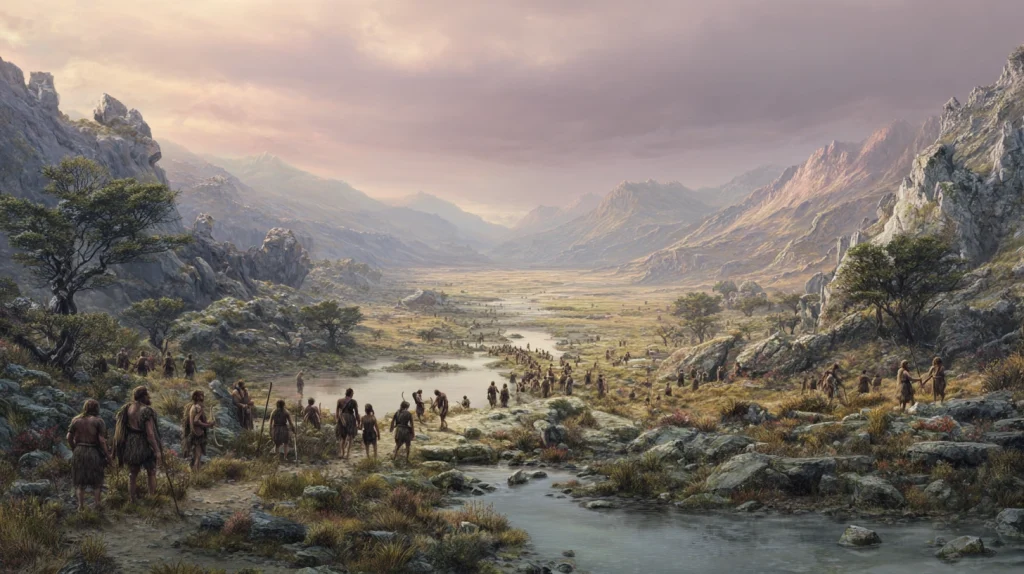
Researchers estimate that the last significant gene flow between Neanderthals and the ancestors of modern non-African populations occurred somewhere between roughly 47,000 and 65,000 years ago, a window that likely represents the tail end of repeated contact between the two populations across the wider span of Late Pleistocene Eurasia rather than one single meeting. In the tens of thousands of years since, natural selection appears to have worked through the resulting mixed genome unevenly, preserving combinations that offered some advantage, tolerating many others that were simply neutral and carried no particular cost either way, and slowly filtering out those, especially around male fertility genes, that measurably reduced reproductive success generation after generation. What remains today, an average of roughly one to two percent Neanderthal ancestry in people with non-African heritage, is not a random leftover fragment of that ancient mixing, preserved by simple accident. It is what survived a long, quiet process of genetic sorting, proof that two closely related populations were compatible enough to interbreed successfully and produce children of their own, and different enough, after several hundred thousand years apart, that not every result of that interbreeding was built to last.
This finding reshaped how researchers think about the underlying biological relationship between the two populations. Neanderthals and modern humans were close enough, genetically and behaviorally, to interbreed and produce children capable of surviving into adulthood and reproducing in turn, a fact proven by the Neanderthal DNA still present in living people today. But the two populations were not identical after their long separation, and combining certain specific gene combinations from both lineages appears to have created real, measurable biological complications for at least some of the resulting offspring, complications concentrated heavily, though not exclusively, around male reproduction. That is a considerably more selective and uneven picture than the older, simpler assumption that interbreeding between the two populations either succeeded cleanly across the board or failed outright. Instead, some genetic combinations quietly thrived and spread through hybrid descendants over tens of thousands of years, while others were slowly filtered back out of the population, leaving fertility-linked genetic deserts as a permanent, legible scar in the modern human genome.

