Why the Neanderthal ‘Rodeo Rider’ Theory Fell Apart
Origins & Prehistory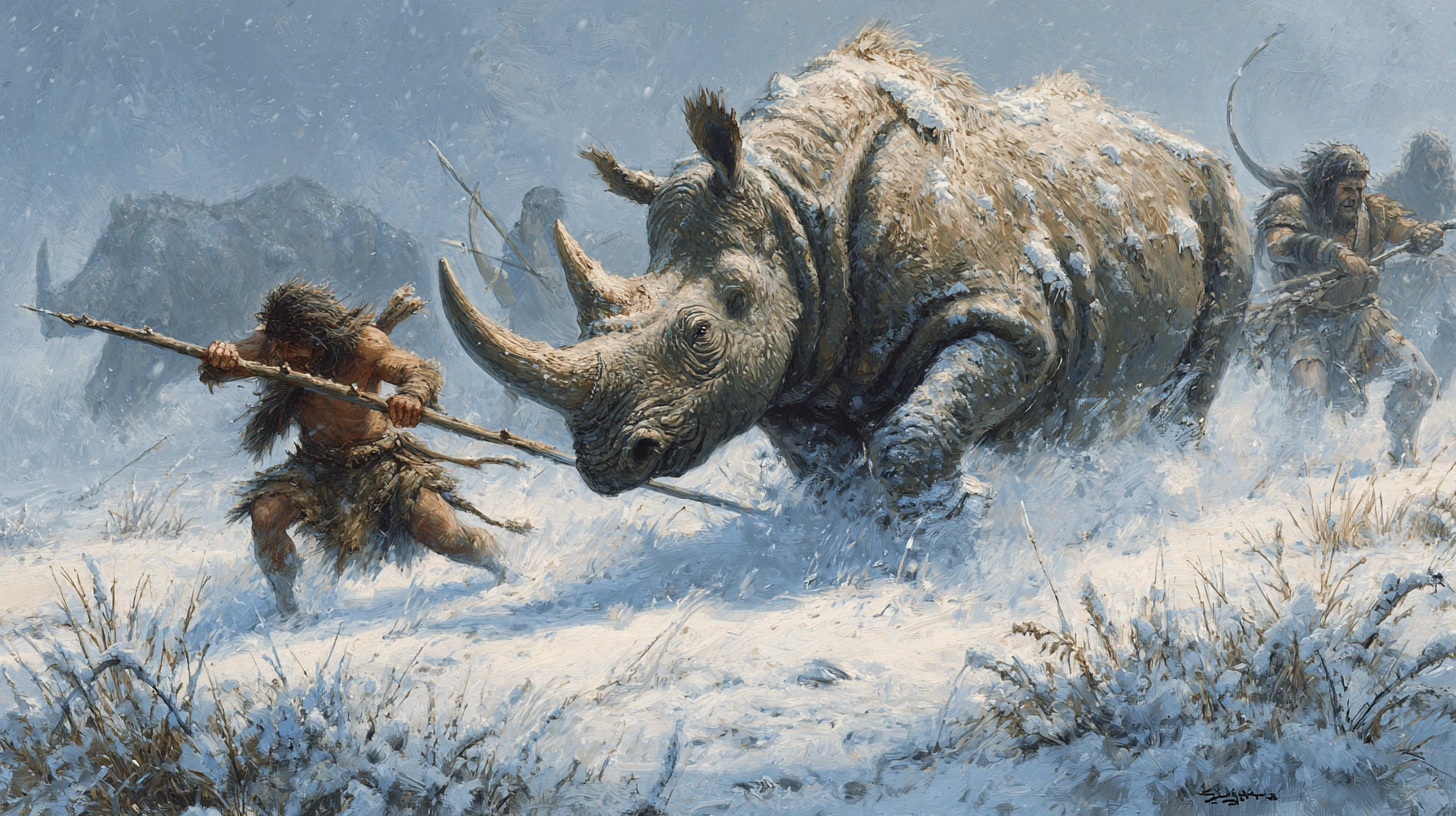
AI reconstruction, not a photograph.
For nearly two decades, one comparison shaped how the public understood Neanderthal injuries more than any other: rodeo riders. It was a vivid, memorable image, the kind of detail that made its way from academic journals into documentaries and textbooks alike. It was also, researchers have since found, considerably shakier than it first appeared, and the story of how it fell apart says almost as much about how science gets popularized as it does about Neanderthals themselves.
A Pattern That Looked Familiar
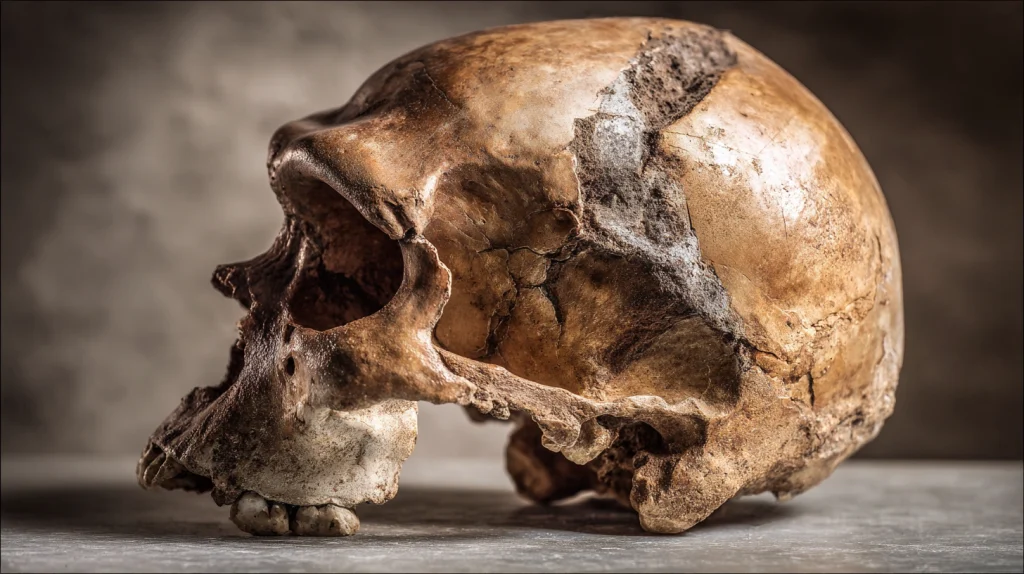
In 1995, the paleoanthropologists Thomas Berger and Erik Trinkaus examined healed injuries across a sample of Neanderthal skeletons and found something striking. Around thirty percent of the seventeen individuals they studied showed signs of cranial trauma, a far higher rate than in either earlier prehistoric hunter-gatherer populations or twentieth-century clinical samples they used for comparison. The injuries clustered heavily around the head, neck, and upper body, with comparatively few clean breaks in the pelvis and legs, the pattern you would expect from someone struck, gored, or thrown by a large animal rather than someone who had fallen from a height or fought mainly with other people using hand weapons. Searching for a modern population with a similar injury profile, Berger and Trinkaus landed on an unexpected match: rodeo riders, athletes who work in close, repeated contact with large, dangerous animals as a matter of routine. They were careful to add, in the original paper, that this was not meant to suggest Neanderthals would have qualified for membership in a professional rodeo association, but the comparison stuck in a way few academic asides ever do, repeated in article after article for years afterward.
Why the Comparison Made Sense at the Time
The rodeo-rider explanation fit neatly with what archaeologists already understood about Neanderthal hunting technology. For most of their existence, Neanderthal spears were built for thrusting at close range rather than throwing from a distance, a conclusion reinforced by later physical evidence, including a detailed analysis of perforated fallow deer bones from a roughly 120,000-year-old site at Neumark-Nord, Germany, where micro-CT imaging and ballistic testing confirmed the wounds came from close-range thrusting weapons rather than thrown projectiles. Bringing down large prey with a weapon like that meant getting genuinely close to animals that could weigh as much as eight hundred kilograms, whether an ice age bison or a woolly rhinoceros, sometimes on unstable, icy ground, sometimes while positioned dangerously beneath the animal itself as it thrashed. There was very little margin for error built into that kind of hunting, and an unusually high rate of upper-body injury seemed like exactly what a dangerous, close-range lifestyle repeated across an entire lifetime would leave behind in the skeletal record.
What Isotope Analysis Confirms
Separate from the trauma debate, chemical evidence backs up how central this kind of dangerous hunting was to Neanderthal survival. Nitrogen isotope analysis of Neanderthal bone collagen consistently shows values as high as, or higher than, those measured in wolves and big cats occupying the same Ice Age ecosystems, a signature that places Neanderthals firmly among the era’s top predators in terms of diet, closer to a specialized carnivore than to an omnivorous forager supplementing meat with a broad range of plant foods. Reaching that position meant regularly closing the distance on the most dangerous animals of the period, over hundreds of thousands of years of Neanderthal presence across Ice Age Eurasia, and this part of the picture has held up well under continued research even as other pieces of the broader story have been revised or complicated.
A Hypothesis Under Its Own Scrutiny
The rodeo-rider comparison itself did not hold up nearly as well under continued scrutiny. In 2012, Trinkaus revisited his own earlier conclusion and found a complication he had not fully accounted for the first time around: early modern humans living in Europe at the same time as the last Neanderthals showed a statistically similar distribution of head and upper-body trauma, despite generally having access to thrown weapons rather than exclusively close-range thrusting spears. If two populations with meaningfully different hunting technology ended up with comparable injury patterns, hunting style alone could not be the whole explanation for either group. Trinkaus also raised a more basic concern about the sample itself: Neanderthals disabled by serious lower-body injuries may simply have been less likely to survive long enough, or travel far enough on an injured leg, to reach the rock shelters where most Neanderthal fossils happen to have been preserved, skewing the surviving skeletal sample toward upper-body injuries almost by accident of preservation rather than by any real difference in how those injuries were caused.

The Comparison That Didn’t Hold Up
A more direct challenge came in 2017, when researchers Libby Cowgill and James Bain reexamined the rodeo-rider hypothesis using a vastly larger modern comparison set, drawing on national injury surveillance data covering eighty-four different sports and activities and more than sixty-one thousand individual injury records, a scale of comparison the original 1995 study had no way to match with the resources available at the time. Of those eighty-four activities, seventy turned out to be statistically distinct from the Neanderthal trauma pattern, and the handful that were not significantly different included no obvious behavioral parallel to Neanderthal life at all, ruling out any tidy story about a single shared activity explaining the pattern. Even actual modern rodeo riders, once measured against this larger and more rigorous dataset, showed fewer skull injuries and substantially more hand injuries than the original 1995 comparison had suggested, meaning the population the whole hypothesis was named for turned out not to match the Neanderthal pattern especially well either, once someone finally checked the comparison against enough real-world data.
None of this erases what isotope evidence and spear-wound analysis still show clearly: Neanderthals hunted large, dangerous animals at close range for a very long stretch of their existence, and it left a mark on their bodies that shows up consistently across skeletal collections from very different sites and time periods. What the rodeo-rider story shows instead is how a single vivid, well-publicized comparison can outrun the evidence supporting it, staying lodged in the popular imagination for decades after the researchers who proposed it, and others who tested it more rigorously afterward, had already found real reasons to doubt it. The image of a Neanderthal as a kind of prehistoric bull rider, gored and thrown but never quite defeated, was memorable enough to survive its own author’s later second thoughts, and it took a dataset of over sixty thousand modern injuries to finally show, with real statistical weight, that the comparison had never fit quite as neatly as it first seemed to in 1995.

